
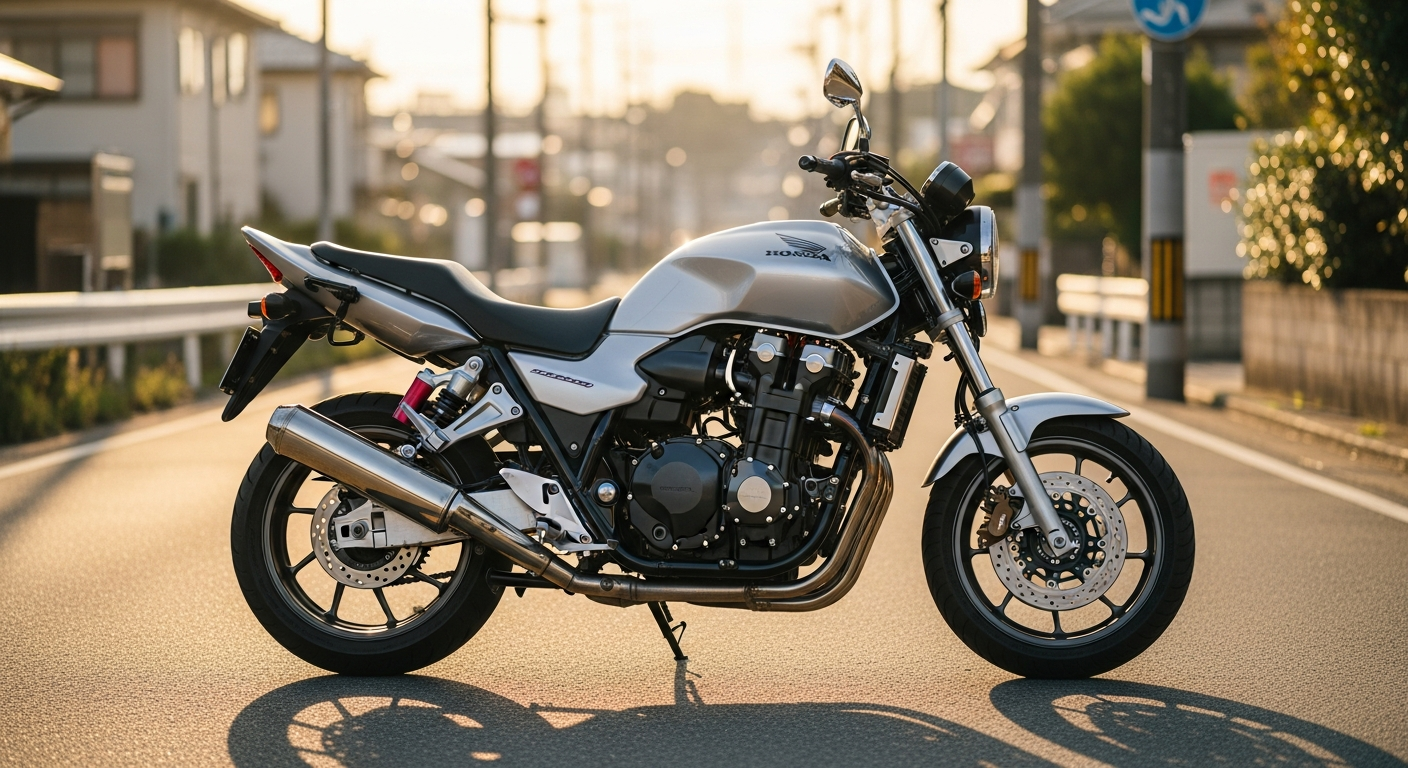
The Honda CB1300 Super Four is the biggest air-and-oil-cooled inline-four naked bike Honda ever put into volume production, and here's the part that trips up a lot of buyers: it was never officially sold in the United States or Canada. If you live in North America and you want one, importing it from Japan isn't one option among many. It's basically the only option. The same is true for a lot of UK, Australian and New Zealand riders who want a clean, low-mileage example rather than a tired grey-import that's been round the block.
So this is your no-nonsense guide to importing a Honda CB1300 from Japan: what the bike actually is, which generation to chase, what it costs landed on your driveway, the legal hoops in your country, and the exact faults to listen for before you bid. We deal with Japanese motorcycle auctions every single day at AWA Auction, so the goal here is simple. By the end of this page you should be able to read a CB1300 listing, spot a good one from a dog, and know roughly what the whole thing will cost you.
No fluff, no "consult a professional" hand-waving. Just the stuff that actually matters when you're spending real money on a bike from the other side of the planet.
What is the Honda CB1300 Super Four?
The CB1300 Super Four is Honda's flagship "BIG-1" muscle roadster — a big, upright, naked four-cylinder bike built around a 1,284 cc inline-four engine. It traces straight back to the CB1000 Super Four of 1992, the bike that kicked off Honda's "BIG-1" concept: a return to the honest, muscular, naked sportbike at a time when everyone else was wrapping bikes in plastic. The CB1300 took over in 1998 and ran, in various forms, all the way to a 2023 Final Edition.
Think of it as Japan's answer to the European muscle-naked. It makes around 100 horsepower in most years, a wall of low-down torque (close to 117 Nm), and it does it with a silky, indestructible motor that genuinely shrugs off six-figure kilometre readings when it's been looked after. The riding position is upright and roomy, the seat is low for a literbike-plus, and it carries its weight low enough that it feels far smaller at walking pace than the spec sheet suggests.
Here's a detail that tells you everything about how Japan rates this bike: the police-spec version, the CB1300P, is used as a patrol and rider-training machine by Japanese highway police. When a country's own traffic cops trust a bike to chase people down all day in the rain, that's about the strongest reliability endorsement you can get. It's also why you'll see so many ex-instructor and high-spec examples come through the auctions in genuinely excellent condition.
Why import a Honda CB1300 from Japan?
Three reasons, and they stack on top of each other.
One: in most of the English-speaking world you literally cannot buy one any other way. Honda never federalised the CB1300 for the US or Canada, so there's no dealer network, no used market to speak of, and the handful of bikes that exist were all imported anyway. Japan is the factory floor for this model — it's where the bikes were sold new, serviced by Honda dealers, and where the deepest, cleanest used supply sits.
Two: the Japanese used market is enormous and brutally honest. Bikes are graded by independent auction inspectors, documented on a standardised auction sheet, and sold in numbers that simply don't exist anywhere else. You're not picking from the three sad examples in your country; you're picking from dozens of CB1300s every week, with mileage, condition and history laid out in front of you.
Three: condition and value. Japanese owners tend to maintain bikes meticulously, ride them in a milder climate, and store them indoors. A 15-year-old CB1300 out of Japan often presents better than a five-year-old bike from a harsher market. Combine that with auction pricing that hasn't been marked up by three middlemen, and even after shipping and duty the maths frequently still works in your favour.
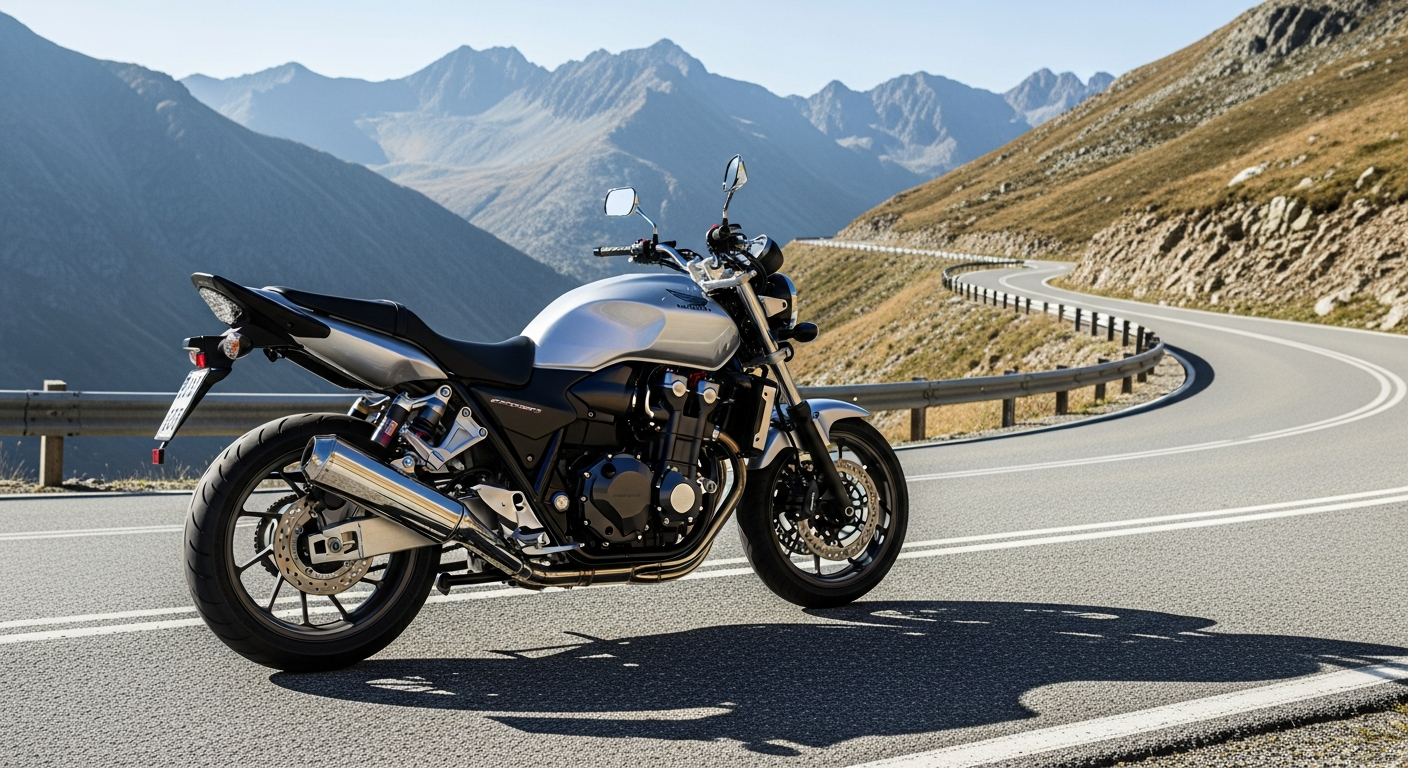
The catch — and there's always a catch — is that buying blind from an auction 9,000 km away is exactly where people get burned. That's what the rest of this guide is for.
CB1300 generations explained: SC38, SC54 and SC80
If you take one thing from this guide, make it this section. "CB1300" covers 25 years of production across three very different chassis codes, and the gap between the oldest and newest is huge. Know the code, and you know what you're buying.
| Chassis code | Years | Fuelling | Headline changes |
|---|---|---|---|
| SC38 | 1998–2002 | Carburettors | The original CB1300SF. Liquid-cooled 1,284 cc four with false cooling fins, ~100 hp, ~120 Nm. Heaviest, most "analogue" feel. |
| SC54 | 2003–2013 | PGM-FI fuel injection | Major redesign. Carbs gone, smoother power, bigger radiator and oil cooler, lighter frame. Optional ABS later in the run. The sweet spot for most buyers. |
| SC80 | 2014–2023 | PGM-FI + ride-by-wire | Modern electronics: ABS as standard, Honda Selectable Torque Control (traction control), slip-assist clutch on later bikes, ~113 PS. Final Edition closed the line in 2023. |
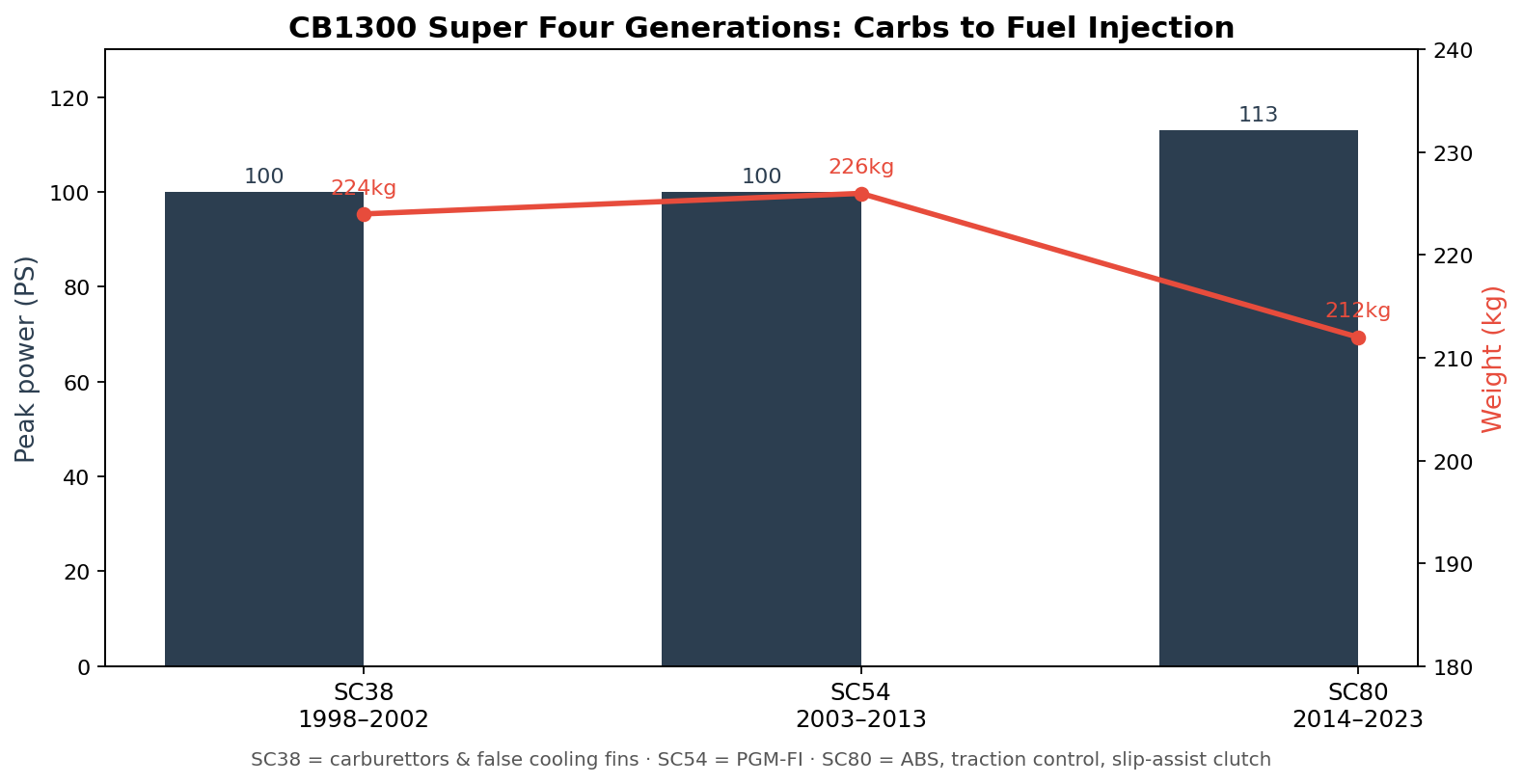
In plain English: the SC38 is the cheapest way into a CB1300 and has the most old-school character, but it's carburetted, the heaviest of the lot, and early bikes carry a couple of known weak spots (more on those below). The SC54 is the one most people should buy — fuel injection makes it easier to live with, parts are plentiful, and prices are sensible. The SC80 is the one to chase if you want ABS and traction control and a nearly-modern bike; it costs more and, for North American buyers, it's too new to import under the 25-year rule for years to come.
That last point matters so much it gets its own section. But first, the variants.
Super Four vs Super Bol d'Or vs SP: which CB1300 to buy
Honda sold the CB1300 in two body styles and, later, a premium "SP" trim. They share the same engine and frame, so this is about how you want to ride, not how fast you'll go.
CB1300 Super Four is the pure naked roadster — round headlight, exposed tank and tail, classic muscle-bike silhouette. This is the default, the cheapest to buy, and the one most people picture when they hear "CB1300."
CB1300 Super Bol d'Or adds a half-fairing and an angular headlight. It's the same bike underneath but with real wind protection, which transforms it on the motorway and on long days. If you plan to actually tour on it — and a lot of people do — the Bol d'Or is worth hunting for. It usually commands a small premium.
SP versions (later bikes) are the connoisseur's pick. They get Öhlins suspension front and rear, Brembo monobloc front calipers, and special seats and finishes. An SP is gorgeous and rides beautifully, but you pay for it and they're rarer in the auctions, so don't hold out for one if a clean standard bike is sitting in front of you at the right money.
Here's the honest take: for a first CB1300, buy condition and history over trim. A meticulously kept standard SC54 Super Four will make you happier than a tired SP. The badge doesn't fix worn-out suspension or a rattly cam chain.
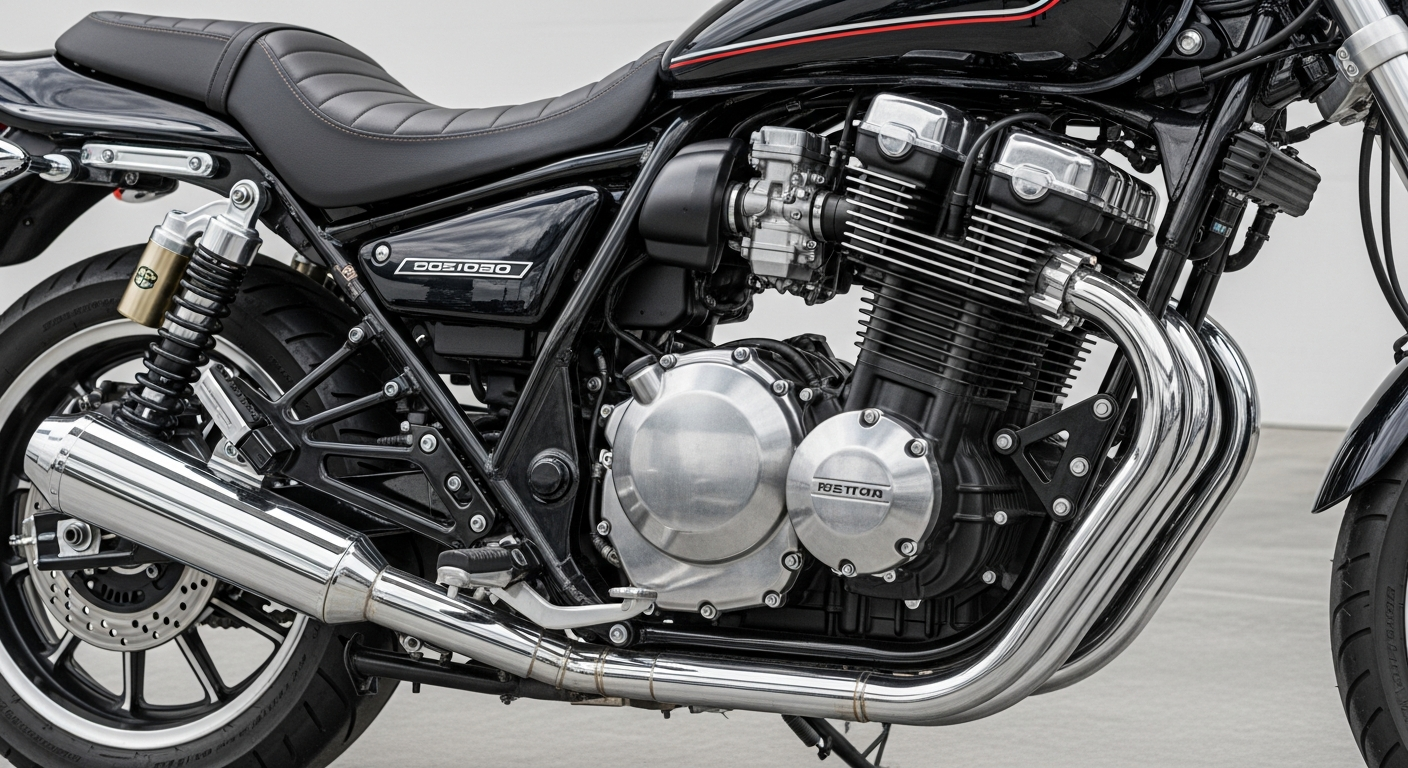
What it costs to import a CB1300 from Japan
Let's talk money, because this is where the dream meets the spreadsheet. The total "landed" cost — the bike on your driveway, legal to ride — is the auction price plus a stack of fees. None of them are huge on their own, but together they typically add 60–80% on top of the hammer price for a bike in this class.
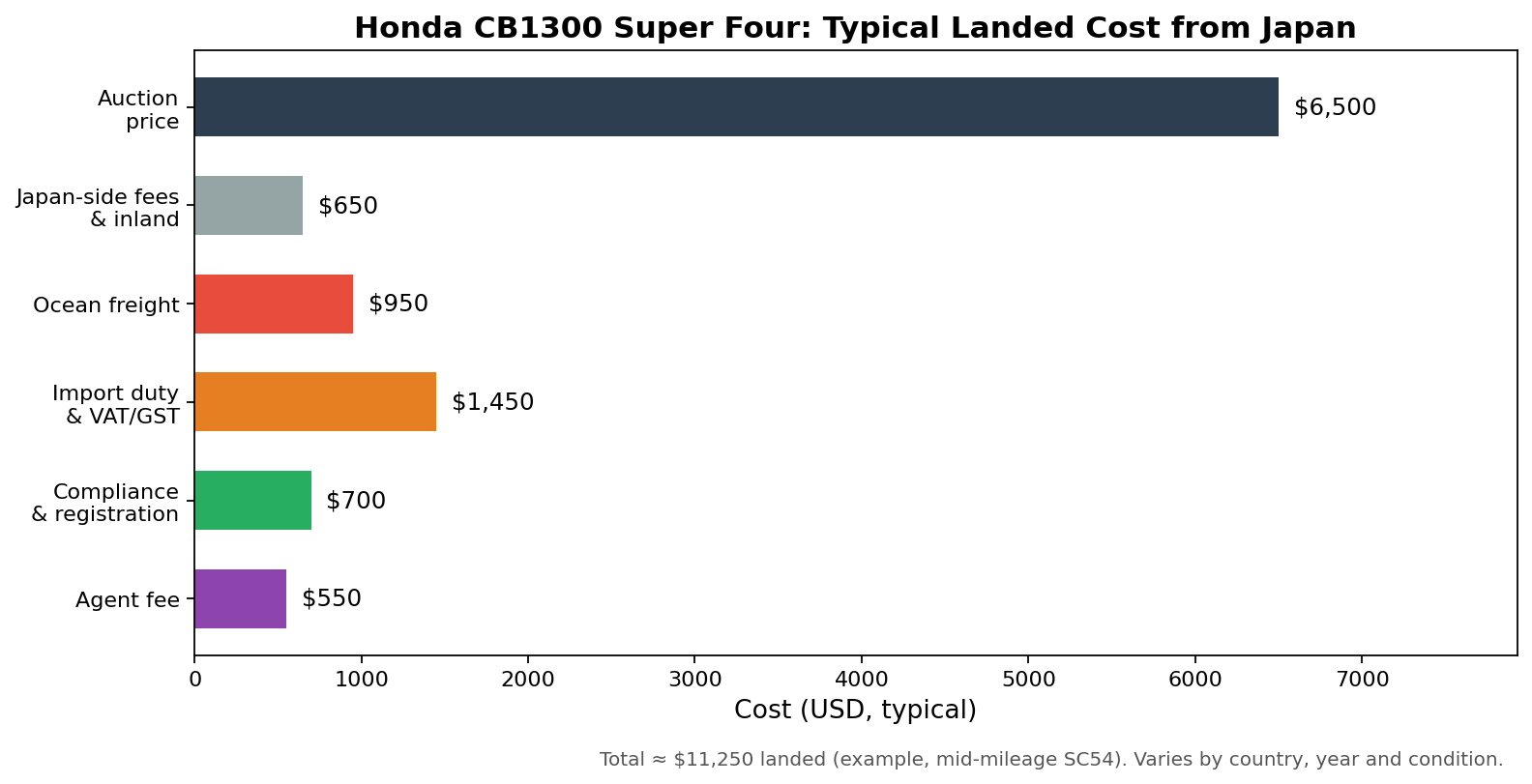
Here's a realistic worked example for a clean mid-mileage SC54 Super Four, in US dollars. Your numbers will shift with exchange rates, your country's duty, and how nice a bike you chase:
| Item | Typical (USD) | What it is |
|---|---|---|
| Auction price | $6,500 | The hammer price for a tidy, honest SC54. Earlier SC38s can be half this; clean SC80s and SPs run higher. |
| Japan-side fees & inland | $650 | Auction fees, deregistration, inland transport to the export port, export paperwork. |
| Ocean freight | $950 | Shipping to your nearest port. Roll-on/roll-off is cheaper; a crate in a shared container protects the bike better. |
| Import duty & VAT/GST | $1,450 | Highly country-specific. This is an illustrative blended figure — see the legality section. |
| Compliance & registration | $700 | Inspections, any required modifications, plating and first registration in your country. |
| Agent / broker fee | $550 | The service that bids for you, handles export and keeps you out of trouble. |
That lands at roughly $11,250 all-in for the example bike. The single biggest variable is your country's duty and tax, and the second biggest is which generation you buy. Budget the fees as a block, not as an afterthought — the riders who feel "ripped off" are almost always the ones who only mentally budgeted for the hammer price.
Is the CB1300 legal to import to your country?
This is the question that decides which CB1300 you're even allowed to chase. The rules are completely different depending on where you live, so find your flag below.
United States. The federal 25-year rule is your friend. Any motorcycle at least 25 years old is exempt from DOT and EPA import standards and can come in on its age alone. For 2026 that means CB1300s built in 2001 or earlier — the carburetted SC38 generation — are clear to import. Each year, one more model year rolls into eligibility. Anything newer than 25 years has to meet US safety and emissions standards or go through a Registered Importer, which for a bike Honda never federalised is impractical and expensive. So in the US, in practice, CB1300 = early SC38.
Canada. Canada runs a 15-year rule for motorcycles, which is far more generous. For 2026 that opens up everything built in 2011 or earlier — the whole SC38 generation and most of the SC54 run. This is a genuine advantage: Canadian buyers can get the fuel-injected SC54 that Americans can't yet touch. Confirm the bike's build date and your provincial registration requirements before you bid.
United Kingdom. No age bar at all. You can import any CB1300, new or old. The cost stack is import duty (currently a reduced rate for motorcycles) plus VAT on the landed value, then an IVA test for newer bikes or a simpler path for pre-1998-style classics — though the CB1300 era will generally need the standard registration route. Budget for the duty, the VAT, and the test, and you're away.
Australia and New Zealand. Both allow CB1300 imports, but Australia in particular has stricter approval pathways — you'll be dealing with import approval and compliance, and Australia's rules around road-bike eligibility are tighter than New Zealand's. New Zealand is one of the easiest developed markets to import into, with a straightforward entry certification and a strong existing Japanese-import culture. In both, confirm the specific compliance route before committing.
The golden rule everywhere: verify the exact build date, not just the model year, from the frame number and export documents. A bike registered in 2002 might have been built in late 2001. When you're sitting on the wrong side of an age cutoff, a few months is the whole ballgame.
How to buy a CB1300 at a Japanese auction
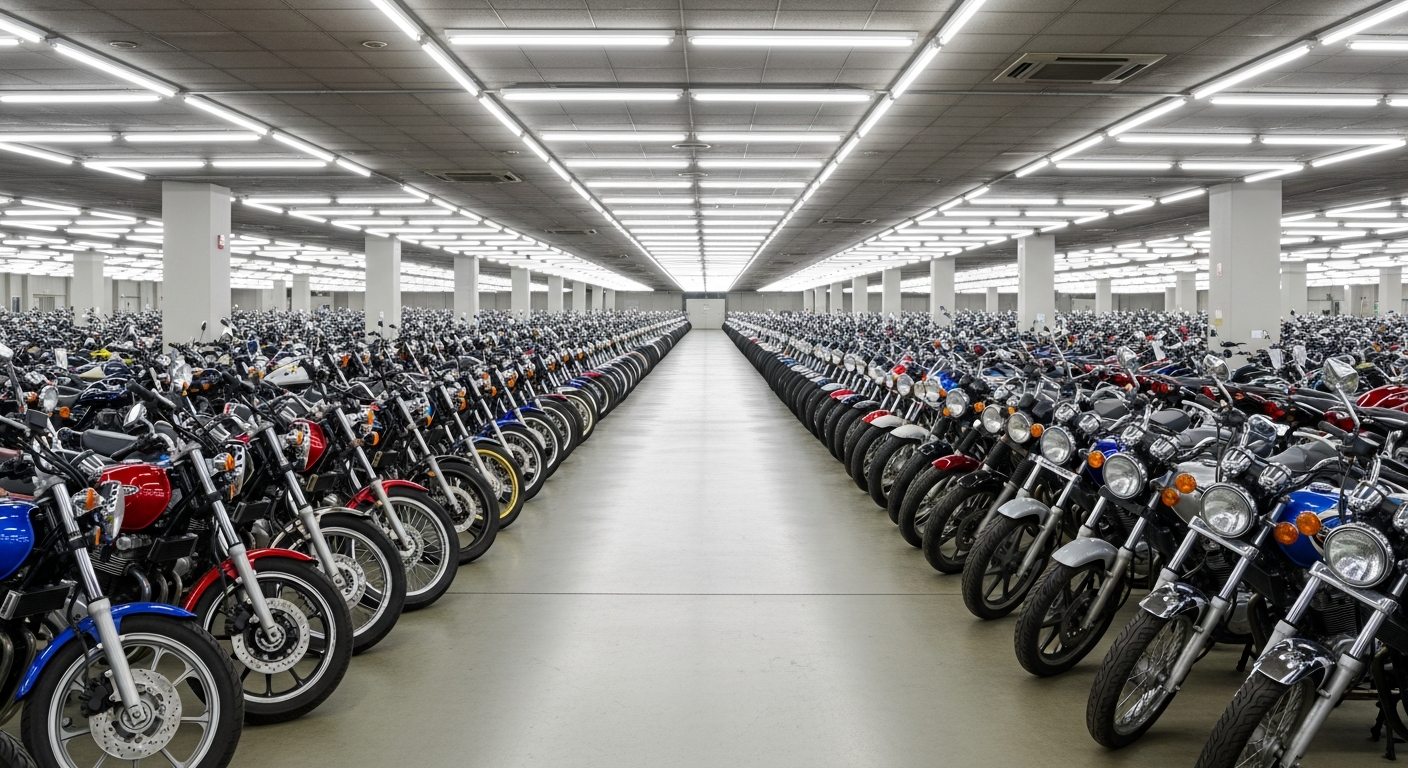
Japanese bike auctions aren't a free-for-all. They're a tightly run system, and once you understand the auction sheet you have more honest information than you'd ever get from a private seller back home.
Every bike gets inspected and graded. The overall grade runs roughly from 1 (project/parts) up through 3, 3.5, 4, 4.5, 5 and S (as-new), with notes for modifications and damage. For a CB1300 you want to be shopping in the grade 4 and up band for a bike you'll ride and trust. The sheet also carries a map of the bike with coded marks: scratches, dents, rust, corrosion, and repaired areas all get noted in a standardised shorthand.
The numbers that matter most on a CB1300 sheet:
- Mileage — and whether the sheet flags it as genuine or "unknown." A CB1300 with a documented 40,000 km is barely run in; these motors go well past 100,000 km.
- Grade and the inspector's notes — small cosmetic marks are normal and cheap; "corrosion" and "frame repair" are not.
- Modifications — aftermarket exhausts are everywhere on these bikes. A slip-on is fine; a full system can complicate your home-country emissions compliance, so factor it in.
- Service records — the gold standard. A bike with a maintenance booklet and stamps is worth paying up for.
You don't bid directly — you bid through a licensed exporter or agent who holds auction access. That's not a middleman tax so much as the price of entry: they translate the sheet, place your maximum bid, and handle export. A good one will also talk you out of a bad bike, which on a blind purchase is worth every yen.
CB1300 common problems and a pre-purchase inspection checklist
The CB1300 is one of the most reliable big bikes ever built — that police endorsement isn't marketing — but "reliable" doesn't mean "buy any of them." Here's the watch-list that owners and Japanese workshops actually know about, generation by generation.
Cam chain tensioner rattle. The classic CB1300 tell. On higher-mileage bikes the cam chain tensioner can wear and produce a rattle on cold start-up that settles as the engine warms. A faint rattle isn't fatal, but it's a known job and a bargaining chip. Listen to a cold-start video before you bid — a good agent can request one.
Fourth-gear jump-out (early bikes). Early SC38 and pre-2008 SC54 gearboxes could pop out of fourth gear under load thanks to worn or bent selector forks. Honda revised the internals for 2008, and most affected bikes have long since been fixed — but on an early example, ride-test feedback or a clean gearbox history is worth chasing.
Exhaust downpipe cracks (early bikes). Pre-2008 bikes could crack downpipes at the collector. From 2008 Honda fitted a catalytic converter and a stronger clamp arrangement. On an SC38, inspect the headers carefully.
Charging and battery gremlins. Like a lot of big fours, a tired regulator/rectifier or stator shows up as battery drain and charging faults. If a listing mentions a flat battery or electrical "quirks," price in a charging-system check.
Switchgear and clock corrosion. The push-button on the instrument cluster can let water in and corrode the switch behind it. It's a fiddly but cheap fix — more an annoyance than a dealbreaker.
Your quick pre-bid checklist:
- Confirm the chassis code (SC38 / SC54 / SC80) and exact build date.
- Auction grade 4+ with genuine, documented mileage.
- Request a cold-start clip and listen for cam-chain rattle.
- Check the sheet for corrosion, frame repair and accident marks — walk away from these.
- Note any full aftermarket exhaust and its compliance impact at home.
- Prefer bikes with a service booklet and stamps.
Step-by-step: importing your CB1300 from Japan
Here's the whole journey, start to finish, so there are no surprises about who does what and when.
Step 1 — Set your budget and target spec. Decide your generation (driven by your country's import rules), your body style, and your all-in ceiling. Work backwards from the landed total, not the hammer price.
Step 2 — Get auction access through an agent. You partner with a licensed exporter who can bid at the Japanese auctions on your behalf and handle export. This is the step that makes the whole thing legal and translatable.
Step 3 — Shortlist and read the sheets. Each week, your agent surfaces CB1300s that match your brief. You read the grade, mileage and inspector notes together, request cold-start clips where it matters, and set a maximum bid on the ones worth chasing.
Step 4 — Win the bike. The agent bids to your ceiling. If you win, you pay the hammer price plus Japan-side fees. If you don't, you move to the next one — there's always another CB1300 next week.
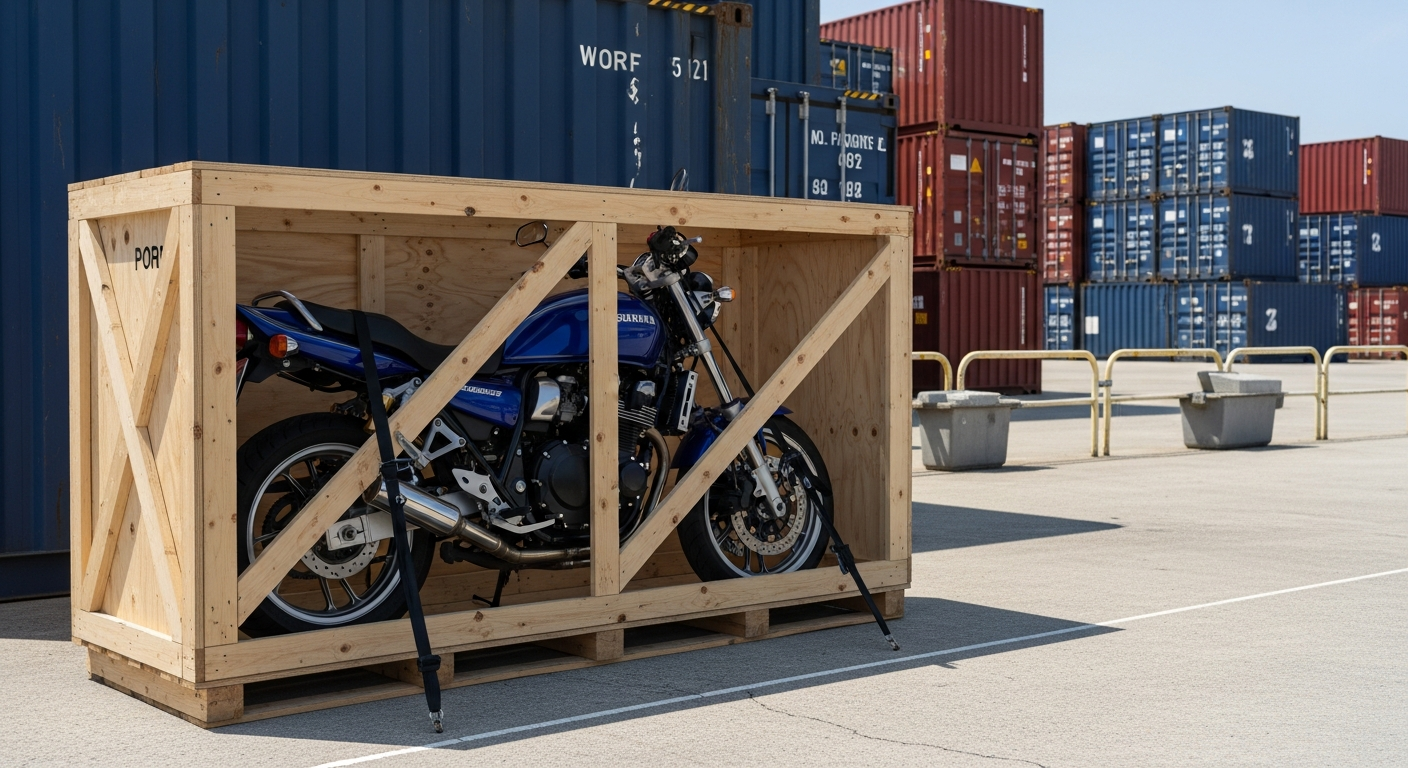
Step 5 — Export and shipping. The bike is deregistered, the export paperwork is filed, and it's moved to port. You choose roll-on/roll-off (cheaper) or a crate in a shared container (safer). Ocean transit is typically a few weeks depending on your country.
Step 6 — Customs, duty and compliance at home. On arrival you (or your customs broker) clear the bike, pay duty and VAT/GST, and run it through any required inspection or compliance steps for your country.
Step 7 — Register and ride. With compliance signed off, you plate it, insure it, and the BIG-1 is finally yours. From winning bid to riding, plan on roughly six to twelve weeks depending on shipping and your local paperwork.
How AWA Auction helps you import a CB1300
This is exactly what we do at AWA Auction. We're plugged into the Japanese motorcycle auctions every day, so instead of gambling on a single listing, you get someone reading the sheets with you, flagging the bikes worth bidding on and the ones to skip, and handling the export end so the bike actually arrives.
You tell us your target — say, a clean SC54 Super Four under a set budget, or an early SC38 that clears the US 25-year rule — and we hunt it down, bid to your ceiling, and manage shipping and paperwork through to your port. No auction Japanese to decode, no guessing what a grade or a corrosion mark really means.
If you're ready to start, browse the current listings to see what's coming through the auctions right now, or contact our team with the exact CB1300 you're after and we'll start watching for it.
How the CB1300 compares to its rivals
The CB1300 didn't exist in a vacuum. Japan's "big naked" class was a four-way fight, and if you're shopping the auctions you'll see the rivals sitting right next to it. Knowing how they stack up stops you overpaying — or missing a better bike.
Yamaha XJR1300. The air-cooled traditionalist. Where the CB1300 went liquid-cooled and modern, the XJR kept a big air-cooled four and a simpler, rawer character. It's lighter-feeling and beloved for its looks, but it makes less usable midrange than the Honda and the build quality, while good, isn't quite CB1300-grade. Buy the XJR for character; buy the CB1300 for completeness.
Kawasaki ZRX1100 / ZRX1200. The hooligan's choice, with that Eddie Lawson Replica heritage and a bikini fairing on the DAEG. Brilliant fun and a cult following, but harder-edged and less refined as an everyday bike than the Honda. Values for clean ZRX1200 DAEGs have climbed hard, so the CB1300 is often the better-value buy.
Suzuki GSX1400. The torque monster — a huge air/oil-cooled 1,400 that pulls like a tractor. Wonderful engine, but it's the heaviest of the group and parts can be fussier to source. A great bike if you find a minter; the CB1300 is the easier one to own.
Modern nakeds (MT-09, Z900, Street Triple). Lighter, sharper, more tech — and completely different in feel. The CB1300 is a big, smooth, old-school muscle bike, not a flickable streetfighter. If you want razor handling, buy modern. If you want that effortless, planted, do-anything inline-four character with real presence, that's exactly what the CB1300 delivers and the new bikes don't.
The short version: within the classic big-naked class, the CB1300 is usually the most rounded, best-built and best-supported choice. That's why it's the one people keep importing.
Living with a CB1300: running costs and who it suits
A bike is only a bargain if it's cheap to own once it's yours. Good news here: the CB1300 is mechanically honest and well supported.
Parts and servicing. Because Japan sold these in big numbers for 25 years, consumables and common parts are widely available and reasonably priced, and any competent independent shop can service one — it's a conventional inline-four, not some electronic puzzle box. Owners routinely report 100,000 km and beyond on the original bottom end with nothing more than regular oil, fluids and the occasional cam-chain tensioner.
Fuel, tyres and consumables. It's a big four, so don't expect scooter economy — figure on real-world fuel use in the mid-40s mpg (UK) under normal riding, less if you use the performance. Tyres are standard sportbike-touring sizes, so there's plenty of choice. Brake pads, chains and sprockets are all off-the-shelf.
Who it suits. The CB1300 is for the rider who wants one big, comfortable, characterful bike to do everything — commute, weekend blast, two-up touring on a Bol d'Or — and wants it to last. The low seat and low-slung weight make it surprisingly manageable, though it is a genuinely heavy bike at a standstill, so very short riders should sit on one (or its equivalent) before committing. It rewards riders who value smoothness, torque and longevity over outright lightness and lap times.
If that sounds like you, the CB1300 out of Japan is one of the most satisfying big bikes you can import, full stop.
What a good CB1300 actually costs in Japan right now
Auction prices move with condition, mileage and the yen, but here's the lay of the land in 2026 so you know whether a quote is fair.
Early SC38 (1998–2002). The value end. Honest, ridered examples with some age and miles change hands for the least money of any CB1300 — often roughly half what a clean injected bike costs. This is also the only generation US buyers can import on age right now, which is quietly pushing demand (and prices) up for the cleanest early bikes. Buy the best SC38 you can find, not the cheapest.
SC54 (2003–2013). The heart of the market and the best value-for-condition. There's huge supply, so you can afford to be picky and wait for a low-mileage, fully-stamped bike rather than settling. Bol d'Or half-faired versions carry a modest premium over the naked Super Four.
SC80 (2014–2023) and SP. The premium tier. Late bikes with ABS and traction control, and the Öhlins-and-Brembo SP models, command the strongest money — and Final Edition bikes are already being treated as collectibles. For most riders this generation is about wanting modern electronics, not value.
One trend worth knowing: clean, low-mileage, unmodified CB1300s of every generation are slowly drying up as the model goes out of production, so genuinely minty examples are appreciating. A standard, honest rider is still sensible money; a showroom-fresh one is increasingly a collector item.
Roll-on/roll-off vs container: shipping your CB1300
Once you've won the bike, you choose how it crosses the ocean, and it's a real trade-off between cost and protection.
Roll-on/roll-off (RoRo) is the cheaper route — the bike is secured and rolled onto a vehicle carrier. It's perfectly standard for motorcycles and fine for a rider, but the bike is handled more and exposed to the elements and to other cargo movement in transit.
Containerised shipping — usually your bike crated inside a shared container with other vehicles — costs more but protects the bike far better. For a tidy, low-mileage CB1300 you've paid up for, the extra few hundred dollars of crating is cheap insurance against dock rash. For a cheap-and-cheerful early SC38 you plan to ride hard, RoRo makes more sense.
Whichever you pick, make sure the bike is properly drained and prepped to your country's biosecurity rules — Australia and New Zealand in particular are strict about cleanliness, and a dirty bike can mean cleaning fees and delays on arrival.
The CB1300P police bike: why Japan trusts this engine
Here's a piece of context that explains why CB1300s come out of Japan in such good shape. The CB1300 isn't just a civilian roadster — in police-spec CB1300P form it's a frontline patrol and pursuit machine for Japanese highway police, and it's the bike that police rider-training instructors use to demonstrate slow-speed control to recruits. There are whole channels of footage of instructors threading a fully-laden CB1300P through cone courses at walking pace, and of white-bike patrols using it day in, day out, in all weather.
Think about what that demands. A police fleet bike has to start every morning, idle in traffic, get ridden hard, and rack up serious mileage with minimal drama, because downtime costs the force money. Honda doesn't get to hide behind a warranty there. The fact that the CB1300 was chosen for that role, and kept in it for years, tells you the engine and chassis are built to a standard most road bikes never have to meet.
For you as an importer, this has two practical upshots. First, the civilian bikes you're bidding on share that same over-built drivetrain, which is a big part of why six-figure-kilometre examples still run sweetly. Second, Japan's bike culture takes maintenance seriously across the board — the same climate, storage habits and servicing discipline that keep police bikes healthy apply to the privately-owned CB1300s flowing through the auctions every week. It's a big reason a well-chosen Japanese import so often shames a tired bike from a harsher market.
See Also
Share this article: