
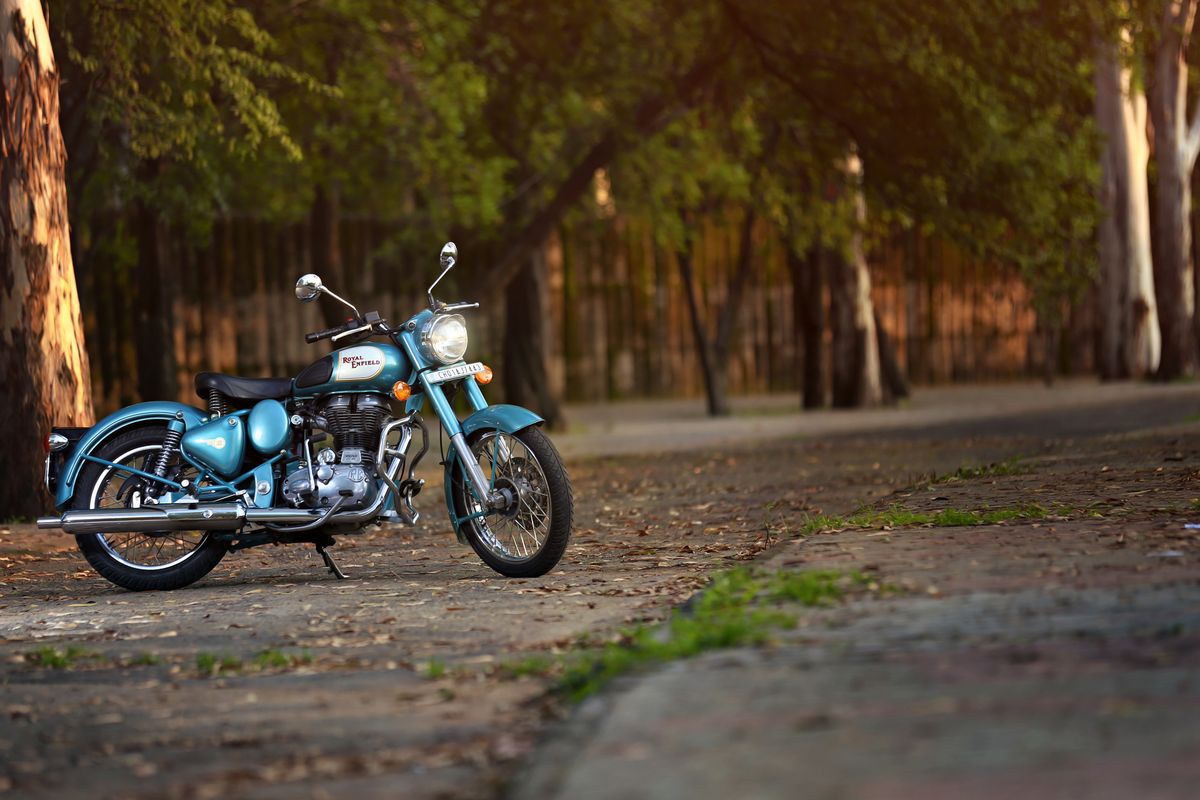
A YouTube channel called Bikes and Beards bought a 40-foot shipping container packed full of Japanese motorcycles, posted the unboxing, and watched it rack up 18.8 million views.
That number tells you everything about the appetite for this topic. People want these bikes. The machines that never officially left Japan — the Honda CB400SF, the Yamaha XJR1300, the Suzuki Bandit in its full-powered domestic spec, the whole two-stroke revival that only Japan kept going into the 1990s — represent some of the best motorcycles ever built, at prices that make no sense compared to what equivalent bikes cost elsewhere.
Here's where most import guides fall short: they start at the shipping step. They walk you through customs forms and port procedures as though you already have the bike in hand. Nobody explains how to actually find the right motorcycle in Japan before any of that begins.
This guide covers the whole chain — from sourcing a bike at Japanese auction to riding it on your street. No vague estimates. No glossing over the hard parts.

Why Import a Motorcycle from Japan?
Three reasons dominate every honest conversation about this: selection, price, and condition.
The Selection Problem Everywhere Else
Japan's domestic motorcycle market produced machines the rest of the world largely never saw. Some of this was deliberate — Japanese manufacturers faced regulatory pressure in certain markets and chose not to export full-power versions. Some was demand-driven — specific 400cc and 750cc segments thrived in Japan due to licensing tiers and never made commercial sense to sell elsewhere in volume.
The result is a category of motorcycles you simply cannot buy new or find locally in most Western markets. You cannot walk into a dealer in the US, UK, or Australia and buy a low-mileage Honda CB400 Super Four. You cannot source a Kawasaki ZZR400 in any condition better than "project bike" at most local dealers. In Japan, these bikes appear at auction weekly in Grade 4 and 4.5 condition, maintained on schedule by their previous owners, with documentation that makes their history transparent.
The 50cc and 125cc domestic Japanese market deserves its own mention. The Yamaha YSR80, Honda Monkey, Dax, and the whole lineage of stylized small bikes from the 1980s and 1990s have enormous collector followings worldwide. In the Bikes and Beards container video, the YSR80 generates as much excitement as the larger machines. These bikes are rare outside Japan but abundant at auction.
The Price Argument
Japan's secondhand motorcycle market is large, organized, and competitive. Auction prices reflect market clearing rates — when a given model is common, it sells cheaply. When supply is tight, prices firm up, but because so many bikes move through the system, genuine rarity commands real premiums rather than artificial scarcity.
For a buyer in the US or Australia, the math on many models is compelling. A 1998 Honda CB400SF in Grade 4 condition might sell at auction for the equivalent of $2,000–$2,500 USD. After adding $1,500–$2,000 in total import costs, you arrive with a well-documented bike in solid condition for under $5,000. Finding equivalent quality and documentation in local classifieds, for a model that's natively rare outside Japan, is either impossible or significantly more expensive.
The premium segment makes the argument even more clearly. A Honda RC30 (VFR750R) in good condition is worth $20,000–$40,000+ in Western markets. At Japanese auction, the starting point is lower and you get auction-documented condition rather than taking a private seller's word for it. The import cost as a percentage of total spend is minimal.
Condition and Documentation
This is the underappreciated one. Japan's vehicle registration and inspection system creates a culture of maintenance and a paper trail. Japanese owners service their vehicles because a properly maintained bike sells better and auctions higher — and the auction sheet confirms it.
Auction houses issue standardized condition reports using a consistent grading system and a diagram marking every visible defect. A Grade 4 auction sheet shows you exactly where the cosmetic wear is, whether there are any structural concerns, and whether the engine ran at inspection. You are not buying a mystery.
Compare this to private classifieds in most Western countries, where "good condition" is a subjective opinion from someone motivated to sell.
The 25-Year Rule: The Single Most Important Thing You Need to Know
Before you go any further, understand this rule. It determines whether importing a specific bike is straightforward or genuinely complicated.
The United States applies what is commonly called the 25-year rule to imported vehicles. Any motorcycle manufactured 25 or more years ago is exempt from the Federal Motor Vehicle Safety Standards (FMVSS) enforced by the Department of Transportation (DOT) and from the Environmental Protection Agency's (EPA) emissions standards.
As of 2026, that means any motorcycle manufactured in 2001 or earlier qualifies.
Why does this matter so much? Because compliance with FMVSS and EPA standards is the hard part of importing any modern vehicle. Meeting those requirements typically requires a Registered Importer — a federally authorized company that modifies non-compliant vehicles to meet US standards — and that process is expensive and time-consuming. For a motorcycle, the compliance cost can exceed the bike's value.
Under the 25-year exemption, you skip all of that. The bike clears customs as a vintage or classic vehicle. You still file the required declarations, but you're declaring an exemption rather than proving compliance. The difference in process complexity is significant.
The Manufacture Date Problem
Here is the critical detail that catches people out: NHTSA uses the motorcycle's manufacture date, not the model year.
A bike listed in auction documentation as a "2001 model" may have been built in late 2000 or early 2002. Japanese manufacturers sometimes produced early units of the next model year in the preceding calendar year. A bike with a 2001 model designation but a build date in early 2002 does NOT qualify for the 25-year exemption in 2026. It qualifies in 2027.
Always confirm the actual manufacture date from the frame stamp or Japanese vehicle inspection certificate — not from the listing, not from the model year designation. Your buying agent should verify this before you bid on anything near the 25-year threshold.
What 25-Year Eligibility Means for Model Selection
As of 2026, the following are clear for import under the 25-year rule with manufacture date verification:
- Honda CB400SF (1992–2001 models built before Jan 2002)
- Yamaha XJR400/1200/1300 (models through 2001)
- Kawasaki ZRX1100/1200 (models through 2001)
- Suzuki Bandit 400/600/1200 (models through 2001)
- Honda VFR750F (all variants — last made 1997)
- Honda RC45 (production ended 1999)
- Any 1980s–1990s two-stroke road bike
- Honda Monkey, Dax, Beat, and other domestic-only small bikes
Models from 2002 onward are not yet eligible. The window advances each calendar year.

The April 2025 Tariff Change: What Changed and What It Means
In April 2025, the US introduced a 25% Section 232 tariff on imported vehicles and automotive parts. This applies to motorcycles and meaningfully changed the cost calculations for importing newer Japanese bikes.
Before this change, the base HTS duty rate on Japanese-origin motorcycles was effectively zero for most displacement categories, with a modest 2.4% rate in certain higher-displacement categories. The Section 232 tariff added 25% on declared value.
For bikes under 25 years old, this shifts the math significantly. A motorcycle with a $5,000 declared value that previously carried near-zero duty exposure now faces up to $1,250+ in additional tariff costs.
For bikes qualifying under the 25-year rule, the tariff interaction with exemption status has been subject to interpretation since the April 2025 announcement. A licensed customs broker is the only reliable source for current guidance on your specific situation.
The practical point: the 25-year exemption became more valuable in 2026, not less. Bikes in the eligible window avoid the compliance burden and benefit from potentially different tariff treatment. If you are considering a bike from 2002 onward, run the full cost calculation with a customs broker before committing to a purchase.
How to Find a Motorcycle in Japan: The Step Most Guides Skip
Most import guides assume you have access to Japanese inventory. They don't explain how the sourcing side actually works.
How the Japanese Auction System Works
The majority of quality used motorcycles in Japan move through a network of licensed vehicle auction houses. Companies like USS, BDS (Bayshore Dynamic Sales), and Mirive operate large-scale weekly or daily auctions. Licensed dealers attend these auctions — physically or online — and bid on behalf of themselves and their customers.
Individual foreign buyers cannot participate directly. You access this market through an agent or registered dealer service licensed to bid on your behalf.
This matters enormously. The auction-direct channel has the best inventory at the best prices. Dealer-sourced bikes on retail platforms like Yahoo Auctions Japan exist and are accessible to individuals, but by the time a dealer lists a bike there, they have already bought it at auction and applied a markup. The volume and selection at wholesale auction dwarfs what is visible at retail.
If you want access to the real Japanese motorcycle market, you need an agent with direct auction access.
Understanding Auction Sheets
Japanese auction houses issue standardized condition reports called auction sheets. These score the vehicle on a numerical scale and use a diagram to mark any visible damage, dents, scratches, or structural issues.
The grading system:
| Grade | What It Means in Practice |
|---|---|
| Grade 6 | New or near-new condition |
| Grade 5 | Excellent — no defects worth noting |
| Grade 4.5 | Very good — minor cosmetic issues only |
| Grade 4 | Good — some cosmetic wear, mechanically sound |
| Grade 3.5 | Above average — visible wear |
| Grade 3 | Average — more visible wear |
| Grade R | Repair history noted on documentation |
| Grade A | Accident history |
For most buyers, Grade 4 and above is the target range. A Grade R marking does not mean the bike is dangerous or poorly maintained — it means there has been visible repair work at some point in its history. Japanese repair standards are high and documentation of repair work is standard. A clearly documented fender repair on a 1995 Honda is very different from an undisclosed frame repair on a race-spec machine.
The damage diagram section of the auction sheet is as important as the grade number. It shows you exactly where any marks, scratches, dents, or damage are located on the bike. A Grade 4 with one clearly marked scratch on the left fairing is a very different purchase from a Grade 4 with a cluster of marks across multiple body panels.
What to Look for Beyond the Grade
Mileage vs. condition: A high-grade bike with 45,000km is not automatically better than a lower-grade bike with 7,000km. Cross-reference the grade with the mileage and the specific condition notes on the sheet.
Running status codes: Some auction sheets include a code indicating whether the engine started at inspection. A bike noted as not-starting at inspection is not necessarily broken, but it warrants caution and a lower maximum bid.
Auction house variation: Different houses have slightly different grading standards. Some grade strictly; others more generously. Familiarity with specific houses — or working with an agent who has that knowledge — matters when comparing grades across auctions.
Parts availability: Before bidding on a rare, exotic, or obscure model, confirm that you have a realistic path to sourcing parts when needed. A 1989 Honda RC30 is spectacular. It also requires RC30-specific parts that do not come from a standard Honda dealer.

Shipping Methods Compared: RoRo vs. Container
Every guide mentions these two options. Most don't give you enough detail to actually choose between them. Here is what you need to know.
Roll-on/Roll-off (RoRo)
The motorcycle is driven or pushed onto the ship's vehicle deck, secured in place, and transported without additional packaging. At the destination port, it is unloaded the same way.
Advantages: Significantly cheaper — RoRo freight from Japan to Los Angeles typically runs $500–$900 for a motorcycle. Faster terminal processing at both ports. Widely available on major routes with regular departures.
Disadvantages: The bike is exposed to the marine environment, other cargo, and road vibration for the duration of transit. Not suitable for non-running machines. No ability to include additional parts or accessories in the same shipment.
RoRo is the right choice for a running bike in good-to-excellent condition where you're not particularly concerned about cosmetic perfection. It's the standard method and handles the majority of motorcycle imports without incident.
Container Shipping
The bike is crated or secured inside a steel shipping container for the entire transit.
Advantages: Maximum protection for rare, valuable, fragile, or cosmetically pristine bikes. You can include parts, tools, or accessories in the same container. Non-running or partially disassembled bikes can be shipped safely. Significantly less risk of transit damage.
Disadvantages: More expensive per unit — a dedicated container from Japan to Los Angeles typically runs $1,800–$3,500 for a single motorcycle. Container sharing with other buyers reduces cost but adds coordination complexity. Terminal processing takes longer at both ends.
Container Sharing
Sharing a 20-foot container between multiple buyers is common practice. A typical 20-foot container holds 4–6 motorcycles. If four buyers split a $2,500 container cost, each pays around $625 plus a proportional share of packing and handling. This brings container shipping close to RoRo pricing while retaining the protection advantage.
Ask your buying agent whether they offer container consolidation. Established import services often run regular shared containers on popular routes.
Choosing the Right Method
| Your situation | Best method |
|---|---|
| Running bike, Grade 4, value under $5,000 | RoRo |
| Rare, high-value, or pristine bike | Container |
| Non-running or partially disassembled | Container |
| Multiple bikes in one purchase | Shared container |
| Tight budget, bike is mechanically complete | RoRo |
Step-by-Step: The Complete Import Process
Here is the full sequence from auction win to riding your bike.
Step 1: Define Your Target Before Anything Else
Know exactly what you want before entering the sourcing process. Specific make, model, year range, minimum grade. Know your absolute maximum bid and hold it. Set the ceiling in advance using current auction price data for comparable bikes — your agent can show you recent sale prices.
Step 2: Choose a Buying Agent with Direct Auction Access
You need a licensed intermediary to access Japanese auctions. When evaluating services, ask which auction networks they access, whether they have Japanese-speaking staff reading sheets directly, and what their dispute process is if a bike arrives in worse condition than indicated. Working with a service that specializes in Japanese motorcycle exports — not generic vehicle brokers — makes a real difference.
Step 3: Bid and Win
Your agent bids on your instructions: a maximum bid and any conditional constraints. Japanese motorcycle auctions move quickly — a lot closes in under a minute. When you win, the auction house issues a purchase certificate and the export process begins.
Step 4: Export Deregistration
Before any motorcycle leaves Japan, it must be formally deregistered from the Japanese vehicle registry. Your agent obtains the certificate of deregistration (抹消登録証明書), required for both Japanese export clearance and US customs import clearance. This takes roughly one to two weeks.
Step 5: Pre-Shipment Inspection and Storage
Request a pre-shipment inspection — photographs, a condition check, confirmation that the bike matches the auction documentation. This is your last opportunity to identify any gap between the sheet and reality before the bike goes into a container. If there is a departure delay, the bike sits in bonded port storage at daily rates. Aligning your auction timing with vessel departure schedules saves money — ask your agent about departures before bidding.
Step 6: Choose Shipping and Dispatch
Select RoRo or container based on the criteria above, confirm the vessel departure, and the bike goes to port. Transit from Japan to US West Coast ports takes three to four weeks. East Coast ports add one to two weeks.
Step 7: US Customs Clearance Documentation
For a 25-year-eligible motorcycle, you need:
- Bill of Lading — the shipping contract
- Commercial Invoice — the purchase price
- Japanese Deregistration Certificate — proof of ownership and export authorization
- DOT Form HS-7 — DOT declaration. For a 25-year-exempt bike, check Box 2B.
- EPA Form 3520-1 — EPA declaration. For a 25-year-exempt bike, use Code BB.
- CBP Form 7501 — Customs entry summary, typically filed by your customs broker
A licensed customs broker is not legally required but is practically essential. Mistakes on these forms cause delays and storage fees. Broker fees of $400–$700 are worth it every time.
Step 8: Pay Duties, Port Fees, and Collect
Your broker calculates duty based on declared value and applicable tariff codes. Port handling fees ($150–$300) apply separately. Once cleared, arrange domestic transport or collect the bike at port yourself.
Step 9: State Registration
Federal clearance is complete, but you still need state registration. Requirements vary by state. Most require a physical inspection plus the customs documentation. Verify your specific state's requirements before the bike arrives — not after.
What It Actually Costs: Real Numbers
The table below assumes a Grade 4 pre-2001 Japanese motorcycle purchased at auction for $3,500 USD, shipped to Los Angeles via RoRo, using a licensed customs broker.
| Cost Item | Low | High |
|---|---|---|
| Auction purchase price | $3,000 | $4,000 |
| Buying agent fee (5–10% of auction) | $150 | $400 |
| Japan domestic transport and storage | $100 | $250 |
| Export deregistration and documents | $100 | $200 |
| International shipping — RoRo to LA | $500 | $900 |
| Destination port handling fees | $150 | $300 |
| Customs broker fee | $400 | $700 |
| Import duty (varies — consult broker) | $100 | $350 |
| Domestic US transport port to door | $200 | $600 |
| **Total landed cost** | **~$4,700** | **~$7,700** |
The fixed costs — shipping, broker, port handling, documentation — run approximately $1,500–$3,000 regardless of purchase price. The math improves on higher-value purchases. A $3,000 auction win carries add-on costs representing 50–100% of purchase price. A $10,000 auction win has the same $1,500–$3,000 in fixed costs — just 15–30% overhead.
Container shipping adds $400–$800 over RoRo but provides better protection. For rare or cosmetically important bikes, it is worth it.
Post-import mechanical budget: Even a Grade 4.5 bike that ran fine at inspection in Japan has spent weeks in transit. Budget $300–$800 for a full service: fluids, brakes, tires, chain, and a thorough inspection when the bike arrives. This is standard practice for any imported vehicle, not a criticism of Japanese auction quality.

Popular Japanese Models and Current Auction Price Ranges
If you're new to this market, here's a snapshot of what moves through Japanese motorcycle auctions and approximate current price ranges. These are auction hammer prices — add $1,500–$3,000 for the full landed cost.
Honda CB400SF / CB400 Super Four: The definitive Japanese domestic 400cc bike. Production ran 1992 to the early 2010s, with the 25-year window opening progressively on earlier models. Grade 4 examples: $2,000–$4,500 USD depending on year and condition.
Yamaha XJR1300: Japan's muscle-cruiser answer to nothing in particular — it just existed because the domestic market wanted it. Full-power spec never exported widely. Grade 4: $3,000–$6,000.
Kawasaki ZRX1200: The spiritual heir to the Z1. Muscular, stylish, straightforward to maintain. Grade 4: $2,500–$5,000.
Honda CBR400RR (NC29): One of the most capable 400cc sport bikes ever built, from an era when Japanese manufacturers took the 400cc class seriously as a technical showcase. Grade 4: $3,000–$6,000+.
Yamaha YSR80: The tiny two-stroke racing-replica that the Bikes and Beards container video made famous. Collector demand is high and rising. Grade 4: $1,500–$3,500.
Honda NSR250R (MC21/MC28): The two-stroke 250cc that street riders actually wanted in the early 1990s. Properly rare in good condition and climbing in value. Grade 3.5+: $4,000–$9,000+.
Honda VFR750F (RC36): The RC36-generation VFR is a genuinely excellent all-rounder that has aged very well. Grade 4: $2,500–$5,000.
Kawasaki ZZR400: Daily-use sports tourer from Japan's domestic market. Plentiful at auction, affordable, practical. Grade 4: $1,500–$3,000.
Documents Checklist
Keep this list with your import paperwork.
From Japan (your agent supplies):
- [ ] Japanese Certificate of Deregistration (抹消登録証明書)
- [ ] Export Certificate / Bill of Export
- [ ] Auction sheet (original condition report)
- [ ] Commercial Invoice showing purchase price
- [ ] Bill of Lading
US Government Forms:
- [ ] DOT Form HS-7 (Box 2B for 25-year exempt)
- [ ] EPA Form 3520-1 (Code BB for 25-year exempt)
- [ ] CBP Form 7501 (Customs entry summary — filed by broker)
From You:
- [ ] Valid photo ID
- [ ] Payment records and receipts for the purchase
- [ ] Insurance documentation (required for state registration in most states)
The DOT and EPA forms are declarations, not compliance tests. For a genuinely 25-year-old motorcycle, you are stating a fact. Your customs broker will walk you through both forms. The CBP 7501 is the form that benefits most from professional filing — tariff classification codes are detailed and errors are common among first-time importers.
What Nobody Tells You Before You Import
These are the things that trip buyers up and don't appear in the official guides.
The manufacture date vs. model year gap is real. NHTSA uses manufacture date, not model year. A bike listed as a "2001 model" may have been manufactured in early 2002. Always confirm the manufacture date from the frame stamp or vehicle inspection certificate before bidding on anything near the 25-year threshold. This is not a technicality — it determines whether your import is simple or complex.
Auction sheets are in Japanese and the details matter. Automated translation tools produce results that range from usable to completely wrong for technical motorcycle terminology. If your buying agent doesn't have Japanese-speaking staff reading sheets directly, you may miss a condition notation that changes the value of a bid. Use agents with actual Japanese-language capability.
Motorcycles are not right-hand drive. The most-liked comment on the 18.8 million view Bikes and Beards container video is a joke about motorcycles being right-hand drive. They are not. Controls and riding position are universal. The joke lands because Japan's left-hand traffic pattern makes buyers uneasy about the whole thing. The bikes are fine. Your instincts are fine.
Storage fees compound faster than expected. If you win a bike at auction in early January and the nearest vessel departure is late February, six weeks of daily port storage charges add $200–$400 or more to your costs. Plan auction timing around available vessel schedules, not the other way around.
California is different. California's state-level emissions regulations operate independently of the federal EPA exemption. Bikes meeting the federal 25-year rule may still face California-specific requirements at state registration. Verify California requirements specifically if that is where the bike will be registered.
Post-import mechanical work is standard, not optional. A Grade 4.5 bike that ran at inspection in Japan has still spent weeks in transit. Budget for a full service. Fluids need changing. Brakes need inspection. Tires age in storage even when tread looks good. The battery is probably flat. This is reality for any imported vehicle — account for it.
Frequently Asked Questions
Can I import any Japanese motorcycle into the US?
Yes, but the complexity and cost depend on the bike's age. Motorcycles manufactured in 2001 or earlier (as of 2026) qualify for the 25-year DOT/EPA exemption, making import straightforward. Newer bikes require compliance verification through a Registered Importer, adding significant cost and time. For most buyers, the practical target is 25-year-eligible models.
How long does the entire process take?
From auction win to bike in your driveway, budget 8–14 weeks. Export deregistration takes 1–2 weeks. Shipping takes 3–6 weeks depending on destination. US customs clearance takes 3–7 business days with correct documentation. State registration timelines vary.
Do I need a customs broker?
Not legally required, but you should use one. The import documentation spans CBP, DOT, and EPA. Errors cause delays and detention fees. Broker fees of $400–$700 are routinely worth it.
What is the 25% Section 232 tariff and does it apply to my bike?
The tariff announced in April 2025 applies to imported motor vehicles. Its application to 25-year-exempt classic motorcycles is an area where a customs broker is the reliable source for current guidance. For any bike under 25 years old, include this tariff in your full cost calculation.
Can I import more than one motorcycle at once?
Yes. Container sharing between multiple buyers is standard practice for reducing per-unit shipping costs. Some buying services specialize in consolidating multiple bikes into shared containers. This is the model behind the Bikes and Beards container purchase.
What Japanese models are most popular with importers?
Honda CB400SF, Yamaha XJR series, Kawasaki ZRX1200, Honda NSR250R and CBR400RR, Yamaha YSR80, Honda Monkey and Dax, and the broader category of 1990s Japanese domestic-spec sport bikes dominate import demand.
Will a Japanese motorcycle pass US state registration?
With valid customs clearance documentation and a legitimate 25-year exemption, it should pass in most states. Individual states have different inspection requirements. Research your specific state's process before starting the import.
What if the bike arrives in worse condition than the auction sheet indicated?
Uncommon at reputable auction houses, but it happens. Your recourse depends on your buying agent's terms and their relationship with the specific auction house. Established agents with long-term auction relationships carry weight with auction houses that individual buyers simply do not. Ask about the dispute process before selecting an agent.
Is importing from Japan cheaper than buying locally?
For models sold in both markets, local availability often wins on total cost when import fees are included. The value proposition for Japanese imports is models that are not available locally at any price, or where Japanese condition and documentation standards justify the cost premium. For rare domestic-spec models, there is no local alternative.
How do I insure a Japanese imported motorcycle?
Contact specialists in classic or imported vehicle insurance before the bike arrives. Standard insurers are often unfamiliar with Japanese domestic-spec vehicles and may decline to cover or price poorly. Companies focused on classic and imported bikes handle these regularly.
How AWA Auction Fits Into This Process
The sourcing step — finding and bidding on the right motorcycle in Japan — is where most buyers either overpay or make avoidable mistakes before the bike is even on a ship.
AWA Auction provides direct access to Japan's major motorcycle auction networks. You browse real inventory with full auction sheet documentation, set your maximum bid, and the team handles auction participation, domestic Japan logistics within Japan, and export paperwork on your behalf.
The platform includes bikes in the 25-year-eligible category — grade 4 and above machines that are prime import candidates — alongside newer Japanese domestic-spec inventory for buyers who want to navigate that process.
AWA's staff reads Japanese. Auction sheets are reviewed directly, not through a translation tool, and any condition notes that should affect a bid decision are flagged before you commit.
Browse current listings at /en/bikes or contact the team with questions about specific models, current auction price ranges, or the complete cost breakdown for a particular bike before you start.

Timing Your Import: When to Buy in Japan
Japanese auction volume follows seasonal patterns. The largest auction runs typically happen in spring (March–May) and autumn (September–November) — the same seasons when Japanese riders decide to trade up or sell. More supply generally means more competitive prices and better selection.
Summer (June–August) sees lighter volume as riders are using their bikes. Winter (December–February) brings lower auction activity but sometimes lower prices as fewer competing buyers are watching. For rare models, season matters less — a Honda NSR250R in excellent condition shows up when it shows up, regardless of the calendar.
Practical implication: if you're targeting a common model and not in a hurry, waiting for a spring or autumn auction cycle gives you more selection and better odds of hitting your target price. If you're targeting something specific and rare, watch the auctions year-round and bid when the right bike appears rather than waiting for optimal season.
The Bikes and Beards 40-foot container video is compelling because it shows the end result: rows of cool machines that most people have never seen in person, sourced from the best secondhand motorcycle market in the world. What it doesn't show is the sourcing step, the auction process, how the sheets work, and how to make sure each bike in that container was the right call at the right price.
That's what this guide covers. Use it.
See Also
Share this article: