
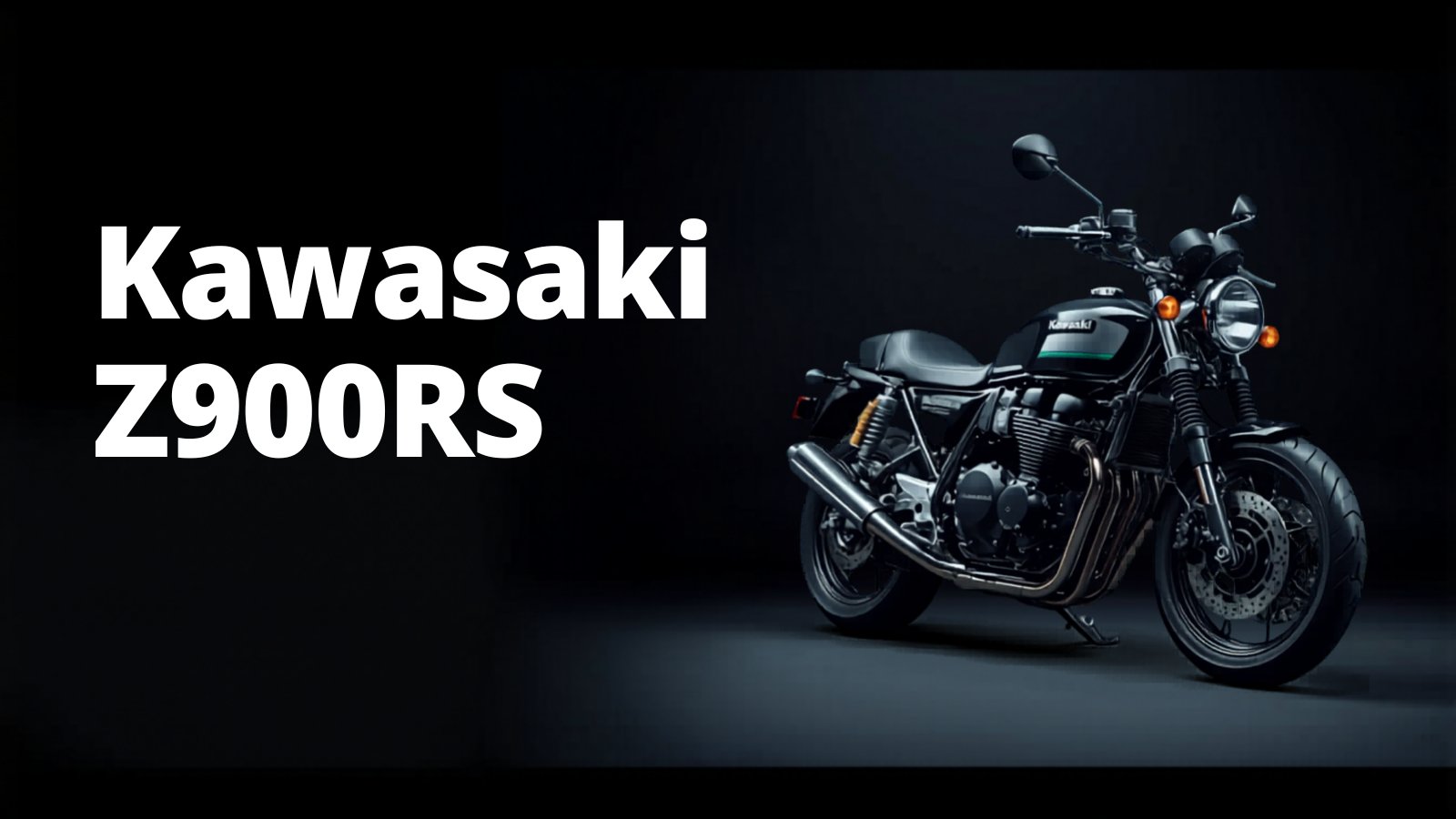
The Kawasaki Z900RS arrived in 2018 and immediately did something few modern motorcycles manage: it made people feel something. The retro Z1-inspired silhouette, the round headlight, the four-into-four exhaust — Kawasaki had built a genuine modern classic.
In Japan, the Z900RS became one of the best-selling middleweights of its generation. Thousands of examples have passed through Japanese domestic market auctions, and the supply of well-maintained, lower-mileage bikes is excellent. For UK buyers who want one of the most desirable retro nakeds on the road without paying UK dealer prices, Japan is the obvious source.
This guide covers everything: what to look for in the auction listings, what the total cost actually adds up to, how MSVA applies to post-2016 Z900RS imports, and how to go from winning a bid to riding on UK roads.
Why the Z900RS Makes Sense as a Japan Import
The Z900RS is built in Japan for a Japanese audience that takes maintenance seriously. The JDM supply is deep — BDS (the dedicated Japanese motorcycle auction) lists multiple Z900RS examples every week — and Japanese owners tend to keep their bikes garaged, serviced, and protected from salt-road exposure.
The practical case for importing one is straightforward:
- Price gap: A 2020 Z900RS at UK dealers typically lists at £9,500–£11,000. A comparable Japanese auction example lands in the UK for £7,000–£9,000 fully registered — a saving of £1,500–£2,500 on the same bike.
- Colour options: Japan received exclusive colourways not available in the UK market — including the original Candytone Brown and Green variants that are highly sought after.
- Condition: Grade 3.5 and Grade 4 examples are abundant, with many bikes showing under 10,000 km at auctions.
- SE availability: The Z900RS SE with Öhlins suspension is sold in Japan at volumes that make finding a good example realistic; in the UK they are comparatively rare on the used market.
Japan also produced the Z900RS Café — a half-faired variant with a small bikini fairing and slightly different ergonomics. Supply is lower than the standard Z900RS but examples do appear regularly at BDS. The Café commands a modest premium and is equally importable.
Model Year Guide: What Changed and When
The Z900RS has been refined across several model years. Knowing the key differences helps you prioritise your auction search.
| Year | Key Changes | Notes for UK Buyers |
|---|---|---|
| 2018 | Launch model. 948cc inline-4, 111 PS. Three riding modes. Candy Tone Brown launch colour. | Oldest available. Most affordable. Check for high mileage. |
| 2019 | Minor refinements. SE variant introduced (Öhlins front and rear, premium colour). | SE becomes available. Good value on standard models. |
| 2020 | Colour updates. Continued SE production. | Strong supply. Recommended sweet spot for value. |
| 2021 | Euro 5 compliance updates (engine management refinement). Minor styling updates. | Euro 5 bikes may have slightly different fuelling characteristics. |
| 2022–2024 | 50th anniversary editions. SE continues. Limited colourways. | Higher auction prices for anniversary editions. Worth a premium for collectors. |
For most UK buyers seeking the best combination of price and condition, 2019–2021 examples at Grade 3.5 or 4 represent the strongest value.
What to Check on the Auction Sheet
The Z900RS is generally a robust and reliable machine, but specific areas are worth scrutinising on every auction sheet.
Engine and mechanicals
The 948cc inline-four is derived from the Z900 — a well-proven unit with no major known reliability issues. On the auction sheet, verify that the mileage aligns with the physical wear indicators (tyre depth, brake pad thickness, chain condition). Bikes showing under 10,000 km with Grade 3.5 condition are common and should be prioritised.
Exhaust condition
The four-into-four exhaust is the Z900RS's visual signature and also its most maintenance-intensive component. Check for U codes (rust) on the exhaust headers — U1 surface corrosion is cosmetic, but U2 or U3 on header pipes or collector sections indicates more significant corrosion. Many Japanese owners fit aftermarket systems (flagged as Y codes on the sheet); verify the system is a UK-road-legal type if possible.
Frame and swingarm
Any condition codes plotted on the frame or swingarm require immediate scrutiny. The Z900RS uses a conventional steel trellis frame which, while robust, should be free from repair codes (R or RA suffix). A frame that has been repaired affects both structural confidence and resale value.
Cosmetic focus areas
The Z900RS's retro styling uses chrome details and polished surfaces that show wear more visibly than matte-finished modern bikes. Pay attention to:
- Tank condition (B codes for dents, A codes for scratches)
- Chrome fork legs (A or U codes for surface marks)
- Side covers and seat cowl (P codes if repainted)
- Wheel rim condition (A codes for kerb rash)
A Grade 3.5 Z900RS with minor tank scratches or small chrome marks is mechanically identical to a Grade 4 example — and typically £500–£1,000 cheaper at auction. The Z900RS responds extremely well to professional detailing; most Grade 3.5 marks polish out or are invisible on the road.
Total Cost Breakdown: Z900RS Import to the UK
Here is a realistic cost model for a 2020 Z900RS import from Japan to a UK registration plate.
| Cost Component | Typical Range | Notes |
|---|---|---|
| Auction hammer price | ¥700,000–¥950,000 | £3,800–£5,200 at current rates |
| Japanese agent / AWA fee | £300–£500 | Bid management and export handling |
| Japan export costs | £200–£350 | Deregistration, export certificate |
| Shipping (RoRo) | £450–£650 | Japan to UK, 4–6 week transit |
| UK import duty (6.7%) | £350–£480 | On CIF value (cost + insurance + freight) |
| UK VAT (20%) | £1,050–£1,450 | On CIF value + duty |
| Customs clearance | £150–£250 | Agent handling at UK port |
| MSVA test | £136 + prep | Required for 2018+ bikes; speedometer swap needed |
| MOT + UK registration | £100–£150 | MOT, DVLA V55/5 fee |
| Total estimated | £6,500–£9,200 | Depending on auction grade and year |
Compare this with UK dealer prices of £9,500–£11,000 for equivalent models, and the import route delivers a meaningful saving — particularly on Grade 4 or SE examples that are harder to find in the UK used market.
For a full explanation of every cost component, see our complete import cost breakdown guide.
MSVA and Registration: What Z900RS Buyers Need to Know
The Z900RS was launched in 2018 — which means every example is a post-2016 motorcycle. This has a direct consequence for UK buyers: all Z900RS imports will require an MSVA test unless the specific bike holds EU or UK whole vehicle type approval (which JDM models do not).
What MSVA preparation involves for the Z900RS
Speedometer: JDM Z900RS instrumentation is km/h only. UK MSVA requires mph display (or dual mph/kph). A replacement instrument cluster from the UK-market Z900RS (same part, different calibration) is the cleanest solution. Dual-reading digital dash overlays are an alternative.
Indicators: Check the indicator configuration on the specific bike's auction sheet. Some JDM Z900RS models use amber rear indicators that comply with UK standards; verify this before the test.
Exhaust noise: Aftermarket exhausts — common on Japanese owner bikes — must meet UK noise limits. If the auction sheet shows a Y code (modification) on the exhaust, factor in a potential exhaust replacement or decibel measurement before MSVA.
The MSVA test adds approximately 4–8 weeks to your import timeline from port arrival. Budget £136 for the test fee and allow for speedometer preparation (typically £200–£400 for a cluster swap on the Z900RS).
Every Kawasaki Z900RS import requires MSVA. This is not optional and cannot be bypassed. Factor the test fee, preparation costs, and timeline into your import plan from the moment you start bidding. For the full MSVA process and what to expect, see our MSVA Test Guide.
The Registration Process Step by Step
Once your Z900RS has cleared customs and passed MSVA, the UK registration process follows a defined sequence:
- NOVA notification — file within 14 days of UK arrival via HMRC online
- MSVA preparation — fit UK-compliant speedometer, verify indicators and exhaust
- MSVA test — book at a DVSA test centre; allow 2–6 weeks waiting time
- MOT test — standard MOT at any authorised station once MSVA certificate issued
- DVLA V55/5 application — submit with NOVA reference, import documents, MSVA certificate, and MOT
- V5C logbook received — typically 4–6 weeks after DVLA application
Total timeline from port arrival to riding: allow 8–14 weeks when MSVA is required. For a complete week-by-week breakdown, see our full import timeline guide.
Z900RS SE: Is the Premium Worth It?
The SE variant adds Öhlins NSF30MA front forks and Öhlins S46DR1 rear shock — components that retail at over £2,000 if purchased separately. In Japan, the SE commands a typical auction premium of 20–35% over the standard model.
Whether that premium is worth it depends on what you plan to do with the bike. For road riding, the standard Z900RS suspension performs well for most riders. For spirited back-road use, canyon carving, or track days, the Öhlins hardware is genuinely transformative and difficult to replicate for less money than the auction premium.
If you are weighing SE vs standard, consider: a standard Z900RS at Grade 3.5 with £1,500 in Öhlins aftermarket components is a comparable outlay to an SE at Grade 4 auction price — but the SE gives you factory geometry and tuning from the outset.
Ready to Source Your Z900RS
The Kawasaki Z900RS is one of the most compelling modern imports available through Japanese auction channels. The supply is consistent, the condition of available examples is strong, and the savings versus UK dealer prices are real.
AWA monitors BDS and other major Japanese motorcycle auctions to source Z900RS examples across all model years and grades. Browse current listings or contact AWA directly to discuss your specific requirements — year, grade, colour, and budget.
Related guides: Total Import Cost Breakdown · MSVA Test Guide · Import Timeline Guide
See Also
Share this article: