
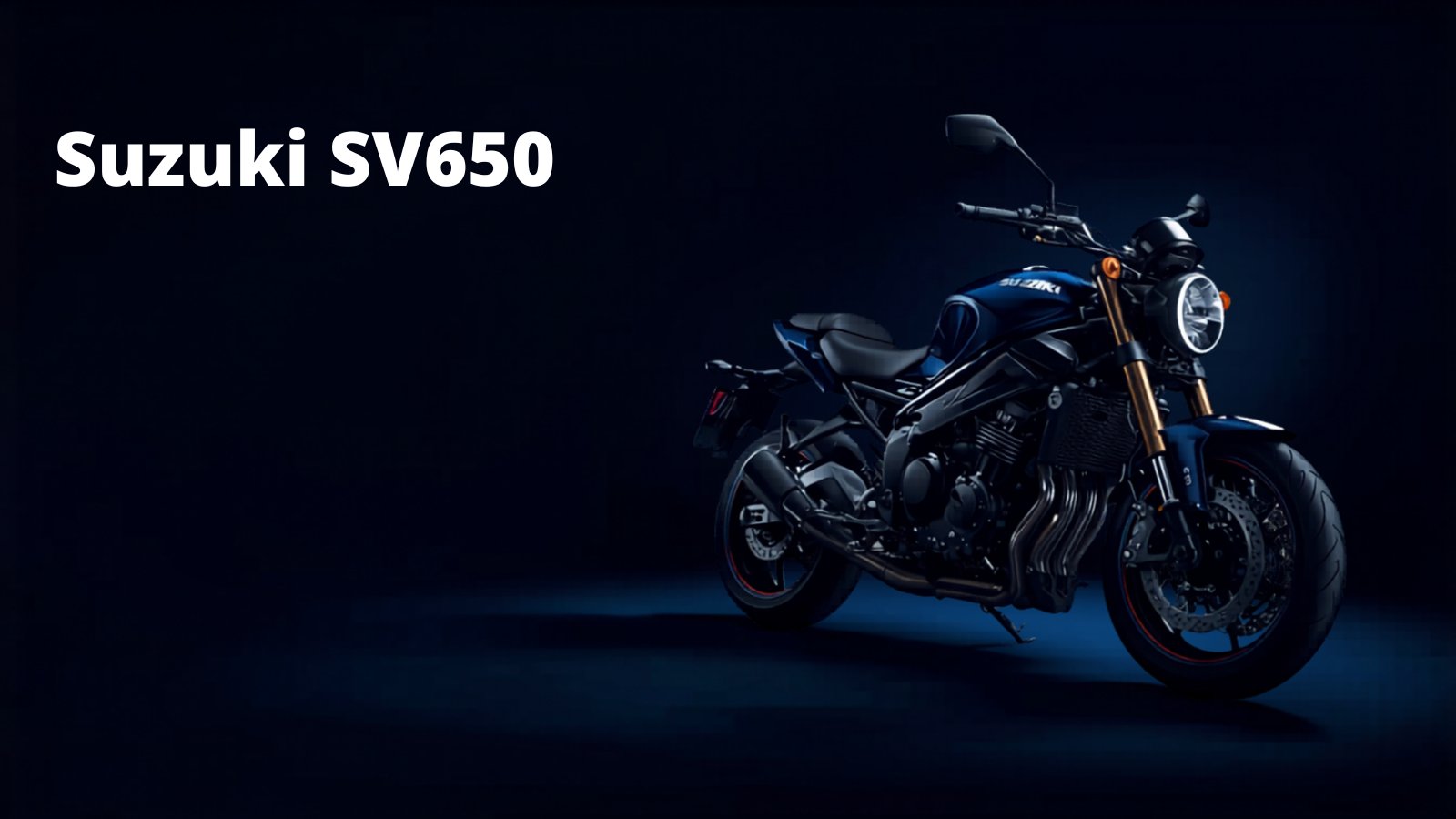
The Suzuki SV650 has been making the same argument since 1999: that a 645cc V-twin, a lightweight chassis, and sharp, honest handling deliver more real-world enjoyment per pound than almost anything else on the market. Twenty-five years on, that argument still holds — and Japan is the best place to find one.
In Japan, the SV650 built a loyal following across all three generations. Auction supply through BDS and other domestic market channels is deep, particularly for Gen 2 (2003–2012) and Gen 3 (2016–present) examples. Japanese ownership standards — regular servicing, careful storage, and low annual mileage — mean Japanese SV650s consistently arrive in better condition than equivalent domestic used market examples at comparable prices.
This guide covers which generation to target, the MSVA split between pre- and post-2016 models, total landed costs, and what to look for on every auction sheet.
Why the SV650 Makes a Strong Import Choice
The SV650's import case rests on a combination of factors that few other models can match:
- MSVA-exempt generations available: Gen 1 (1999–2002) and Gen 2 (2003–2012) are pre-2016 motorcycles and exempt from the MSVA test. This simplifies registration significantly and saves £300–£500 in preparation and test costs.
- Price gap on Gen 3: A 2018 Gen 3 SV650 at UK dealers typically lists at £4,500–£5,500. A comparable Japanese auction example lands fully registered at £4,000–£5,000 — saving £1,000–£1,500 on the same bike.
- Exceptional supply: The SV650 is one of the most consistently available middleweights at Japanese auction. BDS lists multiple examples weekly across all three generations, providing flexibility on model year, mileage, and condition grade.
- V-twin character: The 645cc 90° V-twin's torque delivery, exhaust note, and riding feel are categorically different from the inline-fours that dominate the UK used market. For riders who want something genuinely distinctive, the SV650 is the entry point.
- Proven reliability: The SV650 engine is among the most durable in its class. High-mileage examples with proper service history are common and dependable. Long-term maintenance costs compare favourably with four-cylinder alternatives of similar output.
If registration simplicity is your priority, a Gen 2 SV650 (2003–2012) is one of the strongest options available. Pre-2016 models bypass the MSVA test entirely — registration requires only a UK MOT and DVLA application. Most buyers are on UK plates within four to six weeks of the bike leaving Japan, without the additional four-to-eight week MSVA booking wait.
Model Year Guide: SV650 Generations
The SV650 has evolved through three distinct generations, each with its own strengths for UK importers.
| Generation | Years | Key Characteristics | Notes for UK Buyers |
|---|---|---|---|
| Gen 1 | 1999–2002 | 645cc V-twin, carbureted. Aluminium twin-spar frame. Naked (SV650) and half-faired (SV650S) variants. ~73 PS. | MSVA exempt. Lowest prices. Higher mileage common. Best for budget-conscious buyers. |
| Gen 2 (carb) | 2003–2006 | Revised styling and bodywork. Carbureted. Same mechanical basis as Gen 1 with refinements. | MSVA exempt. Good supply. Carb jetting may need adjustment for UK fuel. |
| Gen 2 (FI) | 2007–2012 | Fuel injection introduced. Improved throttle response and cold-start reliability. Same proven chassis. | MSVA exempt. Best of Gen 2 — FI reliability at lower prices than Gen 3. Recommended sweet spot. |
| Gen 3 | 2016–present | Revised 645cc engine, 76 PS. New aluminium frame. Full LED lighting. ABS standard from 2019. Updated instruments. | MSVA required. Most modern specification. Strong supply. Best for buyers who want current-generation technology. |
For buyers prioritising simplicity and lowest total cost, 2007–2012 Gen 2 examples at Grade 3.5 or above represent the best value in the range. For buyers who want the current-generation engine and modern specification, 2018–2021 Gen 3 examples offer the best combination of features, supply, and price.
What to Check on the Auction Sheet
The SV650 is one of the more forgiving middleweights to evaluate at auction — the engine is robust across all generations, the chassis is straightforward, and common issues are well-documented.
Frame and chassis
The SV650's aluminium frame is highly resistant to crash damage in minor incidents. Look at the damage diagram for condition codes on the frame rails and swing arm. Single codes on bodywork panels are routine and typically cosmetic; codes on the frame itself or steering head warrant additional photo evidence and, where possible, a pre-purchase inspection before bidding.
Fuel tank and bodywork
Gen 1 and Gen 2 panels are available through aftermarket suppliers and are inexpensive by sports bike standards. Gen 3 panels are newer and costlier to replace. On SV650S models, check the condition codes for the nose fairing and side panels separately — a full fairing replacement on an S-spec bike adds meaningful cost to your import.
Engine and drivetrain
The 645cc V-twin across all generations is notably reliable. Cross-reference stated mileage with chain wear rating and brake pad thickness — consistent wear across all three suggests an honest odometer reading. Any discrepancy warrants caution.
On higher-mileage Gen 1 and early Gen 2 examples (40,000 km+), look for references to valve clearance servicing in the inspection notes. The SV650's valve service interval is longer than many four-cylinders, but high-mileage examples with no documented service history should be assessed carefully. Bikes with documented dealer servicing (整備手帳あり) are preferable for older examples.
Exhaust system
The SV650's V-twin exhaust note is a significant part of its character, and many Japanese owners fit aftermarket canisters. The auction sheet flags any non-standard exhaust with a Y code. For MSVA purposes on Gen 3 models, verify that any aftermarket system is road-legal rather than race-specification. Standard OEM exhausts on all SV650 generations comply with UK noise regulations without modification.
Gen 1 and early Gen 2 (pre-2007) SV650s use carburetors optimised for Japanese domestic fuel specifications. UK fuel differs slightly, and some imported carb-model SV650s benefit from a minor rejetting after arrival. This is a straightforward and inexpensive procedure (typically £50–£100 at a workshop), but worth factoring into your budget. FI models (2007+) have no such consideration.
Total Cost Breakdown: SV650 Import to the UK
| Cost Component | Gen 2 FI (2007–2012) | Gen 3 (2018–2021) |
|---|---|---|
| Auction hammer price | ¥150,000–¥320,000 (£830–£1,760) | ¥350,000–¥580,000 (£1,930–£3,200) |
| Japanese agent / AWA fee | £300–£500 | £300–£500 |
| Japan export costs | £200–£350 | £200–£350 |
| Shipping (RoRo) | £450–£650 | £450–£650 |
| UK import duty (6.7%) | £110–£190 | £195–£305 |
| UK VAT (20%) | £340–£570 | £585–£910 |
| Customs clearance | £150–£250 | £150–£250 |
| MSVA test + prep | Not required (pre-2016) | £300–£500 |
| MOT + UK registration | £100–£150 | £100–£150 |
| Total estimated | £2,480–£4,420 | £4,010–£6,815 |
UK dealer prices for 2018–2021 Gen 3 SV650s typically run from £4,500–£5,800 for good used examples, making the import route a consistent £1,000–£1,500 saver. For Gen 2 examples, the domestic used market price has compressed over time, so the import advantage is primarily condition and choice of specification rather than outright cost.
For the complete cost methodology, see our full import cost breakdown guide.
MSVA: The Pre- and Post-2016 Split
The SV650 is one of the few motorcycles where the MSVA decision is determined entirely by which generation you choose — and where the earlier generation carries a meaningful registration advantage.
Gen 1 and Gen 2 (1999–2012): MSVA exempt
All SV650 and SV650S models manufactured before 1 January 2016 are MSVA exempt, provided they have not been substantially modified. This covers every Gen 1 (1999–2002) and Gen 2 (2003–2012) example. Registration requires a UK MOT and DVLA application — no MSVA test, no booking wait, no preparation checklist beyond the MOT itself.
This is a meaningful practical advantage. MSVA-exempt bikes can go from UK port arrival to UK registration in as little as two to three weeks. For buyers who want the simplest possible route to riding, the Gen 2 SV650 is one of the strongest candidates in any price range.
Gen 3 (2016+): MSVA required
Every Gen 3 SV650 (2016 onwards) requires MSVA before UK registration. The SV650 Gen 3 is well-suited to MSVA preparation — it is a conservative, road-focused machine with no exotic features that cause compliance issues.
Speedometer: JDM Gen 3 instruments are km/h only. The most common preparation is fitting a UK-market SV650 instrument cluster (direct swap, mph calibrated) or an aftermarket dual-reading unit. Budget £100–£250.
Indicators: Standard JDM Gen 3 indicators are typically UK-compliant in size and colour. If the auction sheet shows aftermarket indicators (Y code), verify compliance before the test.
Exhaust: Any aftermarket exhaust must be road-legal for MSVA. A race-specification canister requires replacement before the test appointment.
MSVA adds approximately four to eight weeks from UK port arrival to test completion. For the full process, see our MSVA Test Guide.
Suzuki paused SV650 production between 2013 and 2015. There are no factory SV650s from these years — the gap was bridged in some markets by the Gladius (SFV650). If a Japanese auction listing shows a 2013, 2014, or 2015 SV650, investigate carefully before bidding. Gen 2 ended with 2012 production; Gen 3 began in 2016. This gap also means there is no "late Gen 2" version — the last carryover is 2012.
SV650 vs MT-07: Choosing Your Middleweight Import
For UK buyers considering a Japanese middleweight import, the SV650 and Yamaha MT-07 are the two most natural alternatives. Both deliver engaging character at similar price points, but they represent fundamentally different approaches to the same brief.
| Suzuki SV650 (Gen 3) | Yamaha MT-07 | |
|---|---|---|
| Engine | 645cc V-twin, 76 PS | 689cc parallel twin, 73 PS |
| Character | V-twin torque, distinctive exhaust note | High-revving, linear power delivery |
| Weight | ~197 kg wet | ~193 kg wet |
| MSVA exemption | Gen 2 (pre-2016) exempt; Gen 3 required | Required (all examples, 2014+) |
| Total import cost (2018–2020) | £4,000–£6,800 | £4,500–£7,000 |
| Best for | V-twin character, MSVA-exempt option, budget flexibility | Sportier, more aggressive riding experience |
The SV650 offers something the MT-07 cannot: a clear path to UK registration that avoids MSVA entirely via the Gen 2 range. For buyers who value the simplest registration process, or who specifically want V-twin character, the SV650 wins the comparison. For buyers who want the most engaging sportier riding experience and can accept MSVA, the MT-07 is the stronger alternative.
See our Yamaha MT-07 Import Guide for a full breakdown of that model's import process.
Ready to Source Your SV650
The Suzuki SV650 is one of the most versatile options in the Japanese import market. Whether you want a 2010 Gen 2 on UK plates without MSVA, a 2020 Gen 3 in a Japan-exclusive colour, or an SV650S half-fairing at a price that beats UK dealer stock, AWA monitors BDS and other major Japanese auction houses to find the right example.
Browse current SV650 listings on AWA or contact AWA to discuss your requirements before the next auction session.
Related guides: Yamaha MT-07 Import Guide · MSVA Test Guide · Total Import Cost Breakdown
See Also
Share this article: