
Here's a sentence that should make every adventure rider stop scrolling: the bike Adam Riemann rode to the Arctic Circle in his Warhorse film — a battered 1992 Honda XRV750 Africa Twin — has been watched over 2 million times on YouTube, and you can buy that exact model out of Japan today for less than the price of a year's worth of payments on a new GS. If you want the best adventure motorcycles to import from Japan, you are not chasing some unicorn. You are chasing a market that Japan has quietly stocked for forty years.
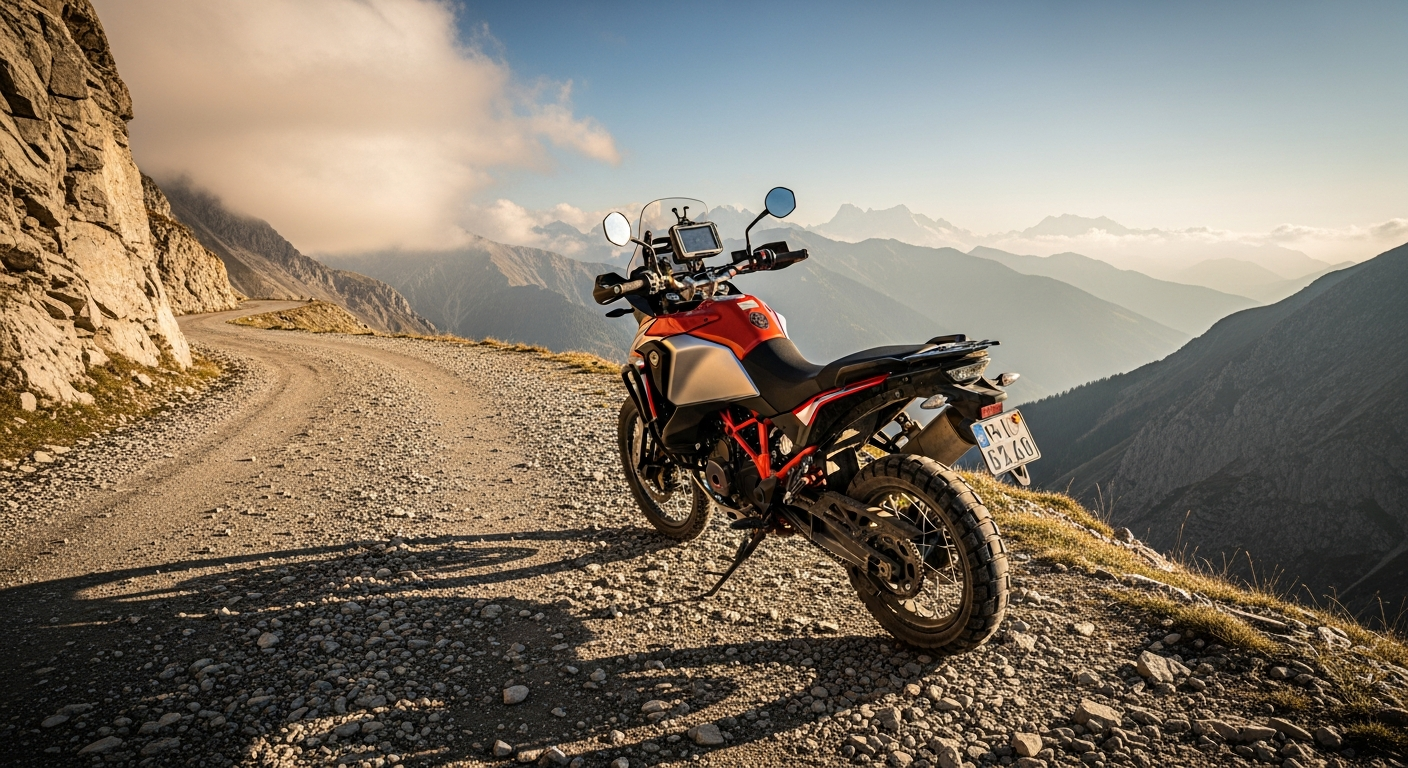
Japan built adventure and dual-sport bikes that the rest of the world either never got, got in tiny numbers, or scrapped decades ago. The Japanese keep them clean, ride them gently, get them inspected obsessively, and then sell them through auctions where a foreign buyer with the right agent can pick them off for a fraction of local used prices. This guide walks through which adventure bikes are actually worth importing, what they cost landed on your driveway, which ones are legal in your country, and how to avoid the traps that catch first-time importers.
We do this for a living at AWA Auction, so the numbers here come from real auction sheets and real shipping invoices — not a press kit.
Why Japan is the smartest place to buy an adventure bike
Three things make Japan the best hunting ground for adventure and dual-sport machines, and none of them are marketing fluff.
First, the bikes are genuinely well kept. Japan's shaken inspection regime, cheap-ish storage culture, and a population that tends to baby its machines mean the average used adventure bike in a Japanese auction has lower miles and better history than the same model sitting in a Western classified. An Africa Twin that did 35,000 hard adventure miles in Europe and one that did 18,000 commuter-and-weekend miles in Osaka are not the same bike, even if the year matches.
Second, Japan got models nobody else did. The Yamaha Serow, the Suzuki Djebel, the Honda XLR and SL230, half the Tenere family — these are bread-and-butter machines in Japan and grey-market legends everywhere else. If you want a lightweight, bulletproof dual-sport that isn't a $9,000 new-bike compromise, Japan is where the deep inventory lives.
Third, the price gap is real. The same money that buys you a tired, twice-crashed adventure bike locally buys you a clean, inspected, lower-mileage one at a Japanese auction — even after shipping, duty, and our fee. We break the exact numbers down later, but the short version is that landed cost from Japan routinely undercuts local "good condition" pricing by 20–40%.
Browse what's crossing the auction blocks right now on our current listings — adventure and dual-sport stock moves fast.
The two worlds of Japanese adventure bikes
Before you start bidding, you need to know that "adventure bike from Japan" splits into two completely different buying decisions, with different budgets, different shipping considerations, and different buyers.
World one: the big-twin globe-crossers. These are the bikes built to cross continents two-up with luggage — Honda Africa Twin, Suzuki V-Strom 1000, Yamaha Super Tenere, Honda Varadero. Heavy, comfortable, powerful, and increasingly collectible in their first-generation forms. This is where the Africa Twin legend lives.
World two: the JDM dual-sport singles. Light, simple, air-cooled or basic liquid-cooled thumpers that Japan sold by the hundred-thousand and most countries barely saw — Yamaha Serow, Suzuki Djebel and DR, Honda XLR and SL230, Kawasaki Super Sherpa and KLX. These are the smart-money imports: cheap to buy, cheap to ship, and almost impossible to find clean anywhere else.
Here's the thing nobody mentions: most buyers think "adventure" means the 500-pound twin. But for genuine green-laning, trail riding, and learning, the 250cc dual-sport from world two is the one you'll actually use — and it's the one Japan does best.
Adventure, dual-sport, or enduro: getting the terms right before you bid
One reason people buy the wrong bike from Japan is that the words get muddy, and the auction listings won't sort it out for you. Here's the plain-English version so you bid on what you actually mean.
Adventure (ADV): the big, comfortable, road-biased machines built to cover long distances with luggage and occasionally venture onto gravel. Africa Twin, V-Strom, Super Tenere, Varadero. Think touring with the option of dirt.
Dual-sport: street-legal but genuinely off-road-capable lightweights. Serow, Djebel, XLR, DR650, KLX. These wear license plates and lights but are happiest on a trail. If your "adventure" involves actual dirt more than highway miles, this is your category — and it's the one Japan stocks deepest.
Enduro: the hardcore off-road end — lighter, more aggressive, sometimes barely street-legal. The DR-Z400 lives near this line. Great fun, less comfortable for distance.
Why does this matter for an importer? Because freight cost, legality, and resale all track the category. A dual-sport ships cheap and clears inspection easily; a big ADV twin costs more to ship but holds value better; an enduro is a specialist tool. Decide which word describes your riding before you start watching auction feeds, and you'll stop wasting bids on the wrong machine. Get the category right and everything downstream — budget, shipping, registration — gets easier.
A quick history: how Japan became the adventure-bike superpower
The adventure bike as we know it was forged in the Sahara, and Japan was there from the start. When the Paris-Dakar Rally captured the world's imagination in the early 1980s, it was the Yamaha XT600 Tenere that became the people's choice — a single-cylinder thumper with a big tank that ordinary riders could buy and actually ride to the edge of the map. The Tenere name still carries that pedigree four decades later.
Honda answered with the NXR750, the works racer that won four Dakar rallies, and then did the clever thing: it turned that race bike into a road bike normal people could buy — the XRV650, then XRV750 Africa Twin. ArtKiz's "Africa Twin Evolution (1986–2025): From NXR750 to CRF1100L" retrospective, with over 1.5 million views, traces that exact line from Dakar racer to modern DCT-equipped tourer. That's the lineage you're buying into when you import an Africa Twin: a genuine Dakar bloodline, not a marketing department's idea of adventure.
Meanwhile, at home, Japan was building a parallel universe of lightweight dual-sports for its own riders — the Serow, the Djebel, the XLR — bikes designed for narrow Japanese trails and tight budgets. The rest of the world never got most of them new. That's why, today, the deepest and cleanest inventory of both worlds sits in one place: the Japanese auction system. Japan didn't just build great adventure bikes; it kept them.
Understanding this history matters when you bid, because it tells you which bikes have collector momentum (the Dakar-lineage twins and limited editions) and which are pure rideable value (the dual-sport singles). Both are worth importing — you just buy them for different reasons.
The legends: Honda Africa Twin (XRV650 and XRV750)
If you only import one adventure bike from Japan, the original Africa Twin is the safe bet. It's the bike that defined the category, it's reliable to a fault, and — per Bennetts' buying guide — clean examples are appreciating, not depreciating. The Honda "Africa Twin Evolution" retrospective by ArtKiz has pulled over 1.5 million views, and that audience is exactly the pool of buyers you'll be selling into later.
The model splits into clear generations. Decode them before you bid, because condition and generation drive price more than mileage does.
XRV650 (RD03) — 1988–1989
The original 650, internal code RD03. Rarest of the lot — it was never officially exported to some markets — and prized for its HRC-built feel and Dakar-replica looks. Bennetts notes clean ones fetch around £3,000 if you can find one, and you mostly find them through Japan. A collector's pick rather than a daily rider.
XRV750 RD04 — 1990–1993
The first 750, more angular bodywork, the value-buy of the range. Bennetts pegs good RD04s at roughly £2,750–£3,500. If you want the classic Africa Twin experience without the collector premium, this is your generation.
XRV750 RD07 — 1993–1995
The redesign most riders consider the sweet spot: rounder lines, refined ergonomics, the look most people picture when they hear "Africa Twin." Clean examples with around 35,000 miles run £4,000–£5,000.
XRV750 RD07A — 1996–2003
The final and most refined version. Critically for importers: thanks to the 25-year rule, 2021 was the first year the RD07A became eligible to import into the US and Australia, and earlier RD07A years keep unlocking month by month. On Bring a Trailer, most Africa Twins sell around $5,000, rarely above $10,000 — and Bennetts explicitly notes prices are "on the up." Buy now, not in three years.
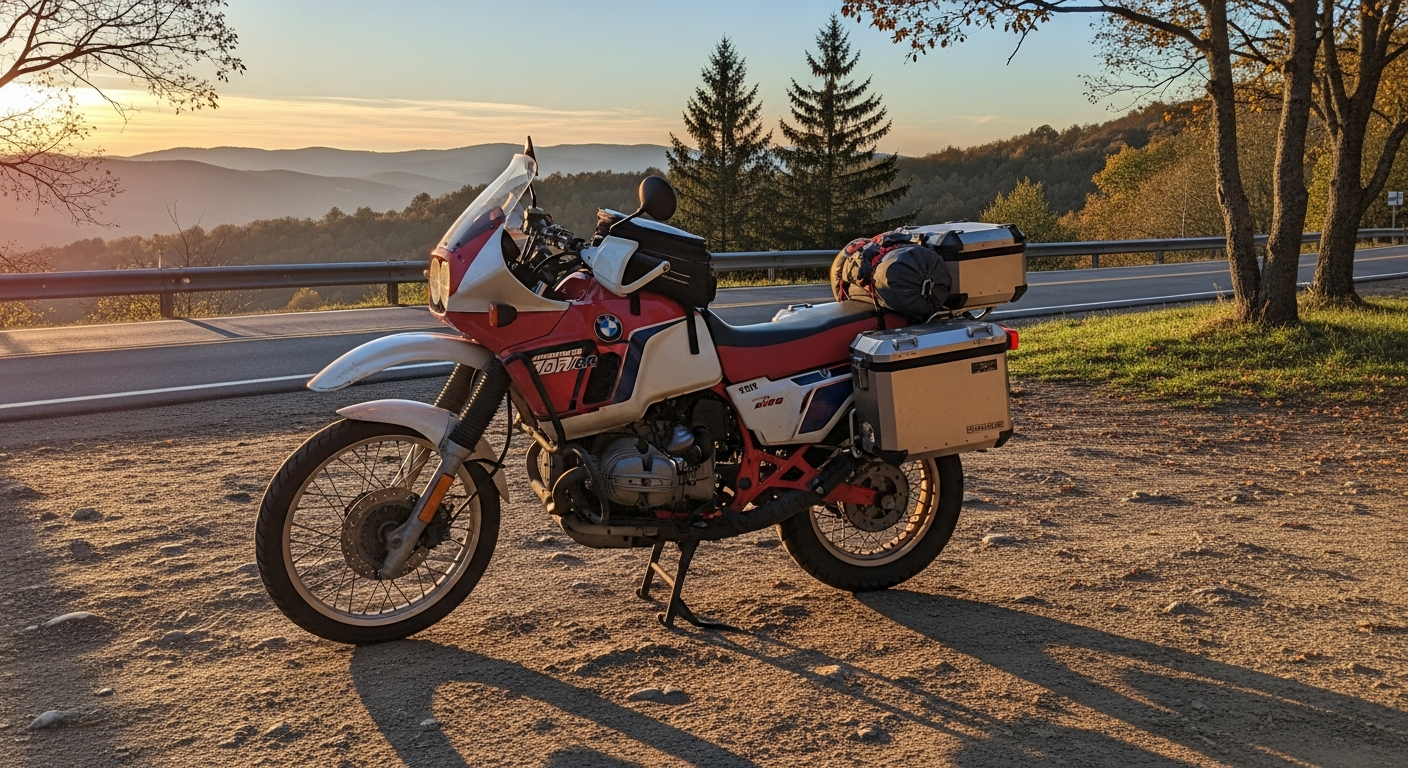
Adam Riemann's two Africa Twin films — the Arctic Circle Warhorse ride (2M+ views, 2,457 comments) and his XRV750 restoration (675k views, 1,505 comments) — are the single best free research you can do on what these bikes are like to own hard. Watch the comments: they're full of owners quoting real running costs and known faults.
JDM-exclusive dual-sports you can basically only get from Japan
This is the section the generic "10 best adventure bikes" lists never write, because their writers have never tried to actually source one. These are the lightweight dual-sports Japan sold for decades and the rest of the world got in trickles — if at all. They are the reason an importer beats a local dealer.
Yamaha Serow (XT225 / XT250)
The Serow is the cult lightweight. Built from 1986 all the way to 2020, it's a sub-100kg, low-seat, go-anywhere thumper with a fanatical following. Yamaha sent off the line with a 2020 Serow Final Edition — just 4,000 units at ¥535,000 each, with buyers getting a commemorative wood camping mug for 35 years of loyalty. That kind of send-off tells you how the Japanese feel about this bike. Clean Serows are everywhere in Japanese auctions and almost nowhere else.
Suzuki Djebel 200 / 250
The Serow's eternal rival. The Djebel 250XC came with a long-range tank and electric start — a genuine mini-adventure bike before "mini-adventure" was a marketing category. In Japan they're plentiful and cheap; outside Japan they're grey-market gold.
Honda XLR250 / XLR-BAJA / SL230
Honda's air-cooled and liquid-cooled trail singles. The XLR-BAJA with its twin headlights is one of the most charismatic small dual-sports ever built, and the SL230 is the friendliest learner trail bike going. Both are JDM staples.
Kawasaki Super Sherpa & KLX250
Kawasaki's underrated lightweights. The Super Sherpa is a 250 that splits the difference between Serow simplicity and KLX sportiness, and the KLX250 is the trail bike that refuses to die.
Spoiled for choice barely covers it. Honda also sold the SL230 and the playful FTR223 as friendly, low-seat trail bikes that make superb first dual-sports, and Kawasaki's KLX250 in its many JDM versions is the lightweight that simply refuses to die. The point is that Japan's dual-sport bench is deep enough that whatever your height, budget, and skill, there is a clean, sorted bike with your name on it waiting at auction.
Why does this matter for importing? Because these bikes are light. A 110kg dual-sport ships cheaper than a 230kg twin, clears inspection easily, and lands for an all-in cost that often beats buying a worn-out example locally. If your "adventure" is weekend green lanes rather than crossing the Sahara, world two is where the value is.
The middleweight all-rounders
Between the lightweight singles and the heavy first-gen twins sits the practical middle — the do-everything bikes that handle a commute on Monday and a gravel trip on Saturday.
Suzuki V-Strom 650 and 1000 (DL650 / DL1000): The internet's favorite value adventure bike. The DL1000's torquey V-twin and the DL650's bulletproof SV-derived engine make these the easy recommendation. Comfortable, brisk, and — per MCN's used-bike guide — "great value all-rounders."
Yamaha XT600 Tenere and Super Tenere (XTZ750 / XT1200Z): The Tenere name carries Paris-Dakar pedigree going back to the XT600 Tenere, which became an instant hit with Dakar racers. The XTZ750 Super Tenere is a 90s twin that's now firmly in modern-classic territory.
Honda Varadero (XL1000V) and Transalp (XL600V / XL650V / XL700V): Honda's quietly excellent twins. The Transalp in particular is the sensible, under-the-radar all-rounder — comfortable, reliable, and cheap, because nobody hypes it.
Kawasaki KLE500 and Versys: Parallel-twin all-rounders that do 90% of what a big ADV does for half the money and weight.
One more middleweight worth flagging for importers: the Honda XL600/650 Transalp is arguably the most underrated adventure bike Japan ever made. It does everything competently, breaks almost never, and because it never had the Africa Twin's glamour, it stays cheap. For a first import where you want to learn the ropes without risking much money, a Transalp is hard to beat. The same logic applies to the Kawasaki KLE500 — a parallel-twin all-rounder that flies completely under the collector radar, which is exactly why it's a bargain.
And don't overlook the Suzuki DR-Z400 in its various JDM forms. It sits right on the line between dual-sport and enduro, and it has one of the most devoted followings of any bike in this guide. Clean ones are getting harder to find at sensible money everywhere except Japan, where they were sold in numbers.
The best adventure motorcycles to import from Japan, by rider type
The "best" adventure bike depends entirely on what you'll actually do with it. Here's the honest breakdown.
- Your first adventure bike: Suzuki V-Strom 650 or Honda Transalp. Forgiving, cheap to run, hard to break, easy to sell on.
- Genuine off-road and green-laning: Yamaha Serow, Suzuki Djebel 250, or Kawasaki KLX250. Light enough to pick up when (not if) you drop it.
- Two-up touring with luggage: Honda Africa Twin RD07/RD07A or Suzuki V-Strom 1000. Comfort and range over trail ability.
- Budget hero: Suzuki DR650 family or Honda XLR250. The bikes FortNine calls the ones that "built a community" — their DR650 film has 783k views and 1,893 comments of owners proving the point.
- Collector / appreciating asset: XRV650 RD03 or a clean first-gen Super Tenere. Buy clean, store dry, watch it climb.
The 25-year rule and adventure bike import legality by country
This is where dreams meet customs forms. The age of the bike decides whether it's legal in your country, and the rules differ enough that the same Africa Twin can be legal in Canada and illegal in the US.
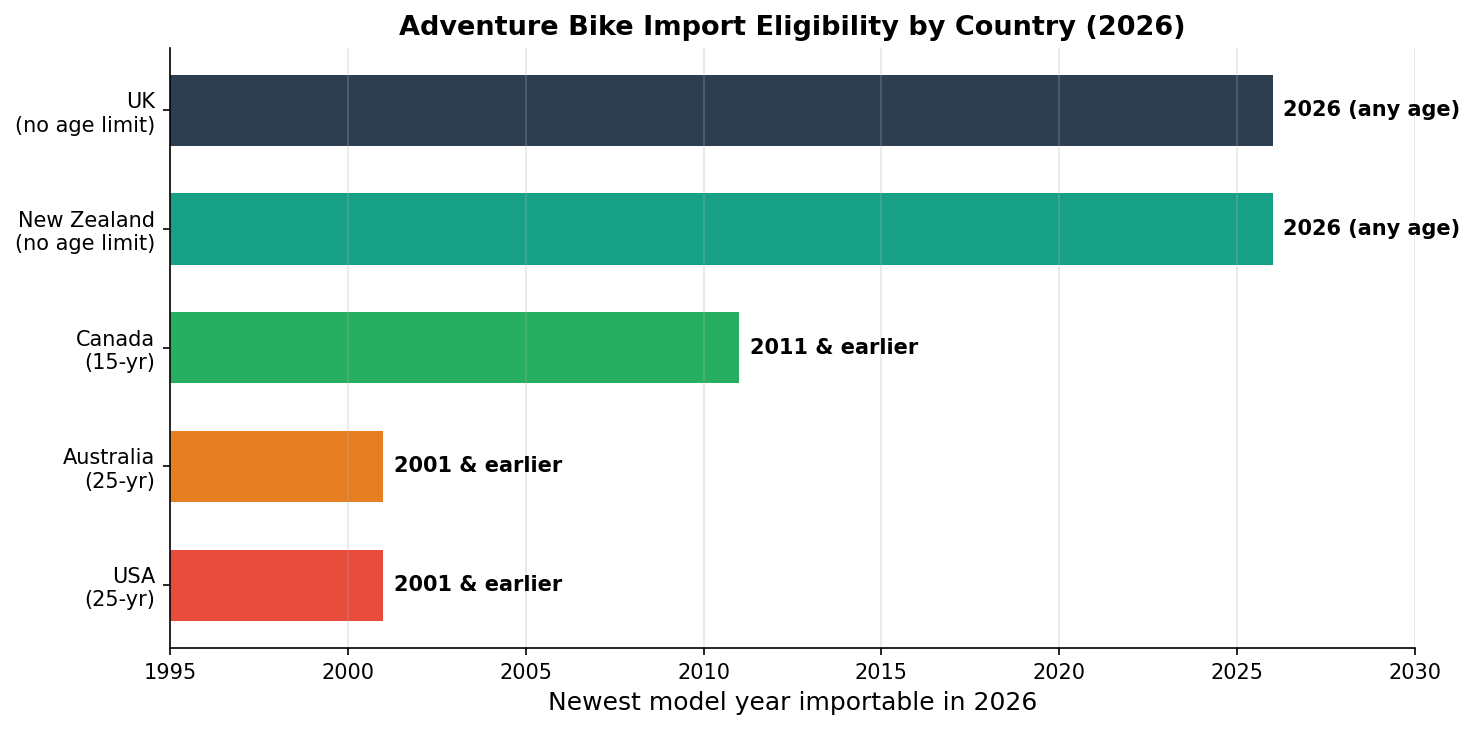
- United States: 25-year rule (NHTSA). As of 2026, anything 2001 or earlier is freely importable — which covers every XRV750 RD04/RD07 and the early RD07A years. Bikes roll into eligibility month by month.
- Australia: 25-year rule, mirroring the US for practical purposes (2001 and earlier). Asbestos inspection applies to all imports.
- Canada: 15-year rule — the big advantage. As of 2026, anything from 2011 or earlier is legal, so even the last RD07A years and many V-Stroms and Teneres qualify a decade before US buyers can touch them.
- New Zealand: No blanket age limit. Bikes over 20 years old skip frontal-impact compliance; newer ones need entry certification. Motorcycles are duty-free, GST only.
- United Kingdom: No age limit either. Older bikes register on an age-related plate; you'll handle NOVA notification and, for newer machines, an MSVA test.
If you're in Canada, the UK, or NZ, your shopping list is dramatically bigger than a US buyer's — you can legally import bikes that Americans will be waiting years for.
What it actually costs: the landed cost of an adventure bike from Japan
Forget the auction hammer price — the number that matters is the landed cost, what the bike costs sitting in your garage with paperwork done. Here's a realistic breakdown for a mid-range adventure twin like an Africa Twin or V-Strom 1000 bought at auction.
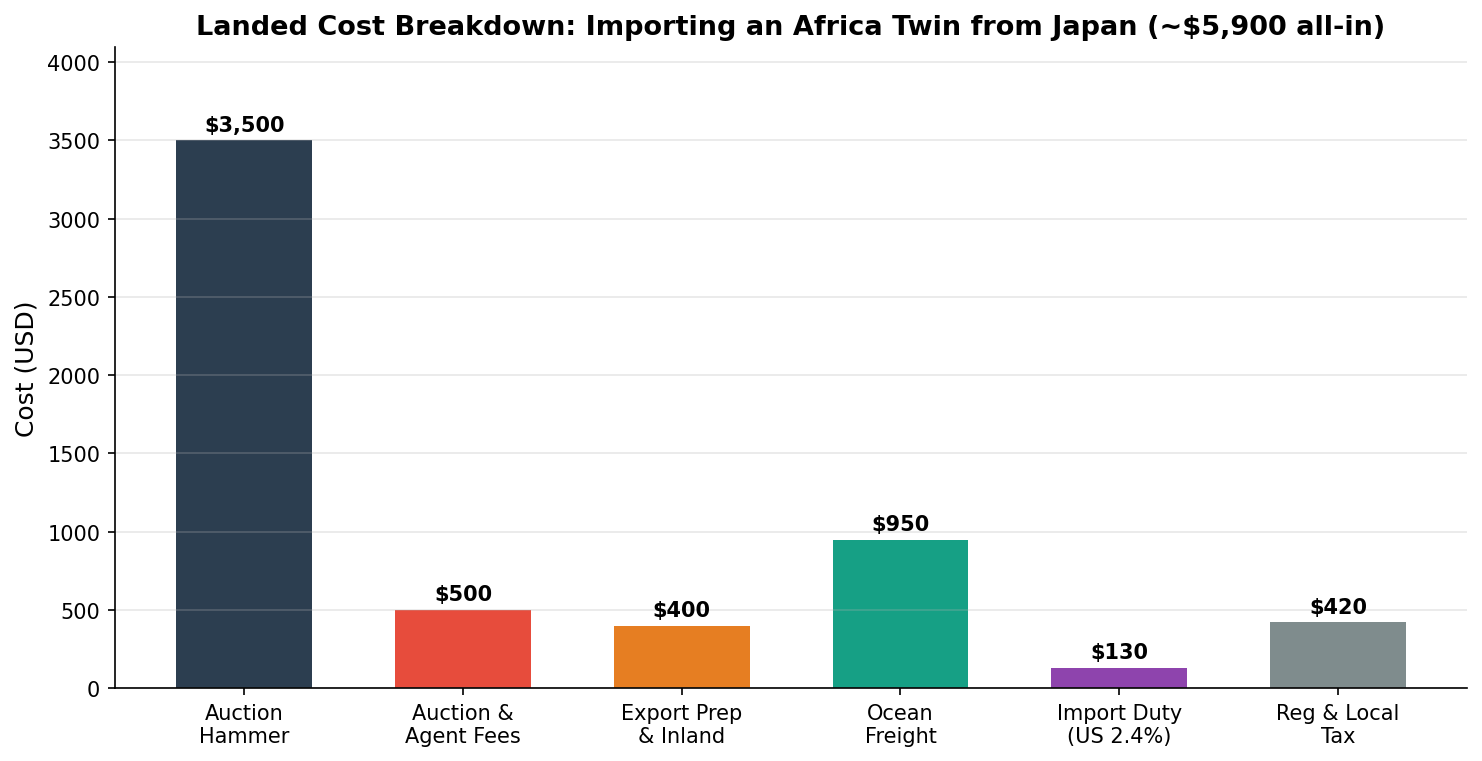
- Auction hammer price: roughly $3,000–$4,500 for a clean Africa Twin or V-Strom; a Serow or Djebel can hammer for $1,500–$2,500.
- Auction & agent fees: around $400–$600 (our fee plus the auction house's cut).
- Inland transport & export prep: $300–$500 (moving the bike to port, deregistration, export documents).
- Ocean freight: $700–$1,200 depending on country and container vs RoRo.
- Import duty: motorcycles attract low or zero duty in most of our markets — the US is 2.4%, the UK/EU around 6%, Australia 5%, NZ and many others zero.
- Local taxes & registration: VAT/GST and rego vary; budget a few hundred to a thousand depending on country.
Add it up and a clean Africa Twin lands for roughly $5,500–$7,500 all-in, and a lightweight dual-sport like a Serow lands closer to $3,500–$4,500. Compare that to local "good condition" prices and the math usually favors Japan — especially once you factor in the better starting condition.
Let's make that concrete with a real-world example. Say you target a 1995 Honda XRV750 RD07 in genuine grade-4 condition. It hammers at roughly $3,500. Add about $500 in auction and agent fees, $400 to move it to port and prep export documents, and $950 for ocean freight to the US West Coast. That's $5,350 before you reach your own country. Add US import duty at 2.4% (about $130 on the bike value), then your state's registration and a sales-tax line that varies, and you're landed at roughly $5,800–$6,200 with paperwork done. A comparable RD07 in clean condition on the US market — if you can even find one — routinely asks $7,000–$9,000, and you have no idea what its 30 years of life looked like. That gap, plus the documented Japanese condition, is the entire argument for importing.
Run the same math on a Serow and the numbers get even friendlier: a $2,000 hammer, lighter freight, and the same low duty land it under $4,000 — for a clean example of a bike that barely exists outside Japan.
Displacement vs landed cost: the adventure segment map
Not all adventure bikes occupy the same value sweet spot. This map plots the popular imports by engine size against their typical all-in landed cost, so you can see at a glance where your budget lands.
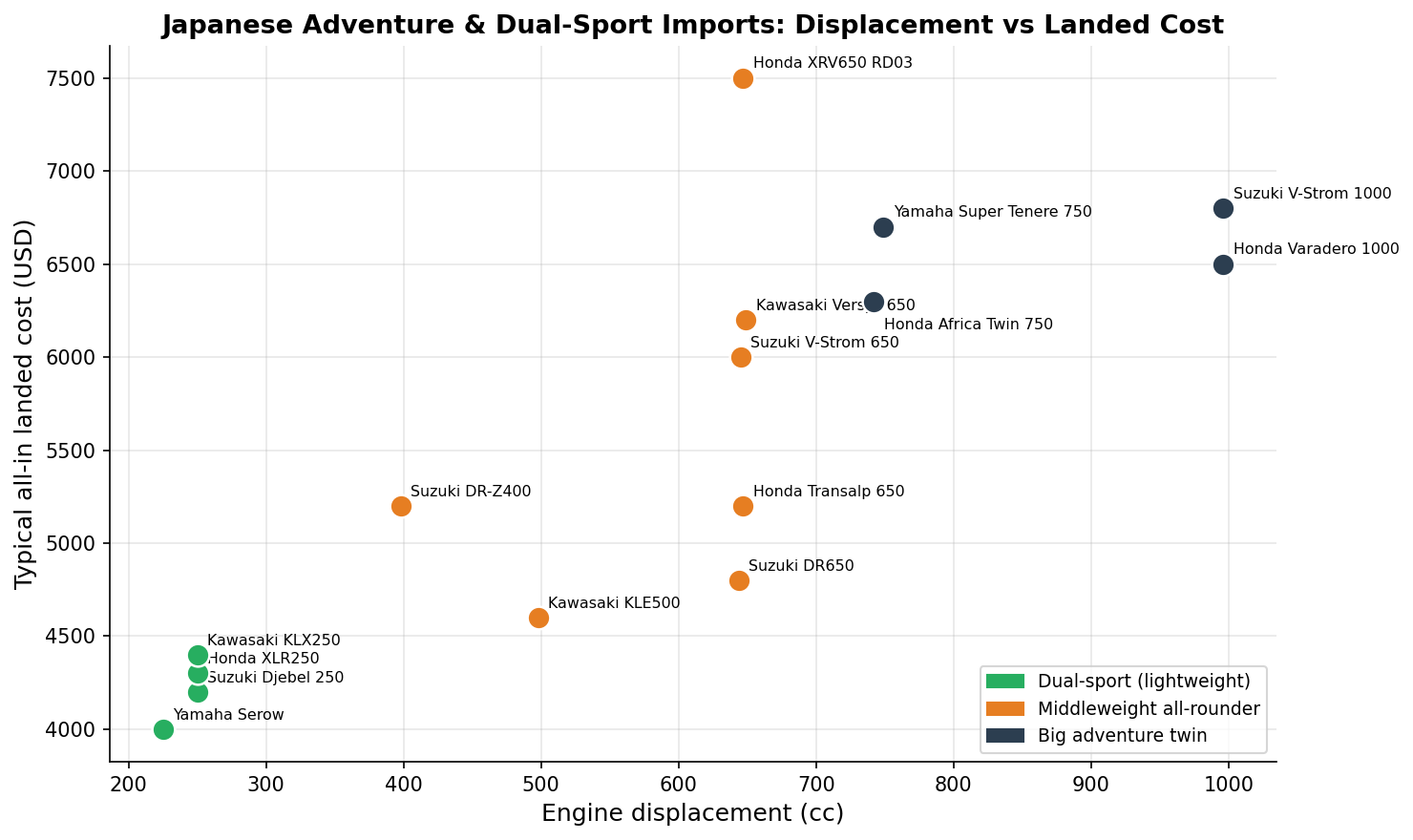
The takeaway: the lightweight dual-sports cluster in the cheap, easy-to-ship corner, the middleweight twins sit in the value middle, and the big first-gen ADV twins occupy the premium-but-appreciating top. There's no wrong answer — only the right answer for how you ride.
How to buy an adventure bike at a Japanese auction
You can't walk into a Japanese motorcycle auction yourself. They're trade-only — BDS (Bike Dealer's System), JBA, and the bike lanes at USS — and you need a licensed agent with a bidding account. That's where we come in, but here's how the flow works so you know what you're paying for.
- Tell us the target: model, year range, budget, and condition floor (we recommend grade 4 / "A" or better for adventure bikes).
- We watch the auction feeds: roughly 15,000 bikes pass through the major houses each week. We flag matching adventure bikes as they're listed.
- We read the auction sheet for you: the inspector's grade, the condition map, the odometer note, and the all-important handwritten remarks. A "修復歴" (repair history) note on an adventure bike that's been off-road needs a careful look.
- We set a max bid and bid on your behalf: you set the ceiling including landed cost, we don't go over it.
- We win, pay, and handle export: deregistration, export certificate, inland transport, and booking freight.
- You clear customs and register: we hand you a clean document pack so your customs broker and local DMV/DVLA have everything they need.
The whole thing takes roughly 6–10 weeks from winning bid to your driveway. If reading auction grades is new to you, our team will walk you through a real sheet before you commit a cent.
Adventure-bike-specific pre-purchase checklist
Adventure bikes lead hard lives, and the auction sheet doesn't tell you everything. Before you set a max bid, factor these model-specific weak points into your numbers.
- Africa Twin (RD04/RD07): check the regulator/rectifier (a known weak spot), water pump seals, and fork seals. The bodywork is expensive and getting rare — cracked panels matter.
- V-Strom: the DL1000's early models can have a snatchy throttle; check the rear shock and the stator. Generally bombproof otherwise.
- Serow / Djebel / XLR (dual-sports): these get ridden in dirt and water. Check the airbox and air filter condition, fork seals, swingarm and linkage bearings, and any rust on the frame and spokes from off-road use.
- Super Tenere (XTZ750): check the carbs (twin-carb air-cooled), the second-gear weakness on high-mile examples, and overall corrosion.
- All of them: valve clearances. A thumper or twin that's never had its valves done will tell you in cold-start rattle. Budget a valve service into your first-year ownership cost.
Cross-reference the auction sheet's inspection map against these. A clean sheet plus a known-good generation is worth paying up for.
A word for the beginners reading this, because the comments sections of every adventure video are full of you. Yes, an adventure bike can be a great first big bike — but pick the right one. A V-Strom 650 or a Transalp is genuinely beginner-friendly: low-stress power, comfortable, forgiving. A lightweight Serow or XLR250 is even better if you want to learn off-road, because dropping a 100kg bike in the dirt teaches you without hurting you or your wallet. What you should not do is import a fully loaded 230kg first-gen Africa Twin as your first bike and expect to enjoy it on a muddy trail. Match the bike to your actual skill and your actual riding, and the import will be the best motorcycle decision you ever make.
One last piece of advice that applies to every bike in this guide: buy on condition, not on price. The cheapest Africa Twin at the auction is cheap for a reason, and the reason is usually written in the inspector's remarks. Pay a little more for a clean grade-4 or better bike with honest history and you'll spend less over the life of the bike than the person who chased the bargain. That's true of any used bike, but it's doubly true of one you're buying sight-unseen from the other side of the planet.
Common mistakes adventure buyers make when importing
We see the same five mistakes over and over. Avoid them and you're ahead of most first-time importers.
1. Buying the heavy twin when you wanted a trail bike. People fall for the Africa Twin romance, import a 230kg machine, and then never take it off the tarmac because it's terrifying in mud. Be honest about your riding. If it's green lanes and gravel, world-two dual-sports are the answer.
2. Ignoring the generation. An RD04 and an RD07A are priced differently for good reasons. Bidding on "an Africa Twin" without knowing which one is how you overpay or end up with the wrong bike.
3. Forgetting the country clock. US buyers especially get burned bidding on a 2003 bike that won't be legal for years. Check your eligibility year before you fall in love with a listing.
4. Skipping the auction sheet remarks. The grade number is a summary; the handwritten notes are the truth. Off-road bikes accumulate cosmetic and structural wear that a "4" grade can still hide. Have someone who reads Japanese auction sheets check it.
5. Underbudgeting the first service. A landed adventure bike usually wants fresh fluids, valve clearances, a chain and sprockets, and tires. Budget $400–$800 for a proper post-import service and you'll never be unpleasantly surprised.
Five adventure bikes from Japan about to appreciate
If you want a bike that's fun and a smart hold, these are the ones our auction data and the collector market both point at.
- Honda XRV650 RD03: the rarest Africa Twin, already climbing, almost only available through Japan.
- Yamaha XTZ750 Super Tenere: a 90s Dakar twin entering modern-classic status while still cheap.
- Yamaha Serow Final Edition (2020): a limited, end-of-an-era model with built-in collectibility — the camping-mug send-off was no accident.
- Honda Africa Twin RD07A (1996–2003): just hitting US/AU eligibility, prices "on the up" per Bennetts — the timing window is now.
- Suzuki DR650 / DR-Z400 (clean JDM examples): the bikes that "built a community"; the good ones only get harder to find.
Japanese adventure bikes vs the European establishment
Walk into any adventure-riding forum and someone will tell you that "real" adventure bikes wear a BMW or KTM badge. The numbers tell a different story. TopSpeed ran an entire feature titled "10 Times Japan Made Better Adventure Bikes Than Europe," and the most-watched comparison videos — like the BMW GS vs Honda Africa Twin clips pulling close to a million views — consistently land on the same conclusion: the Japanese bikes win on reliability and running cost, the Europeans win on showroom dazzle.
Here's the honest comparison for someone importing from Japan.
Reliability. This is not close. A first-gen Africa Twin, a V-Strom, or a Super Tenere will run to 100,000 miles with basic maintenance. The equivalent-era BMW and KTM twins have famous failure points — final drives, electronics, water pumps — that turn a cheap used bike into an expensive used bike fast. When you're importing a bike you can't test-ride, reliability you can trust matters more than usual.
Running cost. Japanese adventure bikes use cheaper, more available consumables and tolerate longer service intervals before something expensive breaks. The old joke that BMW stands for "Brings My Wallet" exists for a reason.
Parts availability. This cuts both ways. Common Japanese ADV parts are everywhere; some JDM-specific bodywork and electrical bits can be a hunt. We cover that below. But mechanically, a Honda twin is a Honda twin the world over.
Where Europe wins. Outright performance, electronics suites, and that intangible "adventure brand" feeling. If you want the newest rider aids and don't mind the maintenance bills, a modern European ADV is a different proposition. But that's not a bike you import 25-year-old from Japan — that's a bike you finance new. For the import buyer, Japan is the value and reliability play, full stop.
The bikes that built the loudest communities — the Suzuki DR650 (FortNine's "The Motorcycle that Built a Community," 783k views) and the KLR650 (FortNine's "Killing the Un-Killable," 2.5 million views, 3,916 comments) — are Japanese for exactly these reasons. People keep them, fix them cheaply, and ride them forever.
Container vs RoRo: shipping your adventure bike home
Once you've won your bike, there are two ways it crosses the ocean, and the right choice depends on the bike and your budget.
RoRo (roll-on/roll-off): the bike is secured on a vehicle deck and rolls on and off the ship. Cheaper, simpler, and fine for a robust adventure bike. The trade-off is that it sits exposed on the deck and you can't pack spares or gear with it.
Container: the bike is crated or strapped inside a shipping container, often sharing the space with other vehicles to split the cost. More protection from weather and handling, and you can legally pack the panniers and a crate of spares. For a valuable first-gen Africa Twin or a collector dual-sport, container is worth the extra few hundred dollars.
For a lightweight Serow or Djebel, the cost difference is proportionally larger because the bike is small, so RoRo often makes sense. For a heavy, valuable twin, container shipping's protection usually justifies itself. We'll quote both so you can decide with real numbers rather than guesswork.
Living with an imported adventure bike: parts, insurance, and resale
The purchase is the easy part. Here's what nobody tells you about the months after your bike lands.
Parts. Service parts — filters, brakes, chains, sprockets, bearings, tires — are no problem; these bikes share components with globally sold models. The hunt is for model-specific bodywork and JDM electrical bits. Buy the cleanest example you can so you're not chasing a cracked fairing for a year, and bookmark the Japanese parts suppliers and Africa Twin owner forums before you need them. For a JDM-only dual-sport like the Serow, owner communities are your parts lifeline — and they're excellent.
Insurance. An imported, older adventure bike is usually cheap to insure precisely because it's old and low-value on paper. In some countries you'll want an agreed-value policy for a clean collector example so a write-off pays out what the bike is actually worth, not a generic book value. Sort this before the bike arrives, not after.
Resale. This is the quiet superpower of importing from Japan. Because you bought below local market and the bike came in better condition than local examples, you're rarely underwater. Clean first-gen Africa Twins, Super Teneres, and Final Edition Serows are appreciating — you can ride one for a few years and sell it for what you paid, or more. Try doing that with a depreciating new adventure bike.
Title and registration. The one genuine headache. Each country — and in the US, each state — handles imported-bike titling differently. The clean document pack we provide (export certificate, deregistration papers, bill of lading) is what makes your local registration go smoothly. Keep every piece of paper; you'll want it again at resale.
How AWA Auction gets you the right adventure bike
We're not a dealer holding a fixed lot of bikes — we're your buyer inside the Japanese auction system. You tell us the adventure bike you want, your budget including landed cost, and your country, and we hunt it across the auction houses, read every sheet, bid to your ceiling, and handle export end to end.
For adventure and dual-sport buyers that matters more than for most categories, because the bikes you actually want — the clean Serow, the unmolested RD07, the low-mile V-Strom — live in Japan and move quickly. Having someone watching the feeds and reading the sheets is the difference between landing the right bike and watching it sell to a Japanese dealer.
Start by browsing our current adventure and dual-sport listings, or tell our team exactly what you're after and we'll set up the hunt. Your next adventure bike is already in Japan — it just needs a ride home.
See Also
Share this article: