
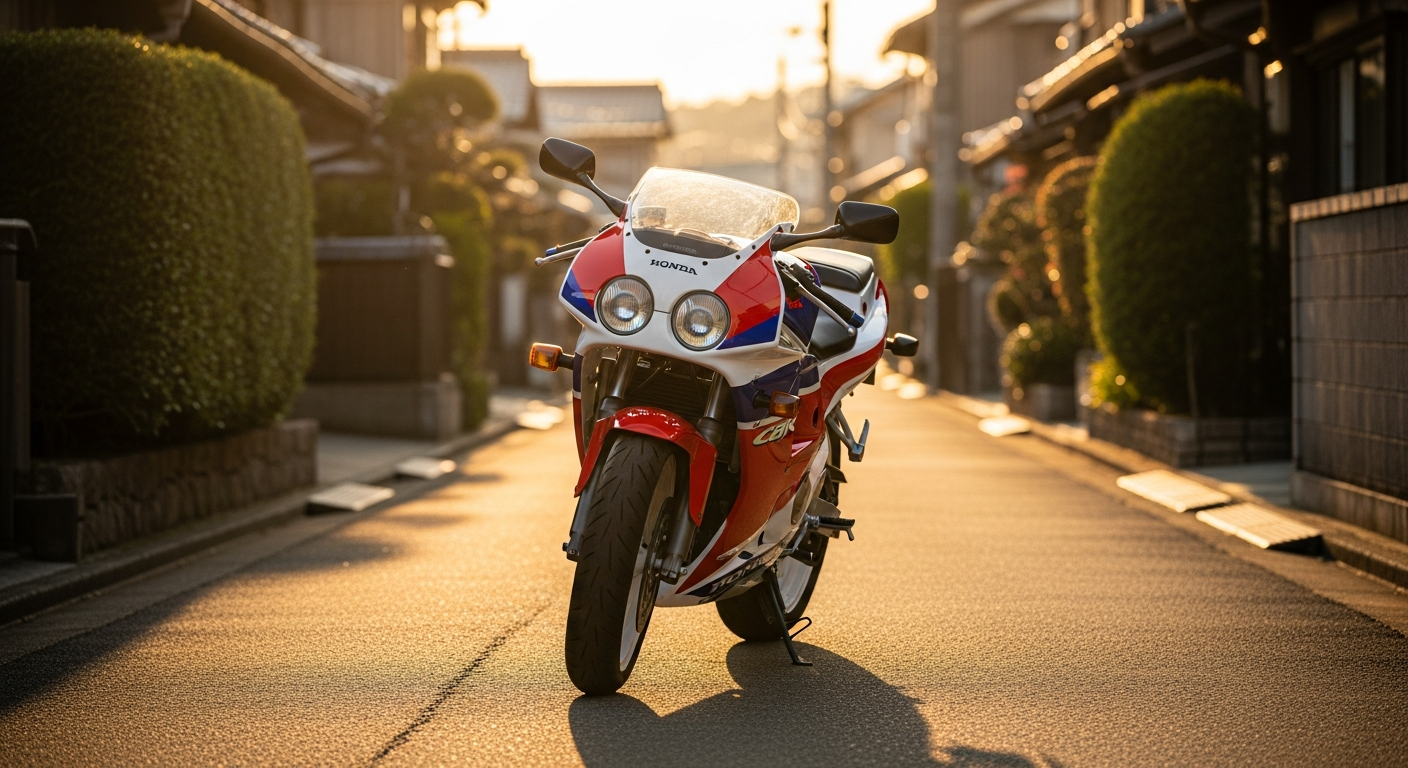
If you want to import a Honda CBR250RR MC22 from Japan, you have already fallen for one of the most addictive sounds in motorcycling: a 249cc inline-four screaming toward a 19,000-rpm redline like a shrunken Formula 1 car. Honda never sold this bike in America, Canada, or most of the West. It was a Japanese-domestic-market pocket rocket, built for a tax bracket and a license tier that only made sense inside Japan. That is exactly why it became forbidden fruit — and why riders all over the world now spend real money to drag one home.
Here is the good news in 2026: every MC22 ever built is now old enough to import legally almost everywhere that matters. The bike that an American rider could only watch on YouTube for thirty years is, this week, sitting in a Japanese auction yard with a grade on its inspection sheet and a hammer price that will surprise you.
One of the biggest motorcycle channels on YouTube put it bluntly in a video that has racked up over a million views: "Japan needs to quit hogging all the fun bikes." That single line captures the whole phenomenon. For decades the MC22 was a screensaver, a forum legend, a thing you heard in a track-day video and never saw in the metal. The 25-year import clock finally caught up with it, and now the chase is on.
This guide is how you stop watching and start importing — what the MC22 actually is, whether it is legal where you live, what it really costs to land one, how the Japanese auction system works, and the checklist that separates a screaming jewel from an expensive paperweight. By the end you'll know more about buying one than most of the dealers selling them.
Why the CBR250RR MC22 is worth importing from Japan
Let's be honest about what you are buying. On paper, a 250 making 45 horsepower is not fast. A modern 400 single will out-accelerate it everywhere below 10,000 rpm. So why do grown adults pay sportbike-money for a thirty-year-old quarter-litre Honda?
Because nothing else sounds or revs like it. The MC22 spins to a 19,000-rpm redline with a 20,000-rpm limiter, and it makes its peak power up near 15,000 rpm. That is not a typo. Magazines and enthusiasts keep comparing it to an old F1 car for a reason — the top end is a hysterical, induction-howling experience you simply cannot get from a modern twin. You ride it pinned, because that is where it lives, and that is the entire point.
Then there's the rarity. The MC22 was never officially sold in the United States, Canada, Australia, or the UK. Every clean one outside Japan was imported by somebody who wanted it badly. That gives the bike genuine cult status and, increasingly, collector appeal. Tidy examples that sold for pocket change a decade ago now change hands for real money, and the trend line only points one way as the supply of unmolested bikes shrinks.
There's a practical case too, not just an emotional one. The MC22 is small, light, and forgiving in the corners, which makes it a brilliant track-day toy and a genuinely usable canyon bike for riders who'd rather carry corner speed than wrestle a heavyweight. It teaches you to ride smoothly because it punishes laziness with the throttle. And because it's a Honda, the fundamentals — gearbox, clutch, chassis — are built to last when maintained.
And the Japanese-market angle works in your favor. Japan's riders sell their bikes early, store them properly, and the country's auction system grades every machine on a standardized inspection sheet you can read before you bid. The exact bike enthusiasts want — a low-kilometre, unmolested, four-cylinder 250 — is far more common in a Tokyo auction yard than in any Western classified, where the few that exist are picked over and priced like unicorns.
The sound that launched a thousand imports
It's worth pausing on the sound, because the sound is the reason this market exists at all. A modern 250 twin makes a flat, sensible drone. The MC22 makes a rising, metallic shriek that keeps climbing long after your brain expects the engine to give up. At a road-legal 60 mph it can be spinning past 10,000 rpm; wind it out and the induction howl genuinely does evoke a vintage grand-prix car.
That's not marketing fluff. Outlets like The Autopian and MotorBiscuit have written entire features built around the idea that this little Honda "out-revs an F1 car" and "redlines at 19,000 rpm at road-legal speeds." The bike became a holy grail in print before YouTube even existed.
Then video arrived and poured petrol on it. One enthusiast channel's MC22 feature has crossed a million views, with its host complaining — affectionately — that Japan hoards all the interesting machinery. Smaller channels, import specialists, and track-day clips multiplied the effect. Every one of those videos created another rider who wanted to hear that noise from their own garage.
Here's the thing nobody mentions: that wall of online enthusiasm is also what's driving prices up. Demand was manufactured by a sound that travels through a phone speaker. The earlier you buy a clean one, the better the deal you're likely to get, because the audience is still growing and the supply of honest, unmodified bikes is not.
What is the Honda CBR250RR MC22?
The CBR250RR (model code MC22) is a fully-faired 249cc sportbike Honda produced from 1990 to roughly 1996. Its heart is a liquid-cooled, DOHC, 16-valve inline-four — four tiny cylinders, each smaller than a shot glass — fed by four miniature carburetors and breathing through a gear-driven cam setup that lets it rev where chain-driven engines fear to go.
In its original tune (1990 to 1994), the MC22 made 45 horsepower at around 14,500 to 15,000 rpm. In 1994 a voluntary Japanese power agreement capped 250s, and Honda detuned later bikes to 40 horsepower. Both versions share the same wild top end; the earlier 45-horse bikes are the ones collectors chase, and they command a small premium for it.
It rides on a twin-spar aluminium frame, weighs roughly 157 kg dry — about 350 pounds — and uses a "Gull-arm" curved swingarm that became a signature design cue. It has a direct cold-air intake and an instrument cluster with a tachometer that sweeps to numbers no road bike has any business showing.
On the road it's a featherweight. The suspension is firm but not harsh, the brakes are adequate rather than mighty, and the riding position is committed — clip-ons, rear-sets, the works. Fuel range is modest because you'll spend so much time at high rpm, but the tank is sized for the bike's playful intent. None of this is the point, though. The point is the engine, and the way the whole package disappears beneath you when you finally get it singing.
This is the easy part to fall in love with and the easy part to misunderstand. The MC22 is not a beginner's commuter that happens to look cool. It is a high-strung, high-revving specialist that rewards revs and good maintenance and punishes neglect. Buy a good one and it is magic. Buy a tired one and you will learn a lot about tiny carburetors.
The CBR250 family: MC17, MC19 and MC22 explained
People throw "CBR250" around loosely, so let's sort the family tree, because it changes what you are bidding on and what you should pay.
The original CBR250F (MC17) arrived in 1987 — a more upright, half-faired four-cylinder aimed at the street. The CBR250R (MC19) followed in 1988 and is the bike that introduced the gear-driven cams and pushed the redline higher. Then in 1990 came the MC22 — the CBR250RR — with sharper bodywork, the Gull-arm swingarm, twin projector headlights, and the sportiest stance of the lot.
If you want the iconic, twin-headlight, fully-faired "RR" that everyone pictures, you want the MC22. If a seller lists a "CBR250" with an older square headlight and a softer shape, you may be looking at an MC19 — still a lovely four-cylinder screamer, often noticeably cheaper, but not the same collector target. The two are sometimes muddled in auction listings, so look at the bodywork and the model code, not just the name in the title.
Here's the thing nobody mentions: condition beats generation. A pampered MC19 will be a far better buy than a thrashed MC22. Don't pay the RR premium for a bike that needs everything — a clean lesser model will give you the same four-cylinder thrill for less money and fewer headaches.
Is it legal to import a CBR250RR MC22 where you live?
This is where most dreams either come true or die, so read carefully. The MC22 was built between 1990 and 1996, which means in 2026 every single one of them is between 30 and 36 years old. That clears the import-age hurdle in nearly every English-speaking market.
In the United States, motorcycles 25 years or older are exempt from EPA emissions and DOT/NHTSA safety standards. Every MC22 sails past that line, so it imports as a classic with no compliance modifications required. You'll file the usual HS-7 and EPA forms claiming the age exemption, and customs clears it as a collector vehicle.
In Canada, the bar is even lower: any vehicle 15 years or older is non-regulated, exempt from Canada Motor Vehicle Safety Standards, and sits outside the Registrar of Imported Vehicles program. The MC22 is wide open, and because Canada and Japan are both in the CPTPP trade pact, the duty can drop to zero with the right certificate of origin.
In Australia, motorcycles 25 years or older qualify for import under the age provisions, and asbestos and quarantine checks aside, a pre-1996 MC22 is straightforward. You'll arrange an import approval before the bike ships, then handle state registration on arrival.
In New Zealand, the rules are friendlier still — there is no blanket year ban, and bikes this age clear entry certification without drama, paying GST but generally no duty.
In the United Kingdom, there is no age restriction at all on importing. You register the import through NOVA for VAT, and a bike this old generally avoids the harder type-approval route, often needing only a basic test before it can be plated.
The honest catch: import-legal is not the same as registration-ready. A handful of US states — California is the usual culprit — make you jump through extra hoops to title a bike that lacks original emissions labelling. Always check your own state or province's titling rules before you bid, not after the bike is on the water. Five minutes on your local DMV or transport-authority website now saves a very expensive surprise later.
What a CBR250RR MC22 really costs to import
Forget the sticker price you saw on one classified ad. The number that matters is the landed cost — the all-in figure to get a plated MC22 in your garage. Let's build it from a realistic example.
A clean, low-kilometre MC22 typically hammers in a Japanese auction for somewhere around ¥400,000 to ¥700,000. Take a mid example landing near US$4,500 at the hammer. On top of that sits the export agent fee, inland transport and export deregistration in Japan, ocean freight, marine insurance, your destination customs duty, broker and port handling, and finally local title and registration.
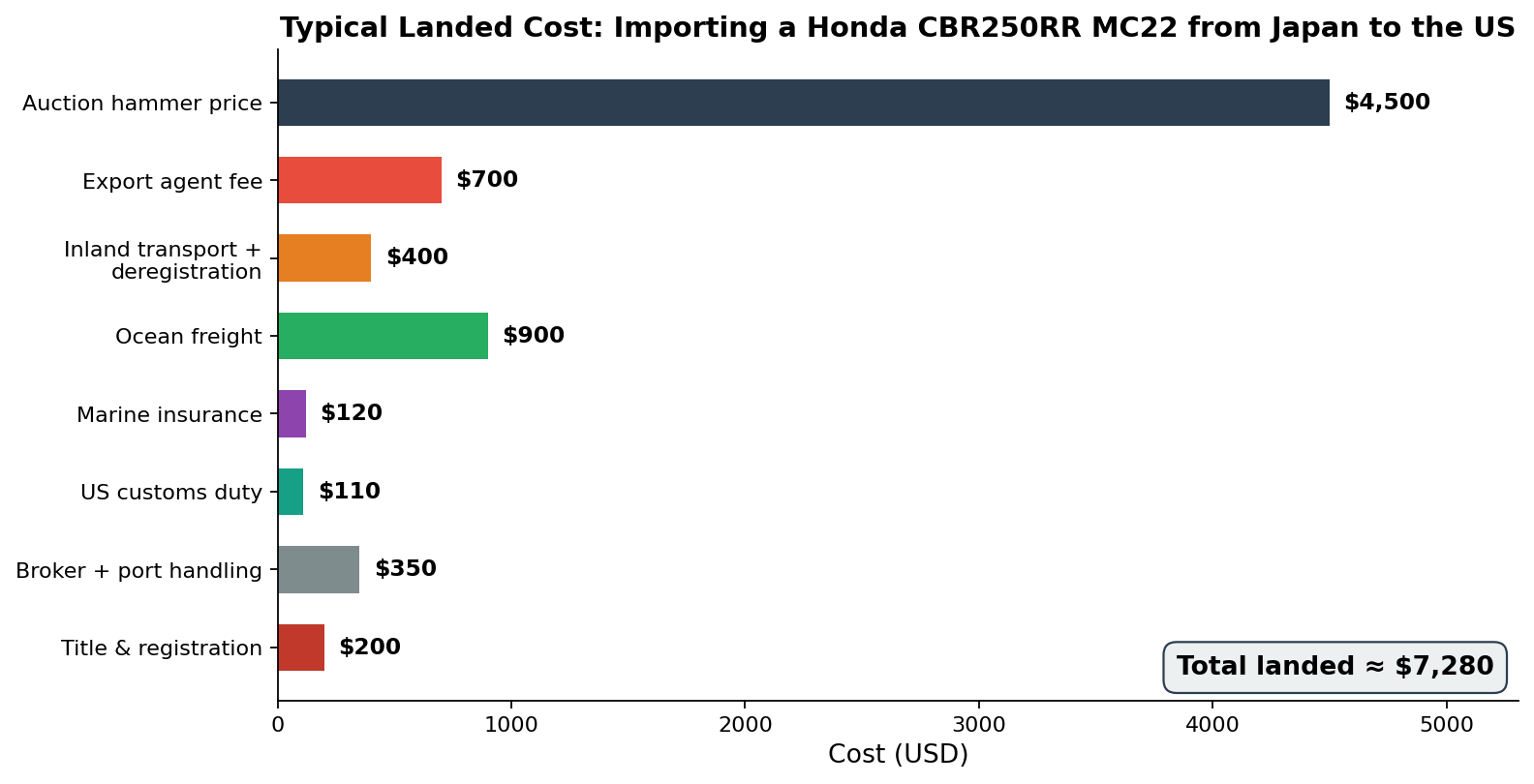
Add it up and a typical MC22 lands in the US for roughly US$7,000 to US$8,000 all-in for a clean rider, and into five figures for a genuinely minty, restored example. That tracks with the real market: specialist importers like Moto2 Imports have advertised restored, dyno-tested MC22s in the US$7,500 to US$9,900 range. So if a seller quotes you "$9,900 ready to ride," they are not gouging you — they have simply already done the work this chart describes, and you're paying for the bike plus the saved hassle.
The numbers shift a little by country. In the UK you'll add 20% VAT on the value plus shipping through the NOVA process, which pushes a clean bike toward the £6,000–£7,500 range once plated. In Australia, factor 5% customs duty and 10% GST plus the import-approval and compliance steps, and a tidy MC22 typically lands around A$9,000–A$12,000. In Canada, the CPTPP duty break helps, and a clean example often plates up for roughly CA$8,000–CA$10,000. The hammer price is the same bike in every case; only the taxes and freight change.
Two things move that number more than anything else. Freight is cheaper if you share a container or use RoRo rather than a sole-use container. And the bike's condition is everything: a deregistration-clean, low-km, stock example costs more at the hammer but far less in surprises than a cheap project that needs carbs, fairings, and a valve job before it'll idle.
How the MC22 compares to its 250 four-cylinder rivals
The MC22 wasn't alone. Japan's late-'80s and '90s "250cc four-cylinder war" produced a clutch of screaming rivals, and knowing them helps you bid smart — sometimes the bike next to the CBR in the auction catalogue is the better buy.
The Kawasaki ZXR250 is the MC22's closest competitor: another revvy four with a slightly more aggressive riding position and, many argue, an even harder top-end shriek. The Yamaha FZR250R brought EXUP exhaust-valve tech and a devoted following. The Suzuki GSX-R250 is the rarest and most fragile of the bunch, and the Honda Hornet 250 (CB250F) is the naked, more practical cousin sharing similar four-cylinder DNA and a friendlier riding position.
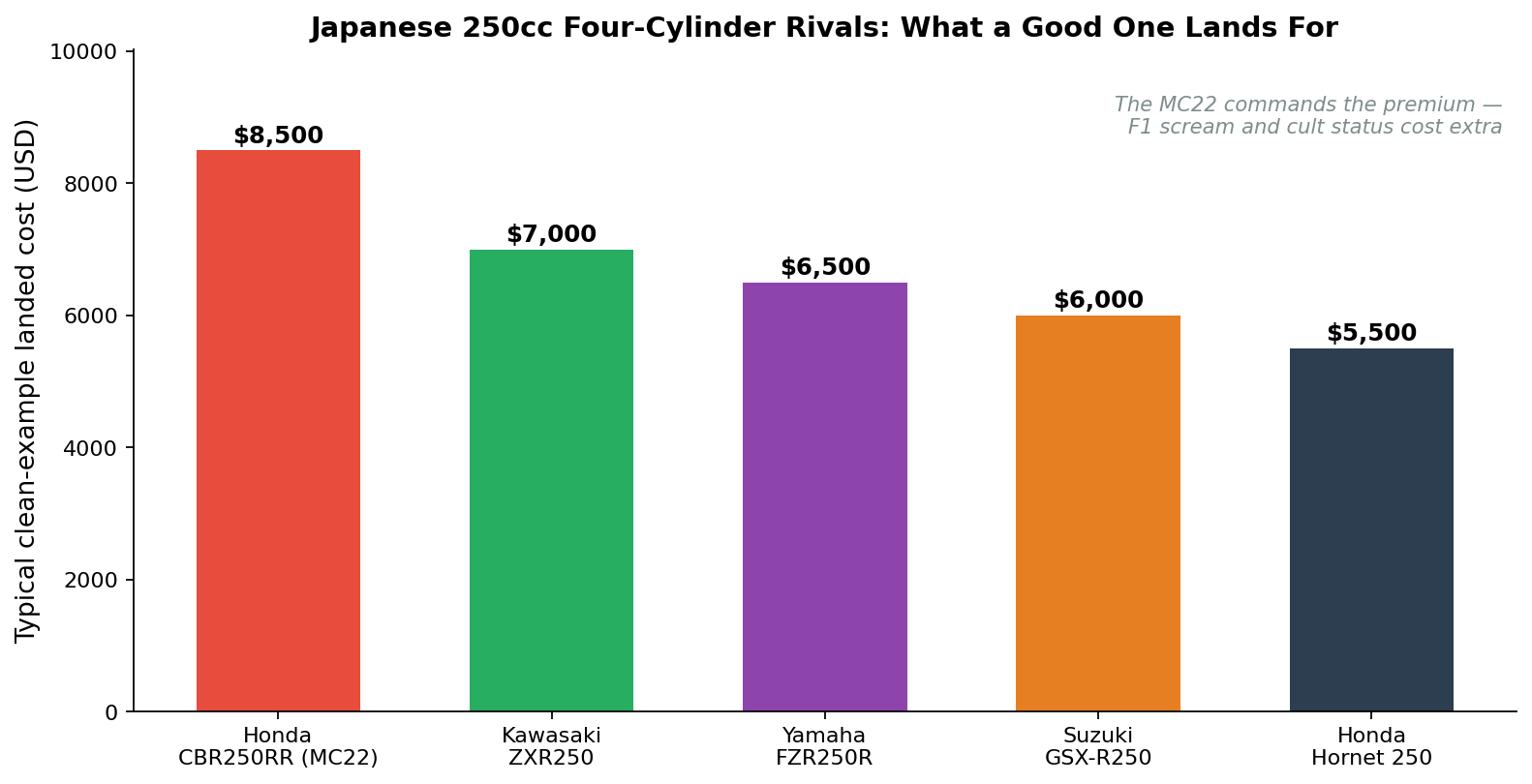
The CBR250RR usually commands the premium of the group, and that's not just hype — parts support is the best of the four, the cult following is the largest, and resale holds strongest. But if your heart is set on the sound and not the badge, a clean ZXR250 can be a smarter landed-cost play, and a Hornet 250 gives you the same engine character in a more comfortable, everyday package. You're importing all of them the exact same way; only the catalogue page changes.
How to buy a CBR250RR MC22 from a Japanese auction, step by step
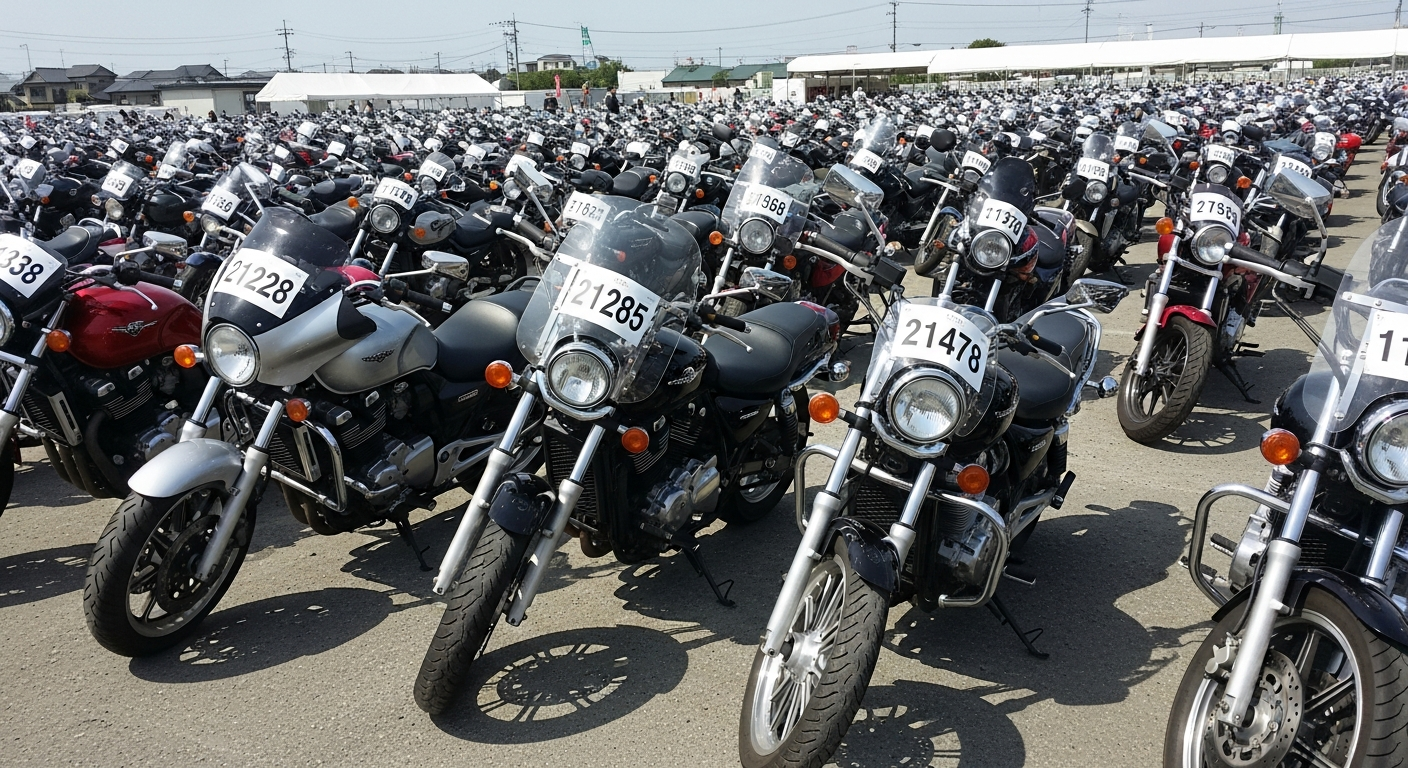
The Japanese used-bike auction system is the single best place on earth to find a clean MC22, and it is closed to the public. You bid through an agent. Here's the sequence, in plain order.
Set your budget first. Use the all-in landed number from the cost section, not just the hammer price. Decide your absolute ceiling before you ever see a bike you love, because you will see a bike you love and your discipline will evaporate.
Partner with an export agent. They hold the bidding accounts at the major auction houses — places like USS, BDS and the bike-specific yards. A good agent is your eyes, your translator, and your bidder all at once.
Watch the weekly catalogues. MC22s appear regularly, each listed with photos and an inspection sheet. You build a shortlist of targets and rule out the projects.
Read the sheet and pick targets. This is the skill that matters most, and it gets its own section below. You're hunting an honest, mechanically sound bike, not the prettiest photo.
Bid with a maximum. Your agent bids on your behalf up to the ceiling you set. Win it, and the agent handles payment, export deregistration, transport to port, and booking your freight. Lose it, and you simply wait for the next one — there's always a next one.
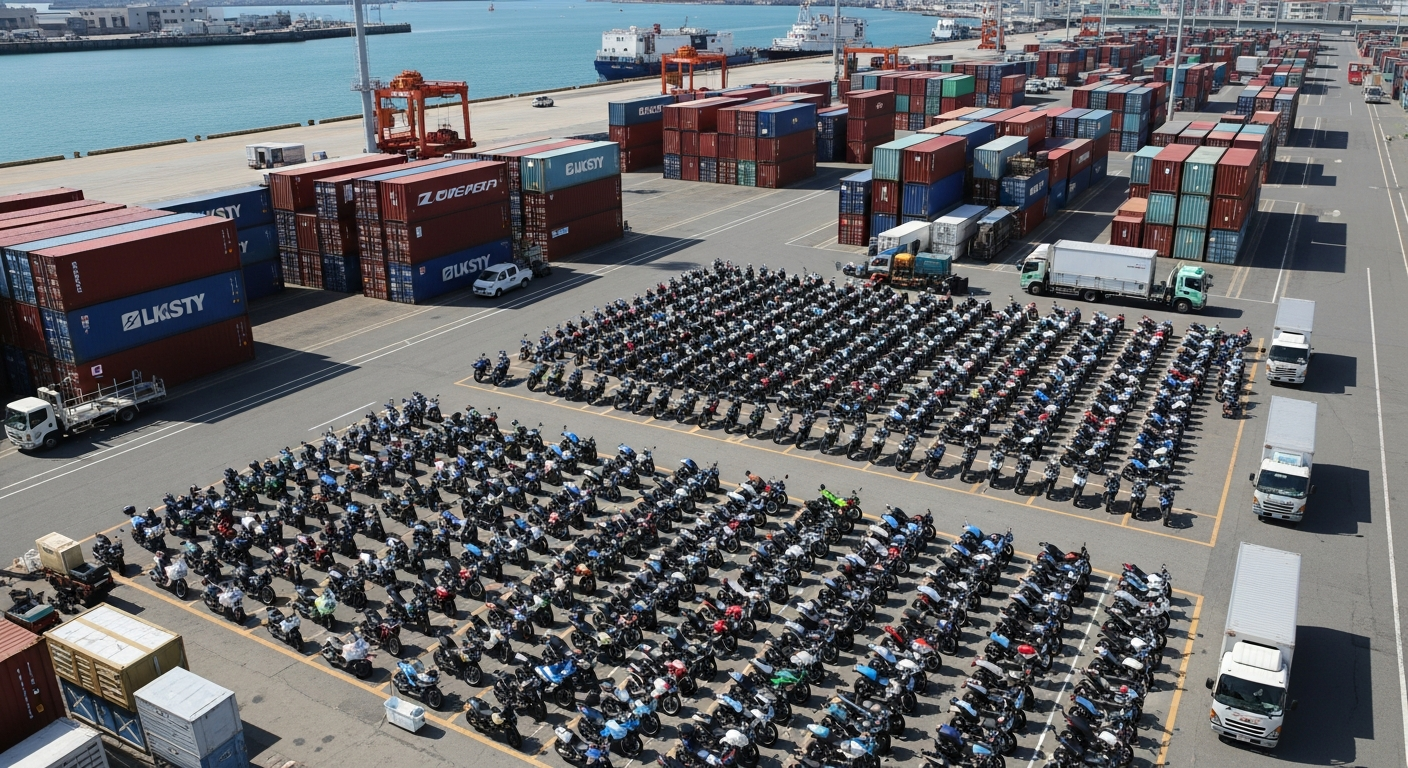
From winning bid to your door usually runs six to ten weeks, depending on sailing schedules and your country's customs. Most of that is the bike sitting on a boat, not anyone dragging their feet. The part people underestimate is the agent. A good one reads the auction sheet honestly, warns you off a bike with a quiet but damning notation, and bids with discipline. A bad one wins you a tired bike at a strong price. Choose the agent before you choose the bike.
Reading the auction sheet on a 30-year-old 250 four
This is the section the dealer listings never give you, and it is where you win or lose. Every bike at a Japanese auction gets a grade and a map. Learn to read both and you'll buy better than people who've been doing this for years on gut feel.
The overall grade runs roughly from 1 (rough or heavily modified) up through 3.5, 4, 4.5, 5 and 6 (excellent or near-new), with "S" reserved for as-new machines. For a bike this old, a 3.5 or 4 is a realistic, honest "good rider" — don't hold out for a 6 unless you want to pay collector money and wait months. The interior box on the sheet uses letters (A is best, down through B and C) for the cosmetic and mechanical condition of the bike's surfaces and trim.
Then there's the diagram of the bike covered in shorthand. A1, A2 and A3 mark scratches by severity. W means a wave or dent in the bodywork or tank. S is rust, C is corrosion, U is a dent, and B is a bigger one. X marks a part that needs replacement, and XX means a part has already been replaced. On a 250 four specifically, pay close attention to notes near the fairings (expensive and hard to find), the four-into-one or four-into-two exhaust (these rot, and replacements aren't cheap), and any electrical or carburetor remarks.
Here's the trick the pros use: a low overall grade caused only by cosmetic scratches is an opportunity — the bike is mechanically sound and you bid less because the photos look scuffed. A high grade with a buried note about hard starting, smoke, or a replaced engine part is the trap. Read the words, not just the number. A reputable agent will translate the comment column for you; if yours won't, get a different agent.
The MC22 buyer's checklist: what to verify before you bid
A four-cylinder 250 has four of everything, and four of everything can go wrong. Use this list to filter the catalogue and to brief your agent.
Valve clearances. This is the single most important maintenance item on the MC22. With sixteen valves running at screaming rpm, clearances drift over time, and the classic symptom is a "click-click" that rises with revs. Owner forums are full of valve-clearance threads for exactly this reason. Budget for a check on arrival regardless of what the seller says — it's the cost of admission on this engine.
The carburetors. Four tiny carbs that sat dry for years are the number-one reason an imported MC22 runs badly. Bikes that have been ridden recently are far safer than long-stored "barn finds." A balanced, recently-cleaned set of carbs transforms the bike from a coughing mess into a screaming jewel.
Cold start and smoke. If the auction notes or seller video show hard cold starting or blue smoke on start-up, walk away or bid like the bike needs an engine. The top end is robust when maintained but expensive to fix when it isn't.
Originality and parts. Some MC22 body and electrical parts are discontinued by Honda, so a complete, unbroken, original bike is worth a real premium over one missing fairings or switchgear. Aftermarket and Japanese specialist suppliers cover a lot, but not everything, and chasing a single discontinued panel can cost more than you'd think.
Brakes, tyres, chain and electrics. These are the cheap, boring items that still need checking. Perished thirty-year-old brake lines, hard old tyres, a stretched chain, and a tired battery or charging system are all normal on a bike this age — just budget for them rather than being surprised.
Mileage in context. Don't fear kilometres on a well-kept example — specialist sellers happily list MC22s around 70,000 km that still "run and ride great." A 70,000-km bike with a service history beats a 20,000-km bike that sat in a damp shed for fifteen years and dried out every seal it owns.
Common mistakes first-time MC22 importers make
Most regret in this hobby comes from the same handful of avoidable errors. Skip them and you'll be the person other buyers envy.
The first mistake is chasing the cheapest bike. A US$2,500 hammer-price MC22 sounds like a win until you've spent US$3,000 on carbs, fairings, and a valve job to make it run and look right. The clean US$4,500 bike is almost always the cheaper bike once it's in your garage. Buy condition, not a low number.
The second is ignoring the carbs and the valves in your budget. Even a good imported bike usually wants a carb clean and a valve check soon after it lands. Plan for it from day one and it's routine; ignore it and it feels like a betrayal.
The third is not vetting the agent. The agent is the entire transaction. One who translates the auction sheet honestly and bids with discipline is worth far more than the small fee they charge. One who just wants the commission will win you a tired bike at a strong price and disappear.
The fourth is forgetting local titling rules. Import-legal and registration-ready are different things, and the gap has bankrupted plenty of dreams in states with strict emissions titling. Confirm your state or province will plate the bike before you bid.
The fifth is underestimating parts lead times. Some bits come from Japan and take weeks. Order the consumables you'll obviously need before the bike even arrives, and you'll be riding while everyone else is waiting on a package.
Living with an imported MC22: maintenance, parts and reality
So the bike has landed and it's plated. What's it actually like to own day to day?
Maintenance is the price of admission. The MC22 likes frequent oil changes, periodic valve-clearance checks, and carburetors that are kept in balance. None of it is exotic, but all of it matters more than on a lazy modern bike, because this engine lives at high rpm and rewards a fastidious owner. Find a mechanic who is not scared of small four-cylinders, or learn to sync carbs yourself — many owners do, and the community will walk you through it.
Parts are a mixed bag. Consumables — filters, pads, tyres, chains, gaskets — are easy and cheap. Model-specific bits like original fairings, switchgear and some electrical components can be hard to find and pricey, which is exactly why you buy the most complete bike you can in the first place. Specialist suppliers in Japan, Australia and the UK keep a surprising amount on the shelf, and the owner forums are an encyclopedia of fixes and source links.
There's also a community that comes with the bike, and it's a big part of the appeal. The CBR250 forums and the import-scene channels are full of people who've solved every problem you'll ever hit, and they're generous with the answers. You're not buying an orphan; you're buying into a club.
Reliability, with that maintenance respected, is genuinely good. These are Hondas, built when Honda was showing off what it could do with a small engine. Keep the valves in spec and the carbs clean and an MC22 will scream happily for years. Neglect either and it will sulk and stumble. That's the whole bargain: a little extra care in exchange for one of the best sounds in all of motorcycling.
What it's like to ride a CBR250RR MC22
Numbers never quite explain this bike, so let's talk about the experience. Throw a leg over an MC22 and the first thing you notice is how tiny and light it feels — it's a bicycle with a jet engine bolted in. The clip-ons put you forward and down, the mirrors show mostly your elbows, and the whole thing wants to be ridden hard from the first corner.
Below 7,000 rpm, nothing much happens. New owners panic here, convinced they bought a slug. They're riding it wrong. The MC22 was never designed to lug around town in third gear. Drop two gears, pin the throttle, and the engine wakes up in a way that rearranges your face. The mid-range builds, the intake starts to howl, and somewhere past 13,000 rpm the bike turns into the thing all those YouTube videos promised.
It's not fast in a straight line against modern metal, and that genuinely doesn't matter. The joy is in the revs, the noise, and the way a featherweight chassis lets you flick through corners that would have a literbike sweating. You can ride an MC22 at its absolute limit at speeds that won't put you in jail, which is more than you can say for almost any modern sportbike.
Here's the part owners never shut up about: the soundtrack changes how you ride. You find yourself taking the long way home, dropping a gear before a tunnel, holding a lower gear just to hear it sing. It turns a commute into an event. That's the whole reason this thirty-year-old quarter-litre keeps selling for sportbike money — it makes you feel like a hero at sane speeds, and it sounds like a war crime doing it.
One more thing the spec sheet hides: the gearbox is a joy. Six tightly-stacked ratios mean there is always a gear to keep the engine in its happy zone, and the shift action is the slick, positive Honda click you remember from every great bike of the era. Combined with the eager chassis, it turns a back road into a video game where you are constantly, gleefully busy — blipping down, banging up, chasing the next surge of revs. Riders coming off torquey modern bikes describe it as rediscovering why they started riding in the first place.
Where to register your imported MC22 and the paperwork you need
The bike's landed, customs is cleared, and now you have to turn a box of Japanese documents into a license plate. This is the step that quietly trips people up, so here's the map.
From Japan, your export agent provides the key document: the export certificate (the deregistration paper, often called the "matsuro" certificate), which proves the bike was legally exported and shows its details. You'll also get the auction sheet, the bill of sale, and the shipping and customs paperwork. Keep every page — your local authority will want to see the chain of ownership and the proof of age.
In the US, you take the customs clearance (the CBP form), the Japanese export certificate, and a bill of sale to your state DMV. Most states issue a title against the foreign documents and a VIN verification; a few want a state inspection first. California, as mentioned, is the strict one and may demand more around emissions labelling, so confirm before you import there.
In the UK, you complete the NOVA notification within 14 days of arrival to settle VAT, then apply to the DVLA to register the bike, which may involve a basic test for an import. In Australia, you register through your state transport authority after the bike has its import approval and any required compliance and inspection. In Canada, you clear CBSA, skip the RIV for a 15-year-plus bike, and register provincially after a safety inspection.
The honest takeaway: the paperwork is fiddly but not hard, and a good agent hands you a clean, complete document pack that makes the local steps almost mechanical. Disorganized paperwork is what causes delays, not the rules themselves. Keep everything, scan it all, and the plate follows.
Is a CBR250RR MC22 a good investment?
Let's separate the heart from the wallet for a minute, because people increasingly ask whether the MC22 is a buy-and-hold as well as a buy-and-ride.
The case for it is simple supply and demand. They stopped making these in the mid-1990s, nobody is building any more, and the 25-year import clock has only just opened them up to the biggest markets. Every clean, original example that gets imported is one that won't come back, and the thrashed projects are slowly being parted out. Demand, meanwhile, is fed by a constant stream of online enthusiasm. That's the textbook setup for prices that drift upward over time.
The case against treating it purely as an investment is just as honest: it's a thirty-year-old high-revving machine that needs riding and maintaining to stay healthy. A bike that sits as a "store of value" in a damp garage will need carbs, seals, and probably more before it runs right again. The collector premium also concentrates on the cleanest, most original, lowest-kilometre bikes — a tidy rider holds its value, but it isn't a lottery ticket.
The sensible way to look at it: buy the best original MC22 you can afford, ride it the way it begs to be ridden, and maintain it properly. Do that and the odds are strong you'll get your money back and then some when you sell — while having owned one of the best-sounding motorcycles ever made in the meantime. That's about as good as a "want" purchase ever gets.
How AWA Auction gets you a CBR250RR MC22
This is the part where the guide becomes a garage. AWA Auction is a Japan-based export service that gives English-speaking buyers direct access to the same closed auctions where the clean MC22s actually live — the ones that never reach a Western classified.
We bid on your behalf, read the auction sheet honestly before you commit, handle deregistration and export paperwork, and arrange shipping to your country. You tell us the bike, the grade, and the all-in budget; we do the hunting and the bidding with the discipline that keeps you from overpaying for a tired example. No bidding account to set up, no Japanese to learn, no guessing what a comment column means.
You can browse our current listings to see what's coming through the auctions right now, or contact our team and tell us you're hunting a clean MC22 — we'll watch the catalogues and flag the right one when it appears. The bike's out there this week. Let's go find yours.
See Also
Share this article: