
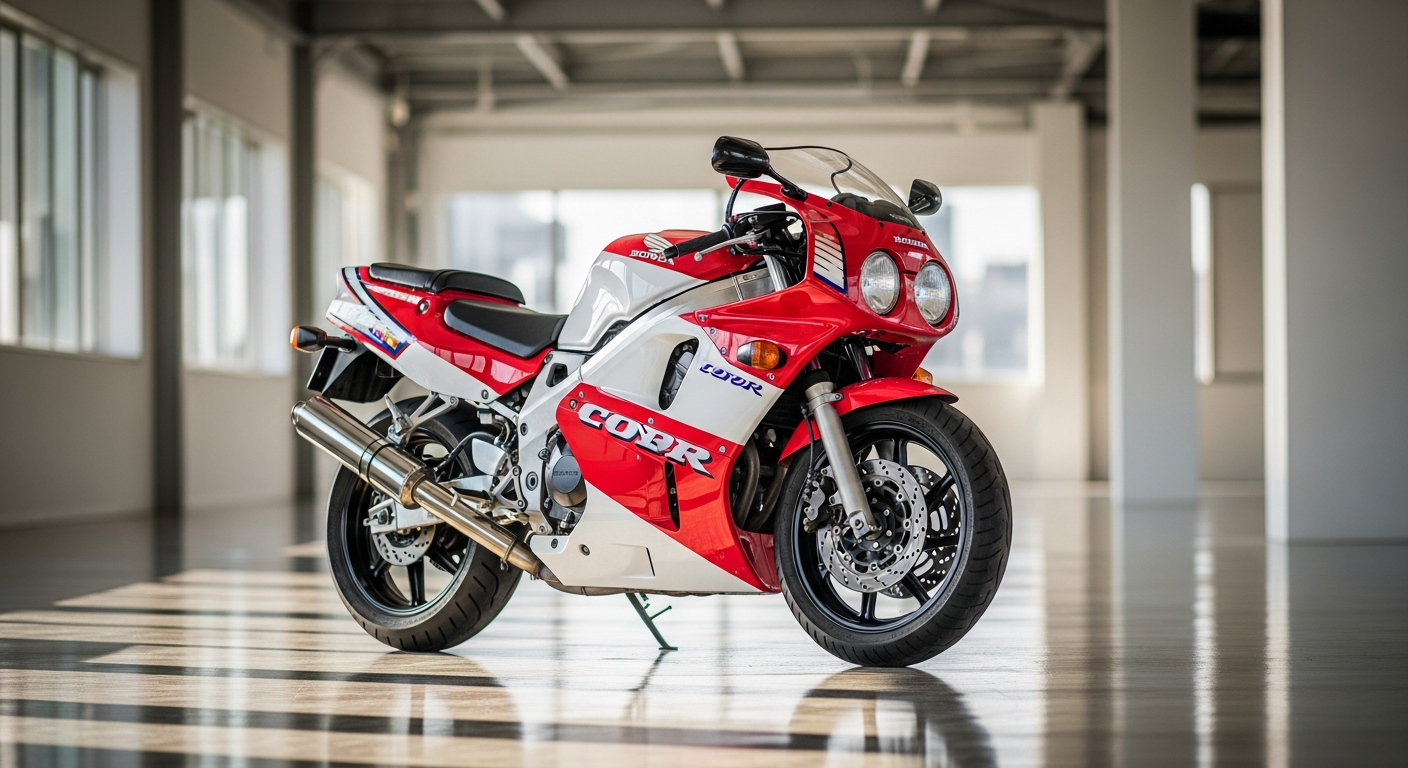
In 1992 Honda did something nobody else had the nerve to do. They built a 900cc sportbike that weighed less than a 600, handled like a 250, and made a liter-class superbike feel slow and fat by comparison. They called it the CBR900RR Fireblade, and three decades later riders still argue about it in YouTube comment sections with the energy of people defending a first love.
Here's the thing most buyers outside Japan never figure out: the cleanest, most original Fireblades on the planet aren't in dealer showrooms in Los Angeles or Manchester. They're sitting in Japanese auction halls, ridden by owners who treated them like museum pieces, run through weekly wholesale sales that the rest of the world can't walk into. If you want a proper Honda CBR900RR Fireblade import from Japan, you don't go to a classifieds site and hope. You go to the source.
This guide is the source. We'll cover every generation worth importing, what each one is actually legal to bring into the US, Canada, Australia, New Zealand and the UK, what it really costs to land one on your driveway, and the buying mistakes that turn a dream bike into a money pit. Let's get into it.
What the CBR900RR Fireblade is — and why it still matters
The Fireblade was the brainchild of one stubborn Honda engineer, Tadao Baba. While the rest of the industry chased horsepower numbers, Baba was obsessed with a different idea: total control. His mandate was light weight and user-friendly power — a bike that a normal rider could actually exploit, not a dyno hero that scared everyone off the throttle.
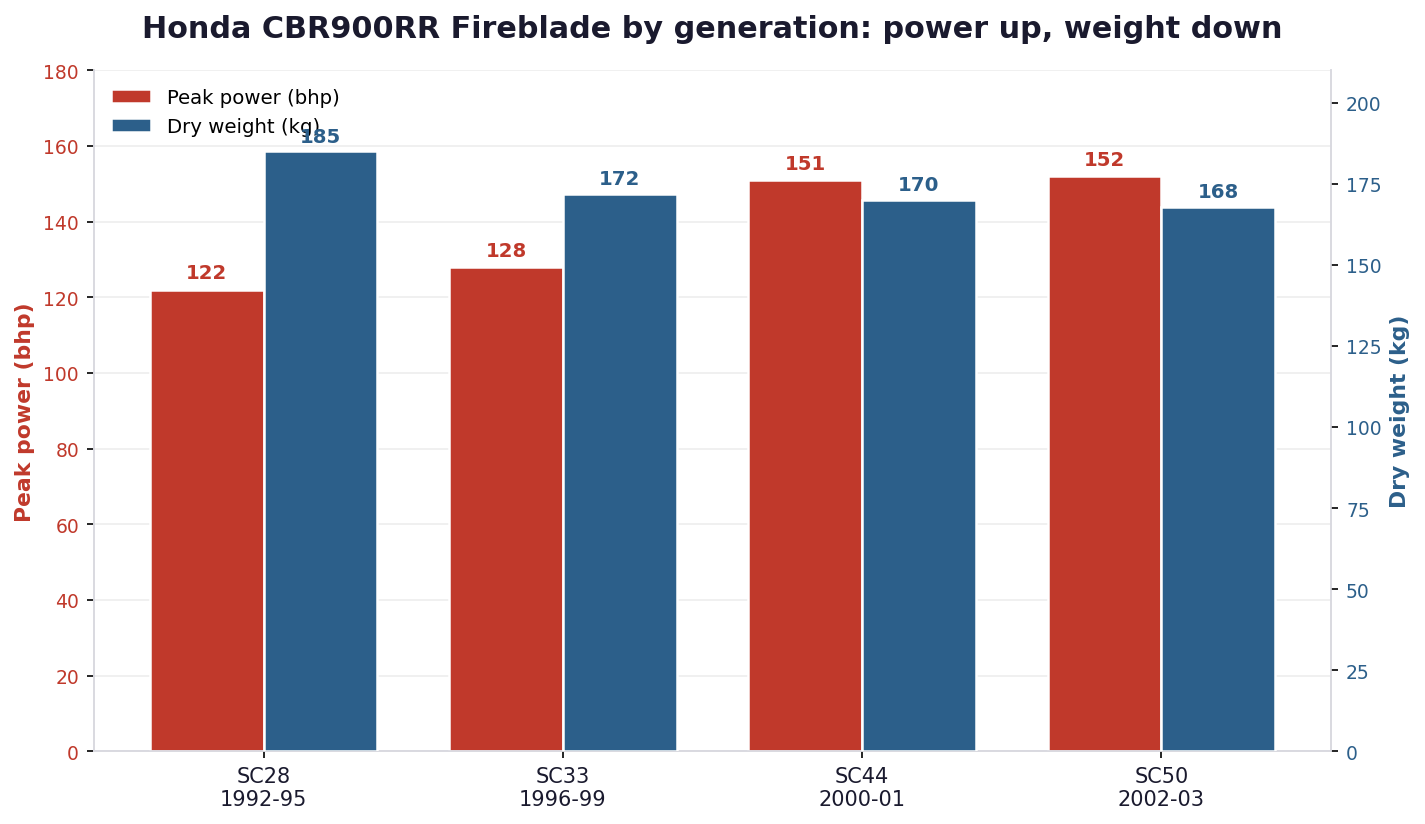
The result rewrote the rulebook. The original 1992 SC28 displaced 893cc but weighed around 185kg dry, dramatically lighter than the 750 and 1000cc sportbikes it embarrassed. There's a quote that does the rounds on social media every few months — one motorcycle history account on X put it best: "The 1994 Honda CBR900RR changed the sportbike game. Faster than a liter bike but lighter than a 600." That single line is why the bike matters. It invented the modern superbike formula that every R1, GSX-R and ZX-9R chased afterward.
This isn't nostalgia talking. The Fireblade's place in history is so settled that there are documentaries about it. A film from Brightside Media literally titled it "The Origin of the Species" and pulled over 230,000 views doing it. A longer history piece from the channel HeroRR — "The History of the Legendary Honda Fireblade" — racked up more than 740,000 views and nearly a thousand comments, most of them from owners who never sold theirs and never will. When a 30-year-old motorcycle still pulls that kind of attention, you're not buying an old bike. You're buying a piece of motorcycling history that happens to still be brutally fast.
And it remains usable. A clean SC33 will keep pace with modern traffic, scares almost nothing on a back road, and parts support is still strong because Honda built so many of them. Importing one isn't a restoration gamble — it's getting the best surviving examples before they vanish into private collections.
The Fireblade generations: SC28, SC33, SC44 and SC50
"CBR900RR" covers four distinct generations across eleven years, and the differences matter enormously — for how the bike rides, what it's worth, and crucially, what's legal to import into your country right now. Get the generation wrong and you either overpay or buy a bike you can't register. Here's the honest breakdown.
SC28 (1992–1995) — the original
The bike that started it all. 893cc inline-four, roughly 124 PS, and that famous 16-inch front wheel that gives the early Blade its slightly nervous, flickable, almost twitchy steering. This is the purist's choice and the one collectors fight over. The 1992–1994 cars in particular are the holy grail. They're also getting genuinely hard to find in good condition — as one feature on the early bikes noted, it doesn't matter how deep your pockets are, there simply aren't that many clean ones left.
If you want the historically significant Fireblade and you value originality over outright speed, the SC28 is the one. Just go in knowing prices for tidy examples have only gone one direction.
SC33 (1996–1999) — the sweet spot
For most importers, this is the smart buy. The engine grew to 918.5cc, power climbed to around 126–128bhp, and the chassis was sharpened. Crucially the SC33 in its 1998–99 form weighed just 172kg dry — astonishingly light even by modern standards. It kept the analog, raw character of the early bikes but with more midrange and a touch more stability.
The SC33 is the Goldilocks Fireblade: fast enough to thrill, cheap enough to actually buy, plentiful enough to find a good one, and old enough to clear most import age rules. If you asked us to pick one generation to import in 2026, it would be a clean 1998 or 1999 SC33.
SC44 (2000–2001) — the modern leap
The SC44 was a clean-sheet bike: an all-new 929cc engine with electronic fuel injection, 151bhp at 11,000rpm, a titanium exhaust, and — finally — a 17-inch front wheel that calmed the steering and let it run modern rubber. This is the Fireblade for someone who wants the badge and the heritage but doesn't want to baby a carbureted classic. It's quicker, more usable in daily riding, and the fuel injection makes cold starts a non-event.
SC50 (2002–2003) — the last of the 900RRs
Technically the 954cc SC50 is the final chapter before Honda renamed the line CBR1000RR in 2004. It's the most powerful, most refined "900RR," and arguably the best all-rounder of the lot. The trade-off is age: being newer, it's the last generation to clear the 25-year import rules in countries that have them.
The chart below compares the four generations on the two numbers that define a Fireblade — power and weight — so you can see exactly how Baba's "light and controllable" original evolved into a 150-plus horsepower weapon.
Why import a Fireblade from Japan instead of buying local
You could buy a Fireblade down the road. So why ship one halfway around the world? Three reasons, and they're the same reasons savvy buyers have been importing JDM bikes for years.
Condition. Japan's bikes live easier lives. Strict shaken roadworthiness inspections force owners to maintain their machines properly. Lower average mileage, less salted winter road, garaged storage, and a culture that treats bikes with genuine care all add up. A Japanese-market SC33 with 18,000km on it and a full set of stamps is a different animal from a UK or US bike that's been crashed, flipped and bodged through three owners.
Originality. Domestic-market Fireblades are far more likely to be standard and unmolested. Western-market bikes from this era were track-day fodder — drilled, rewired, fitted with cheap aftermarket cans and "race" rearsets. The clean, factory-original examples that collectors actually want are disproportionately still in Japan.
Choice. This is the big one. Japanese wholesale auctions move thousands of motorcycles every single week. The selection of clean, low-owner Fireblades flowing through these sales dwarfs anything you'll see locally. You're not picking from the three sad examples within driving distance — you're picking from the whole country's supply.
One caveat worth knowing, and it's a famous one: some JDM bikes from the 90s left the factory power-restricted under Japan's old gentlemen's agreement. The Fireblade itself wasn't capped the way the V-Max was, but always confirm a specific bike's spec before you fall in love. We'll come back to checks later.
Is it legal? Fireblade import rules by country
This is where dreams meet paperwork. Whether you can register an imported Fireblade depends entirely on where you live and how old the specific bike is. Here's the current state of play in the five biggest English-speaking markets.
United States — the 25-year rule
The US lets you import any vehicle 25 years or older without meeting modern EPA and DOT standards. That's the famous "25-year rule," and it's what's slowly trickling Japanese-market bikes into America. The math is simple: in 2026, any Fireblade built in 2001 or earlier is fair game. That covers the entire SC28, the entire SC33, and the SC44 up to 2001. The 954cc SC50 starts clearing in 2027–2028. You'll clear customs on an HS-7 declaration and an EPA form, pay a low motorcycle duty rate, then title it in your state.
Canada — the 15-year rule
Canada is the easy mode of motorcycle importing. Its rule is 15 years, not 25, which means a 2011 bike is already legal — a full decade ahead of the US. Every single Fireblade generation, including the last SC50s, clears comfortably. Motorcycles are generally treated as non-regulated for the federal RIV program once they're 15 years old, you'll use the CPTPP origin rules to land Japanese bikes at zero duty, then register provincially.
Australia — the 25-year rule
Australia mirrors the US with a 25-year threshold under its Specialist and Enthusiast Vehicle pathway, so in 2026 anything 2001 or older imports cleanly. The wrinkle Australia adds is mandatory asbestos testing — every imported vehicle must be certified asbestos-free, which matters for gaskets and brake components on bikes this age. Budget for that test and use an importer who handles it routinely.
New Zealand — no blanket age rule
New Zealand is refreshingly sane: there's no flat "must be X years old" rule for motorcycles. Instead bikes go through entry certification and a warrant of fitness check. Older Fireblades actually get easier treatment — bikes over 20 years old are exempt from the frontal-impact requirements. You pay GST but motorcycles attract no import duty, so a clean SC28 or SC33 can be one of the simpler imports going.
United Kingdom — NOVA, not age
The UK has no minimum-age rule at all. You can import any Fireblade, any year. The process runs through NOVA (Notification of Vehicle Arrivals) so HMRC can collect any VAT due, then you register with the DVLA. Bikes older than ten years skip the most demanding type-approval testing, which means every Fireblade generation is straightforward to put on UK plates. For Brits, the only real question is which one you want, not whether you can have it.
The takeaway: if you're in the US or Australia, stick to 2001-and-older bikes for now and you'll never hit a wall. In Canada, NZ and the UK, the whole Fireblade range is open to you.
What a JDM Fireblade actually costs to land
The auction price is never the real price. The number that matters is the landed cost — what it takes to get the bike from a Japanese auction hall to your garage, registered and legal. Buyers who only look at the hammer price get an unpleasant surprise. Let's break it down honestly.
Take a clean SC33 that hammers for around ¥550,000 — call it roughly US$3,700 at current rates. That's your starting point, not your finish line. On top of it you'll pay:
- Buying agent / auction fee — the licensed agent who actually bids for you at the wholesale sale, typically a flat fee plus a percentage.
- Inland transport in Japan — moving the bike from the auction yard to the export port.
- Export paperwork and de-registration — clearing the bike out of the Japanese system.
- Ocean freight — RoRo (roll-on roll-off) is usually cheapest for a single bike; container shipping costs more but offers more protection.
- Import duty and tax — varies wildly by country (often near zero on motorcycles, but local taxes and VAT/GST apply).
- Local compliance and registration — testing, titling, plates, and any country-specific checks like Australia's asbestos certification.
Add it all up and a bike that hammered at US$3,700 typically lands somewhere around US$7,000–8,000 depending on your country and shipping choice. The chart below shows a realistic breakdown so you can see where every dollar goes.
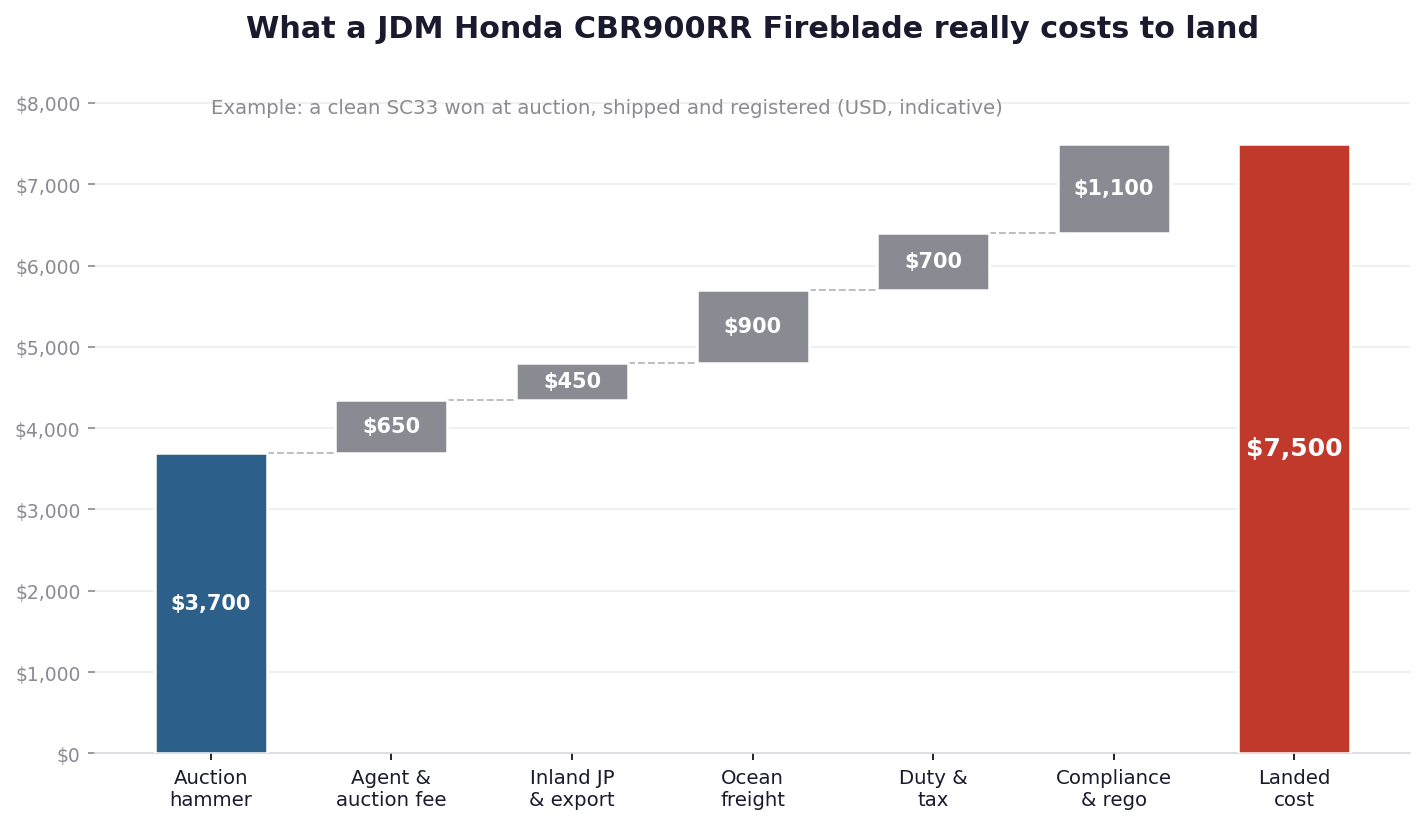
The encouraging part: even at $7,500 landed, you're often buying a cleaner, more original, lower-mileage Fireblade than anything available locally at the same money. The import premium buys you condition you simply can't find otherwise.
How to buy a Fireblade at a Japanese auction (step by step)
Japanese motorcycle auctions are wholesale, trade-only events. You can't just sign up and bid — they exist for dealers. Here's how a private buyer actually gets in and lands a bike.
Step 1: Work through a licensed buying agent. Auctions like BDS (Bike Dealer's System) and JBA run weekly sales with thousands of bikes, but access is gated to registered members. A buying agent is your key in. They hold the membership, bid on your behalf, and handle the export. This is the single most important decision in the whole process — your agent is your eyes, hands and translator.
Step 2: Set your budget and target spec. Decide your generation (SC28 vs SC33 vs SC44), your maximum bid, your acceptable mileage and the minimum auction grade you'll accept. Write it down. Auctions move fast and discipline is what stops you overbidding on a Friday-night impulse.
Step 3: Learn to read the auction sheet. Every bike at a Japanese auction comes with an inspection sheet graded by an independent inspector. The overall grade (often on a scale up to S or 6) tells you condition at a glance, and a map of the bike notes scratches, dents and rust. This sheet is the heart of the whole system — it's how you buy a bike you've never seen with confidence. Learning to decode it is non-negotiable.
Step 4: Shortlist and bid. Your agent sends you the upcoming listings with sheets and photos. You pick your targets, set your maximum bids, and the agent executes at the sale. If you win, great. If you don't, there's another auction next week — patience beats panic every time.
Step 5: Pay, ship and clear. Once you've won, you settle the invoice, the agent arranges inland transport and export, and your bike heads to port. Choose RoRo or container, then handle customs and registration on your end. Six to ten weeks later, depending on your country, it's yours.
That's the entire loop. The auction sheet and the agent are what make it safe; everything else is logistics.
What to check before you bid — the Fireblade buyer's checklist
A 30-year-old superbike rewards the careful buyer and punishes the impulsive one. These are the specific things that matter on a Fireblade, generation by generation.
Carburetors (SC28 and SC33). The early bikes run a bank of four carbs that hate sitting unused. Look for evidence the bike has been ridden regularly and the carbs cleaned. A Fireblade that's been parked for years often needs a full carb strip — factor that into your bid.
The 16-inch front wheel (SC28). The original's distinctive front wheel uses a less common tire size. Confirm the wheel is straight and that decent rubber is actually available in your market before you commit to an early bike.
Regulator/rectifier and charging (all). Like many Hondas of the era, the charging system is a known weak point. A tired reg/rec can cook a battery or leave you stranded. It's a cheap fix if you know to look, an expensive surprise if you don't.
Fuel injection sensors (SC44 and SC50). The later injected bikes are more reliable day-to-day but add electronic complexity. Confirm there are no warning lights and that the bike starts and idles cleanly from cold.
Crash history and originality. Check the auction sheet's diagram for frame damage, look for mismatched paint, aftermarket levers, drilled fairings and "race" modifications. The originality you're paying the import premium for can evaporate if a previous owner went track-day mad.
Service records and mileage. Japanese bikes often come with a stack of stamps and receipts. A documented history is worth real money and confirms the odometer reading. Low mileage with no records is a yellow flag; moderate mileage with a full book is gold.
Common mistakes — what nobody tells you about grey-import Fireblades
After watching buyers do this for years, the same avoidable errors come up again and again. Here's how to dodge them.
Buying the wrong generation for your country. The number one mistake. An American buyer falls for a gorgeous 2003 SC50, wins it, and then discovers it won't clear the 25-year rule until 2028. Check the age rule for your country before you shortlist, not after you've paid.
Ignoring the landed cost. People budget the hammer price and forget the agent fee, freight, duty and compliance. Then the final bill is double what they planned. Always run the full landed-cost math before you set a maximum bid.
Treating the auction sheet as optional. Some first-timers bid on photos alone and skip the sheet. The sheet is the entire point of the Japanese auction system — it's how you buy sight-unseen safely. Learn to read it or you're gambling.
Underestimating parts logistics. The Fireblade is well supported, but some early SC28 bits and JDM-specific parts can take time to source overseas. Build a relationship with a parts supplier before you need one, not during a breakdown.
Skipping the spec check. A handful of 90s JDM bikes were power-restricted from the factory. Confirm the exact spec of your bike rather than assuming. It only takes one message to your agent and it saves a world of disappointment.
Going it alone. The single biggest predictor of a happy import is a good buying agent. Trying to bid directly, navigate Japanese export paperwork and arrange shipping yourself, with no language and no auction access, is how imports go sideways. Use the people who do this every day.
How the Fireblade stacks up against its 90s rivals
The Fireblade didn't exist in a vacuum. It kicked off an arms race, and the bikes that chased it are also flowing through Japanese auctions right now. Knowing how they compare helps you decide whether the Blade is really the one you want — or whether a rival scratches the same itch for less money.
Kawasaki ZX-9R. Kawasaki developed the ZX-9R as a direct answer to the Fireblade, launching it in 1994. It was more powerful and a touch heavier — a brilliant fast road bike that traded a little of the Blade's razor agility for more brute grunt and stability. If you want big-bore 90s thrills and don't need the Honda badge or the collector cachet, a clean ZX-9R is often the value play. The Fireblade holds its value better; the ZX-9R gives you more bike for the money today.
Suzuki GSX-R750 and GSX-R1000. The GSX-R750 is the sharp, track-focused alternative — lighter and more focused than the Blade but less of an all-rounder. The later GSX-R1000 (from 2001) raised the power bar dramatically. Both are import-worthy, but the 750 in particular has its own devoted following and clean JDM examples are getting just as collectible as Fireblades.
Yamaha YZF-R1. When Yamaha dropped the R1 in 1998, it out-Firebladed the Fireblade — lighter, more powerful, and even more focused. The first-generation R1 (1998–2001) is now clearing 25-year import rules and is arguably the next great JDM superbike to collect. If you're choosing between a late SC44 Blade and an early R1, it comes down to character: the Honda is friendlier and more usable, the R1 is angrier and more of an event.
Here's the honest summary. The Fireblade is the historically important one, the one that started the whole light-superbike idea, and that gives it the strongest collector story and the most stable values. The rivals often deliver more raw performance per dollar. None of them are wrong answers — but only one of them is the Origin of the Species.
RoRo or container: shipping your Fireblade home
Once you've won your Blade, there's one logistics decision that affects both your cost and your peace of mind: how it crosses the ocean. There are two ways, and the right choice depends on the bike and your budget.
RoRo (roll-on, roll-off). The bike is strapped onto a vehicle deck on a dedicated car-carrier ship and rolls off at the destination port. For a single motorcycle, RoRo is almost always the cheapest option, and it's perfectly safe for a sturdy bike. The trade-offs: fewer port options, fixed sailing schedules, and the bike rides on an open deck rather than in a sealed box. For a clean but not priceless SC33, RoRo is usually the sensible, economical choice.
Container shipping. The bike is crated or strapped inside a shipping container, often sharing the box with other vehicles to split the cost (groupage), or in a dedicated container if you're moving several bikes. Container shipping costs more per bike when you only have one, but it offers maximum protection from weather and handling, and it reaches far more ports. For a rare, numbers-matching SC28 or a concours collector piece, the extra money for a container buys real protection — and peace of mind that's hard to put a price on.
A good buying agent arranges either option and will tell you honestly which makes sense for your specific bike. The rule of thumb: RoRo for a solid rider you'll actually use, container for a rare or pristine example you'd be heartbroken to see scuffed.
Living with an imported Fireblade: insurance, parts and resale
Buying the bike is only the start. Here's what to expect once it's on your driveway — the stuff that separates a happy ownership story from a frustrating one.
Insurance. An imported 90s superbike can be insured normally in most markets, but how you insure it matters. A clean, low-mileage Fireblade is increasingly viewed as a modern classic, which can mean access to agreed-value classic policies rather than standard market-value cover. Agreed-value is worth chasing: it protects the premium you paid to import a special example, instead of paying out a generic book price if the worst happens. Get the import documented and photographed when it arrives.
Parts. This is one of the Fireblade's quiet strengths. Honda built hundreds of thousands of them, so consumables, service parts and most mechanical components are readily available worldwide. The areas to watch are JDM-specific cosmetic bits — original decals, market-specific bodywork, and early SC28 oddments like the 16-inch wheel's tire sizing. Build a relationship with a Japanese parts exporter before you need one, because sourcing an original part from Japan while your bike sits in pieces is the slow, expensive way to do it.
Resale and values. Clean, original, well-documented Fireblades have been climbing in value for years, and the trend shows no sign of reversing — these are finite, and the good ones get rarer every year as rough examples get scrapped or tracked to death. The bikes that appreciate are the honest ones: standard spec, low-to-moderate mileage, full history, no crash damage. If you buy carefully through the auctions, ride it sensibly and keep the paperwork, an imported Fireblade is one of the few motorcycles you can genuinely enjoy for years and still sell for as much as — or more than — you paid. That's the import math that actually works in your favor.
Why 2026 is the moment to import a Fireblade
Timing matters more with the Fireblade than with almost any other bike, and 2026 sits at a genuinely interesting point on the calendar. Two clocks are ticking at once, and they both point in the same direction: buy the good one now.
The first clock is the import-rule clock. In the US and Australia, the 25-year rule is steadily opening up the range. The whole SC28 and SC33 are already through the gate, the SC44 clears in full through 2026, and the final 954cc SC50 starts becoming legal in 2027 and 2028. Every year the rule unlocks more of the range — but it also means demand keeps arriving for a supply that only shrinks. The bikes that were squirreled away in Japan are now actively being exported, and the cleanest examples get picked off first.
The second clock is the condition clock. There is a fixed, finite number of clean, original, unmolested Fireblades in the world, and that number only goes down. Every year more of them get crashed, parted out, tracked into the ground or modified beyond recognition. The supply of genuinely good examples isn't being replenished — Honda stopped building the CBR900RR in 2003. What's left in Japan, maintained through decades of strict inspections and careful ownership, is the best of what remains. Wait five years and the same money buys a rougher bike.
Put those two clocks together and the conclusion is hard to argue with. Values for clean, documented Fireblades have been climbing steadily, the legal window keeps widening just as collector interest peaks, and the pool of pristine examples keeps draining. None of that means you should panic-buy the first bike you see — discipline at the auction still wins. But it does mean that a clean SC33 or a tidy SC28 bought carefully today is far more likely to be a smart purchase than a regret. The original superbike isn't getting any younger, and neither is the supply of good ones.
If you've been telling yourself you'll get around to it eventually, the honest answer is that "eventually" costs more and delivers less every year. The smart move is to line up your country's rules, set a realistic budget, get an agent watching the sales, and be ready when the right Blade comes through.
How AWA Auction gets you a Fireblade from Japan
This is exactly the gap AWA Auction exists to fill. Those weekly wholesale auctions — BDS, JBA and the rest — are closed to the public and run entirely in Japanese. We're your licensed access to all of it. We hold the auction memberships, we read the sheets, we bid on your behalf, and we handle export and shipping so you don't have to learn an entire foreign system to buy one motorcycle.
You tell us the Fireblade you want — a numbers-matching SC28, a clean low-owner SC33, a fuel-injected SC44 — and your budget and country. We watch the sales, send you the listings with full auction grades and inspection sheets translated into plain English, and bid when the right bike comes up. When you win, we manage the paperwork and get it on a ship.
Browse current listings to see what's flowing through the Japanese auctions right now, or contact our team to put a specific Fireblade on our watch list for the next sale. The original superbike is still out there in Japan, still clean, still waiting. We'll help you bring one home.
See Also
Share this article: