
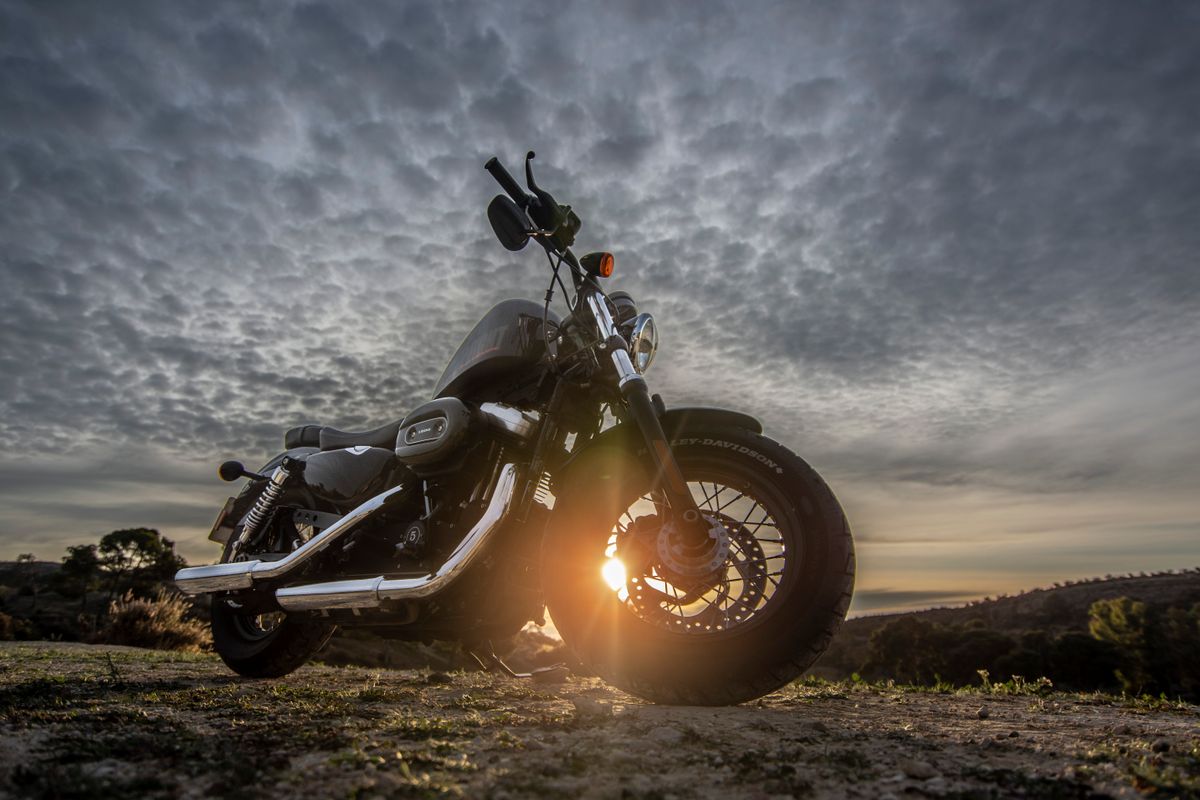
There's a Honda CBR250RR sitting in a garage in Osaka right now that revs to 19,000 RPM. It makes roughly 45 horsepower from 250cc — performance that embarrassed full-litre bikes of its era — and it was never sold in the United States. Not because Honda didn't want to sell it. Because Japan had a 400cc limit on learner licenses, so the engineers built a quarter-litre engine that behaved like it had no right to exist.
That bike is a JDM motorcycle. And there are thousands more like it — models engineered specifically for the Japanese market, sold exclusively through Japanese dealers, invisible to Western buyers for decades. The CBR400RR. The NSR250R. The VFR400R. The Kawasaki ZXR400. Each one a machine the US, UK, and Australian markets never got.
As of 2026, many of these bikes are 25 years old and fully legal to import. The demand is there — Bikes and Beards' video on buying a 40-foot container of motorcycles from Japan pulled 18.8 million views and nearly 8,000 comments. People want these bikes. Most just don't know how to get them.
This guide covers everything: what JDM actually means, which models are worth tracking down, how Japanese auctions work, what it costs, and how to find a legitimate exporter who won't disappear with your deposit.

What Is a JDM Motorcycle?
JDM stands for Japanese Domestic Market. It refers to vehicles built in Japan and sold exclusively to Japanese buyers — not exported versions manufactured for global markets.
Here's the thing most articles miss: JDM isn't a style. It isn't a sticker pack or a lowered suspension or a big wing. It's a designation of origin and specification. A JDM motorcycle is literally built to different standards than an export model, because Japan had different rules.
Japan's motorcycle licensing system historically tied engine displacement to license class. Learner riders were restricted to 400cc. The result? Manufacturers built the most insane 250cc and 400cc motorcycles imaginable — bikes with four-cylinder engines, six-speed gearboxes, and racing DNA — that simply didn't exist anywhere else.
The export version of a Honda CB400 is a sensible, well-mannered machine. The JDM version has a VTEC system, 56 horsepower, and a character that the export model never received. Same badge. Completely different motorcycle.
The term JDM entered popular culture primarily through cars — the Nissan Skyline GT-R, the Honda NSX-R, the Mitsubishi Lancer Evolution VI. But the motorcycle side of the JDM world is arguably more interesting, because the performance gap between domestic and export spec bikes is more dramatic. Japan's car market had different horsepower agreements from European markets, but the displacement differences in motorcycles created entirely different categories of machine.
A 400cc sportsbike class doesn't exist in the United States. There was never commercial demand for it. Buying a JDM motorcycle isn't just about getting a different version of a bike you know — it's about accessing a category of machine that was engineered for a market with completely different rules. That's the appeal. That's why collectors are paying serious money for well-preserved examples.

Why JDM Motorcycles Are Different From Export Models
Three factors explain the gap between JDM and export bikes.
Japan's power agreements. In the 1990s, Japanese manufacturers voluntarily agreed to cap motorcycles sold in Japan at 100PS (approximately 98 horsepower). This didn't apply to export models, but it shaped development priorities. While European and American engineers chased peak power numbers, Japanese engineers squeezed extraordinary performance from smaller displacements. Efficiency, revability, and chassis dynamics became the focus. Honda's engineers weren't building the CBR250RR because they had to — they were building it because a domestic market existed that rewarded them for doing so. The result was engineering that had no equivalent elsewhere.
The 400cc license class. The category that doesn't exist in most Western countries. Because Japanese learners could only ride up to 400cc, there was massive commercial demand for capable bikes in that class. Honda built the CBR400RR as a four-cylinder supersport. Kawasaki built the ZXR400 with full race bodywork. Yamaha produced the FZR400. These machines had no equivalent in export markets — there was no commercial reason to build them for countries where beginners started on 600s.
This is actually the most significant thing about the 400cc class: the bikes weren't compromises. Honda and Kawasaki didn't water down the engineering to meet the displacement limit. They maximized what was possible within that limit, and the results were technically sophisticated machines that rivaled far larger bikes on everything except top-speed runs. The CBR400RR runs high-revving carbs, close-ratio gearbox, and bodywork derived directly from the RC30 — Honda's World Superbike homologation special.
Domestic regulatory requirements. JDM bikes met Japanese certification standards (JIS), not US FMVSS or EU type approval. This is why most JDM motorcycles over 25 years old can be imported to the US without modification — they don't have to retroactively meet modern standards. Under 25 years old, the situation is more complicated and generally not practical for road use in the US.
The practical result: a JDM CBR250RR from 1990 is a technical achievement that has no rival from that era. It revs to 19,000 RPM. It weighs 154kg. It handles like something that arrived from the future. And it spent 30 years unknown to most of the world.
Right-hand drive is not a factor for motorcycles. Unlike JDM cars, JDM motorcycles are not right-hand drive — motorcycles don't have a dominant steering-wheel side. This means there are no conversion requirements related to vehicle orientation. A JDM motorcycle rides exactly the same as an export bike in terms of controls and rider position. The differences are purely in specification, engine tune, and features.
The Best JDM Motorcycles Worth Importing in 2026
With the 25-year rule, anything from 2001 and earlier is now importable to the US without FMVSS certification. Here are the models worth tracking down, from the most exotic to the most practical.
Honda CBR250RR (MC22) — 1990–1999
The four-cylinder quarter-litre motorcycle with the 19,000 RPM redline. It produces around 45 horsepower — from 250cc. Race-derived technology crammed into a learner-legal package. FortNine's video on the CBR250RR described it as "the 90s Honda that revs faster than an F1 car" — 2.47 million views and 5,400 comments later, it's fair to say the rest of the world has been paying attention. These bikes remain mechanically intricate, so find one with documented service history.
What to expect to pay: ¥150,000–¥400,000 at Japanese auction ($1,000–$2,800 USD). They're not cheap anymore. The internet found them.
Honda CBR400RR (NC29) — 1990–1999
Four cylinders, four carburetors, full race bodywork, 59 horsepower from 400cc. This is the bike that Honda's race teams used to develop young riders. The NC29 is the most refined version and the one to look for. The earlier NC23 is mechanically similar but lacks some refinements and is typically cheaper.
What to expect to pay: ¥200,000–¥600,000 ($1,350–$4,000 USD). Condition varies enormously. An auction sheet score of 4 or above is worth the premium.
Honda NSR250R (MC21/MC28) — 1990–1999
Two-stroke. 250cc. Around 45 horsepower. The NSR250R is Japan's equivalent of an Aprilia RS250 but lighter and arguably better engineered. MC21 is more common; MC28 is rarer and more desirable. These require two-stroke maintenance knowledge — they're not bikes for the uninitiated. Power valves, two-stroke oil injection systems, and expansion chambers require specific knowledge and regular attention.
What to expect to pay: ¥300,000–¥1,200,000 ($2,000–$8,000 USD). Prices have climbed sharply as two-stroke demand increases globally.
Kawasaki ZXR400 — 1989–2003
The ZXR400 was Kawasaki's 400cc class entrant — full bodywork, aggressive geometry, proper race-replica attitude. It's a better-looking and better-handling machine than most people who haven't ridden one realize. The later models (1995+) received revised suspension and improved carburetion over the original.
What to expect to pay: ¥100,000–¥350,000 ($670–$2,350 USD). More affordable than the Hondas, and often in better mechanical condition because they're slightly less sought-after.
Yamaha TZR250 3XV — 1991–1999
Another two-stroke, this one with a V-twin configuration. The Yamaha TZR250 is featherweight — around 130kg — and produces power in a way that four-stroke riders describe as violent. It's a riding experience that genuinely doesn't exist outside of Japanese market bikes from this era.
What to expect to pay: ¥200,000–¥700,000 ($1,350–$4,700 USD). The rarer variants command significant premiums.
Suzuki GSF400 Bandit — 1989–1998
The naked alternative. The Bandit 400 is a four-cylinder naked streetbike with excellent ergonomics, a strong aftermarket parts supply in Japan, and the relaxed character you want if you're not chasing outright lap times. It's also significantly cheaper than the sportsbikes, which makes it a smart entry point for first-time JDM importers.
What to expect to pay: ¥80,000–¥250,000 ($540–$1,680 USD). Excellent value among 400cc JDM bikes.
Honda VFR400R (NC30) — 1989–1993
The V4 variant. The VFR400R uses a 360-degree firing order V4 engine with gear-driven cams — the same technology in Honda's RC45 superbike, scaled down. It sounds like no other motorcycle at any price point. If you want something genuinely exotic, this is it.
What to expect to pay: ¥250,000–¥800,000 ($1,680–$5,350 USD). Prices depend heavily on condition. Gear-driven cam maintenance is not cheap.
Honda CB400 Super Four VTEC — 1999–2013
Technically available in some Asian markets but not in the US. The CB400SF with the VTEC system is Japan's best-selling motorcycle for much of the 2000s for good reason: it's smooth at low revs, pulls hard at high revs, has impeccable build quality, and is bulletproof reliable. A CB400SF Hyper VTEC Spec III in Grade 4 is one of the most usable everyday JDM imports you can find.
What to expect to pay: ¥150,000–¥450,000 ($1,000–$3,000 USD). Younger models (2007+) are more expensive but potentially easier on maintenance.
Kawasaki ZRX400 — 1994–2008
A retro-styled naked bike with a four-cylinder engine and classic Kawasaki Z1-inspired styling. Less sporty than the ZXR400 but more livable as a daily machine. The later fuel-injected versions are more reliable for everyday use.
What to expect to pay: ¥100,000–¥300,000 ($670–$2,000 USD). One of the better long-term value options in the 400cc class.

JDM Motorcycle vs Export Model: A Direct Comparison
Here's a concrete example of what "JDM spec" actually means in practice, using the Honda CB400.
Export-spec CB400 (sold in Southeast Asia, some parts of Europe): - 2-valve SOHC engine - Approximately 40 horsepower - Standard carburetor - No VTEC - Weight: approximately 187kg
JDM-spec CB400 Super Four VTEC Spec III: - 4-valve DOHC with VTEC variable timing - Approximately 56 horsepower - Fuel injection (later models) - VTEC engages at 6,750 RPM, changing the engine's character completely - Weight: approximately 178kg (lighter than the export version) - Available in a wider range of factory colors and configurations
The VTEC system is particularly notable. Below 6,750 RPM, the engine runs on two valves per cylinder for smooth, controllable power. Above 6,750 RPM, all four valves open and the character shifts — more urgency, more top-end pull, a distinctly different exhaust note. It's one of the most interesting variable valve timing implementations on any motorcycle at any displacement.
The export version doesn't have any of this. It's a different motorcycle wearing the same name.
This pattern repeats across Japanese manufacturers. The domestic-market Honda CB1300 received suspension tuning and engine calibration that the export version never saw. The JDM Yamaha YZF-R1 in the early 2000s had different fueling maps from the US-spec machine. Even mundane commuter bikes received specifications that the domestic market demanded and export models never got.
How Japanese Motorcycle Auctions Work
This is the part most guides skip. Understanding the auction system is what separates buyers who get great bikes from buyers who get expensive problems.
Japan has two major motorcycle auction networks: BDS (Bike Dealer System) and USS Motorcycle. BDS is the larger of the two — it's been operating since 1983 and runs the biggest motorcycle auction in the world, with approximately 180,000 bikes passing through per year. The flagship BDS Kanto auction in Tokyo runs every Wednesday and puts roughly 4,000 motorcycles up for bid in a single day. That's not a typo. Four thousand motorcycles. In one day. At one location.
These are wholesale auctions. Individual buyers can't walk in. Only registered dealers and their agents have access.
The scale matters because it determines supply. When collectors in the US or Australia want a specific JDM motorcycle, they're not searching a small pool. The BDS Kanto auction alone, running 52 times per year, processes more bikes than most Western countries export in a decade. Finding your specific target — a CBR400RR NC29 in Grade 4, a specific color, low mileage — is a matter of patience and the right auction access, not luck.
Here's how it actually works for an overseas buyer:
Step 1: Find a licensed exporter. An exporter is a company that holds membership at Japanese auctions and can bid on your behalf. They handle export documentation, customs clearance on the Japanese side, and shipping. Their membership is their business asset — they've posted bonds, met BDS or USS membership requirements, and have a track record with the auction houses. A company that's been operating for five years has a reputation to protect. A company you found through a Facebook ad last month does not.
Step 2: Browse available listings. Most exporters provide access to their inventory system, which pulls from live auction feeds. You can search by model, year, condition grade, and mileage. AWA Auction's system lets you set search criteria for specific JDM models, so when a CBR400RR hits the BDS feed, you see it immediately.
Step 3: Review the auction sheet. Every bike in a Japanese auction comes with a detailed condition report — the auction sheet. It grades the overall bike on a scale (typically 1–5, with 5 being excellent), notes cosmetic issues with a diagram, flags mechanical problems, and records mileage. A Grade 4 bike with honest cosmetic notes is typically a better buy than a Grade 3.5 "as-is" listing. Learn to read auction sheets before you bid. The grading system is standardized across BDS auctions and consistent once you understand what the marks mean.
Step 4: Submit your bid. Exporters charge a buying fee (usually 3–7% of the hammer price) plus shipping, documentation, and port fees. Get a written, itemized quote before you bid. A reputable exporter will give you an all-in cost estimate including auction price, buyer's fee, Japan-side logistics, ocean freight, and US port costs.
Step 5: Wait for shipping. Container shipments from Japan take 4–6 weeks to reach the US West Coast, 6–8 weeks to the East Coast. RoRo (Roll-on, Roll-off) shipping is typically cheaper and adequate for most motorcycles. Container shipping offers more physical protection and allows for additional items to share the space.
The auction cycle matters for timing. BDS Kanto runs every Wednesday. If you miss a bike, there will be more at the next session. Experienced importers set a maximum bid and hold to it — the Japanese auction supply is deep enough that another example will appear. Overpaying out of impatience is how buyers leave money on the table.
What Does Importing a JDM Motorcycle Actually Cost?
The auction price is only the beginning. Here's a realistic breakdown for a mid-range JDM bike (auction hammer price of $2,000 USD / approximately ¥300,000):
Auction hammer price: $2,000 Buyer's fee (5%): $100 Inland transport to port (Japan): $100–$150 Export documentation (Japanese deregistration, export certificate): $100–$200 Ocean freight (Japan to US West Coast, container): $600–$900 US customs duty (2.5% of bike value): $50 EPA/DOT declaration (25-year exemption, Form 3520-1 and HS-7): Paperwork only, no fee Port handling and customs broker fee (US side): $200–$400 State registration (varies by state): $50–$150
Total landed cost: approximately $3,300–$3,950 for a $2,000 bike.
The rule of thumb is to budget 60–80% on top of the auction price for all-in landed cost. That's not a ripoff — that's what international shipping and legitimate compliance actually costs.
Where buyers get surprised is when an exporter quotes a suspiciously low shipping cost and then adds fees at the port. Get a written, itemized quote before you bid. Every legitimate exporter will provide one.

Marine insurance is available and worth purchasing for shipments over $1,500. The ocean voyage has risks — rare but real — and motorcycle claims without insurance are a painful lesson. Confirm that your exporter offers it and understand the claims process.
The 25-Year Rule: What It Means for JDM Buyers in 2026
The 25-year rule is the federal exemption under the NHTSA that allows vehicles 25 years or older to be imported to the US without meeting current Federal Motor Vehicle Safety Standards (FMVSS). The equivalent exemption from EPA emissions standards applies to vehicles 21 years or older.
As of 2026, any motorcycle manufactured in 2001 or earlier can be imported without modification for road use purposes. This unlocks the entire golden era of Japanese domestic market bikes.
A few things every buyer needs to understand:
The 25 years is calculated from the year of manufacture, not the year of import. A bike manufactured in December 2001 qualifies today. The manufacture date is on the frame — verify it against the auction sheet documentation before bidding.
State laws still apply. Federal exemption doesn't override state-level requirements. California's Air Resources Board (CARB) applies its own emissions standards to bikes built after 1975. If you live in California, get specific advice about your target model before committing.
Idaho, Montana, and Oregon are frequently cited as the most straightforward states for JDM registration. This doesn't mean you can register a bike in Montana and then ride it in California — state law follows the owner. But if you're in a JDM-friendly state, the DMV process is typically routine.
The bike needs to be properly deregistered from Japan. You need a Japanese export certificate (jidosha yushutsusho) and the deregistration certificate. Any legitimate exporter handles this automatically. Do not accept a shipment without both documents.
You're importing an unregistered vehicle. The bike arrives with no US title. You apply for a title through your state DMV with the Japanese documentation and a bill of sale. Show up with your full documentation package — auction sheet, export certificate, deregistration certificate, bill of lading, bill of sale from the exporter — and the process is generally routine.
The EPA form is separate from the DOT form. You file both at the port of entry. Form HS-7 covers the DOT (safety) exemption; Form 3520-1 covers the EPA (emissions) exemption. Your customs broker handles these. If you're not using a customs broker for a motorcycle import, start using one.
Timing matters for planning. If you're targeting a specific 2002-model-year JDM bike, you have until 2027. Prices for bikes approaching the 25-year threshold tend to climb as the import date gets closer, because buyers anticipate the exemption and start competing earlier. Buying a bike a year before it qualifies — with the intention to store it and import once it's legal — is a documented strategy in the JDM community.
Maintenance and Ownership Realities for JDM Bikes
Owning a JDM motorcycle is different from owning a domestic-market bike. Here's what experienced JDM owners wish they'd known before importing.
Find a mechanic before you import. Not every workshop wants to work on a bike with no US parts network and Japanese service documentation. Sportsbike shops with track day communities are more likely to have experience with JDM machines. Ask before you commit to a specific model.
Parts sourcing is a skill. Yahoo Japan Auctions and Mercari Japan are the primary marketplaces for used JDM motorcycle parts — both require a proxy service or Japanese account. Webike Japan (webike.net) ships internationally for new parts and is the easiest entry point. Budget more time for parts sourcing than you would for a domestic bike.
Learn to read Japanese service documentation. It's not as difficult as it sounds. Most service items are identified by numbers, diagrams, and part numbers that translate visually regardless of language. Google Lens can translate photographed Japanese text. Community forums for specific JDM models often have translated service documentation pinned.
Insurance requires some legwork. Not all insurers are familiar with JDM imports. For motorcycles, the main issue is agreed-value vs. stated-value coverage for a bike with no US market valuation data. Progressive and Hagerty have historically handled JDM motorcycles; verify with your insurer before you buy.
Budget for a post-import service. Regardless of how well a bike presents at auction, a bike that's been in storage, handled multiple ownership transfers, or sat on a ship for six weeks needs fresh fluids, a brake inspection, and a carburetor check at minimum. Budget $300–$600 for a first-service on a used JDM import and consider it mandatory, not optional.
How AWA Auction Accesses Japan's Wholesale Motorcycle Market
AWA Auction connects directly to Japan's major motorcycle auction networks — including BDS and USS — so buyers get real-time access to the same inventory that Japanese dealers bid on every week.
Every listing comes with the original auction sheet, condition grade, and mileage documentation. There's no middleman markup on the inspection report — what you see is what the auction recorded.
The team handles export documentation, shipping coordination, and customs paperwork on both sides. The full-cost quote is provided before you commit to a bid, so there are no port surprises.
If you're looking for a specific JDM model — a CBR400RR in Grade 4 condition, a VFR400R NC30, a Bandit 400, a CB400SF VTEC — browse the current inventory at AWA Auction bikes listing or contact the team directly with your requirements. The Tokyo BDS auction runs every Wednesday, and specific model searches can be set up in advance.

The Part Nobody Mentions: What to Watch Out For
The JDM motorcycle market has two tracks: legitimate exporters who know what they're doing, and opportunists who learned the vocabulary from YouTube. The difference matters enormously when something goes wrong.
Odometer rollback is real. Japanese auction sheets record odometer readings, but the number reflects what the auction inspector recorded — not an independently verified figure. Grade 3 or below bikes with suspiciously low mileage deserve extra scrutiny. Ask for service records, even partial ones.
Parts availability varies dramatically by model. A Bandit 400 or CBR400RR has strong parts support in Japan, and Webike ships internationally. An NSR250R MC28 in pristine condition might sit waiting six months for a specific carburetor component. Research parts availability for your specific model before you bid.
Two-strokes are not casual weekend bikes. The NSR250R and TZR250 are genuinely exciting machines. They're also mechanically demanding. Power valves, two-stroke oil injection systems, and expansion chambers require specific knowledge and regular attention. Do not import a two-stroke expecting it to behave like a fuel-injected four-stroke. The riding experience is spectacular; the maintenance demands are real.
The "Grade 4" expectation gap. In Japanese auction grading, Grade 4 indicates a bike in good condition with minor cosmetic issues. That's accurate by auction standards. But "minor cosmetic issues" in Japan might include scratches that would be called significant damage in a Western private sale. Read every note on the auction sheet before you decide a Grade 4 is acceptable.
Deposit structure matters. Reputable exporters require a deposit before bidding on your behalf — typically 10–30% of the expected total cost. This is normal and protects both parties. What's not normal is an exporter requiring full payment upfront before the auction, or being unwilling to provide a written purchase agreement. If they refuse to put the terms in writing, walk away.
JDM Motorcycle Prices: What the Market Looks Like Right Now
JDM motorcycle prices have risen significantly since 2020. The combination of increased online awareness, YouTube coverage driving demand, and limited supply of well-maintained examples means the "cheap Japan import" framing is increasingly outdated for desirable models.
That said, value still exists — particularly for less-glamorous but mechanically excellent bikes.
The Bandit 400, ZXR400, and FZR400 remain genuinely affordable relative to their quality. A Grade 3.5 or 4 example in these models at ¥150,000–¥250,000 ($1,000–$1,680 USD) represents honest value once landed.
The CBR series and NSR have been discovered. Prices for clean examples have doubled in three years. Budget accordingly and be patient — rushing a purchase because you're excited is how collectors overpay for bikes they could have found better six weeks later.
VFR400R NC30s in excellent condition have crossed the $5,000 mark at auction — not because they're common, but because the people who want them really want them. The gear-driven V4 sound is genuinely addictive and there's nothing else like it at any price point.
For a visual comparison of price ranges across popular models, see the chart below.

How to Verify a JDM Motorcycle Before You Buy
You're buying a vehicle sight unseen from a country you've probably never visited. Here's the due diligence process that experienced importers use.
Read the auction sheet in detail. Japanese auction sheets use a standard diagram of the motorcycle with marks indicating damage location and severity. "A" marks indicate scratches, "U" indicates dents, "W" indicates rust or corrosion, "X" indicates missing or broken parts. A Grade 4 bike with a few "A" marks on fairings is acceptable. A Grade 4 bike with "W" marks near the frame or an "X" on any mechanical component deserves clarification before you bid.
Request additional photos. Reputable exporters will have auction photos taken during the inspection process. If you're spending more than $2,000, ask for all available photos. A good exporter will be happy to provide them.
Check the VIN/frame number. The frame number on a JDM bike can be cross-referenced against manufacturer records for major models. Community forums for specific models often have VIN decoding resources pinned. Verify it matches the auction sheet.
Understand what "running" means in Japanese auctions. Japanese auction sheets typically note whether a bike starts and runs. "Running" at a Japanese auction means it started during inspection — not that it's mechanically perfect. Factor in a post-import service regardless of what the auction sheet says.
Confirm documentation completeness before payment. The export package should include: the original Japanese shaken (roadworthiness certificate, even if expired), the deregistration certificate, the auction sheet, and the bill of lading. If any of these are missing, ask why before money changes hands. Missing documentation creates problems at US customs and state DMV that are expensive to resolve.
Frequently Asked Questions About JDM Motorcycles
What does JDM motorcycle mean? JDM stands for Japanese Domestic Market. A JDM motorcycle is a bike built in Japan and sold exclusively to Japanese buyers — not the export version manufactured for global markets. JDM bikes often have different specifications, power outputs, and features compared to the same model sold overseas.
Are JDM motorcycles legal in the USA? Motorcycles that are 25 years or older can be legally imported to the US under the NHTSA 25-year exemption from FMVSS standards. For 2026, this means any bike manufactured in 2001 or earlier. Younger JDM bikes face much stricter requirements and are generally not practical to import for road use.
What is the best JDM motorcycle to import? It depends on what you want. The Honda CBR400RR (NC29) is widely considered the finest 400cc sportsbike ever made. The Honda CBR250RR (MC22) is the most technically impressive 250cc motorcycle ever produced. The NSR250R is the ultimate two-stroke experience. The Suzuki GSF400 Bandit offers the best value in the class. The CB400SF VTEC is the most practical daily rider. Define your priorities first, then match the bike to them.
How much does it cost to import a JDM motorcycle to the USA? Budget 60–80% on top of the auction hammer price for total landed cost. A bike with a $2,000 auction price typically costs $3,300–$3,950 all-in including shipping, import duties, documentation, and port fees. Get a written itemized quote from your exporter before bidding.
What is the 25-year rule for motorcycles? The 25-year rule is a federal exemption that allows vehicles 25 years or older to be imported into the US without meeting current Federal Motor Vehicle Safety Standards. As of 2026, 2001 and earlier model year bikes qualify. The 25 years is calculated from the year of manufacture, not the year you are importing.
Can I import a JDM motorcycle from Japan without an agent? Technically yes, but practically very difficult. You need Japanese auction membership or must buy from a dealer, handle export documentation in Japanese, arrange international shipping, file US customs paperwork (EPA Form 3520-1 and DOT Form HS-7), and manage the state registration process. Most importers use an agent or exporter — the fee is worth the time and complexity saved.
What is a Japanese auction sheet for a motorcycle? A Japanese auction sheet is a standardized condition report produced by the auction house inspector. It grades the overall motorcycle on a 1–5 scale, documents cosmetic damage with a diagram, notes mechanical issues, records the odometer, and logs any modifications. It's the primary due diligence document when buying a Japanese-auction motorcycle. Grade 4 and above is generally considered good condition.
How long does it take to import a JDM motorcycle from Japan? From the auction date to your garage, allow 8–12 weeks total. This includes: 1–2 weeks for export processing in Japan, 4–6 weeks for ocean freight to US West Coast (6–8 weeks to East Coast), and 1–2 weeks for customs clearance and port pickup.
What is BDS auction in Japan? BDS (Bike Dealer System) is Japan's largest motorcycle auction network. It runs the flagship BDS Kanto auction in Tokyo every Wednesday, with approximately 4,000 motorcycles available per session and around 180,000 bikes processed annually. It's a wholesale, members-only auction — individual buyers access it through a licensed exporter or agent.
Are JDM motorcycle parts easy to find? For popular models (CBR400RR, Bandit 400, ZXR400, CB400SF), parts availability from Japan is good. Webike Japan ships internationally and stocks a large range of OEM and aftermarket parts. For rarer models like the VFR400R NC30 or NSR250R MC28, sourcing specific parts can take considerable time. Research your specific model's parts situation before you import — it's a meaningful factor in total cost of ownership.
See Also
Share this article: